Reflective Practice is a cycle that involves defining goals or outcomes, aligning programs with these goals, implementing and evaluating the program, and then spending time to pause, reflect, and improve programs.
This iterative cycle has a few advantages. First, it offers structure when approaching program design: it helps frame the many decisions program developers need to make (Where should we hold this? How many people can participate? Who should teach this? What should participants do first? How should the program end? What might I send people home with?) Second, it ensures that programs do what we say they will do, or at least, they get closer and closer to achieving its stated (and promoted, and hopefully funded) goals. And third, it creates a departmental culture that is collaborative, experimental, and reflective. By examining programs with the assumption that they can and should be improved, and reflecting on them as a team, museum education leaders create a space in which everyone can share ideas and engage in an experimental approach to program design.
The most challenging part of the Reflective Cycle process is often crafting goals and outcomes (what you will look for in your evaluation) that allows you to easily embed evaluation within the program. Museum Questions is pleased to offer an inexpensive coaching package to help you with this.
Resources:
Presentation from Small Museums Association February 2024 Conference:
Worksheet:
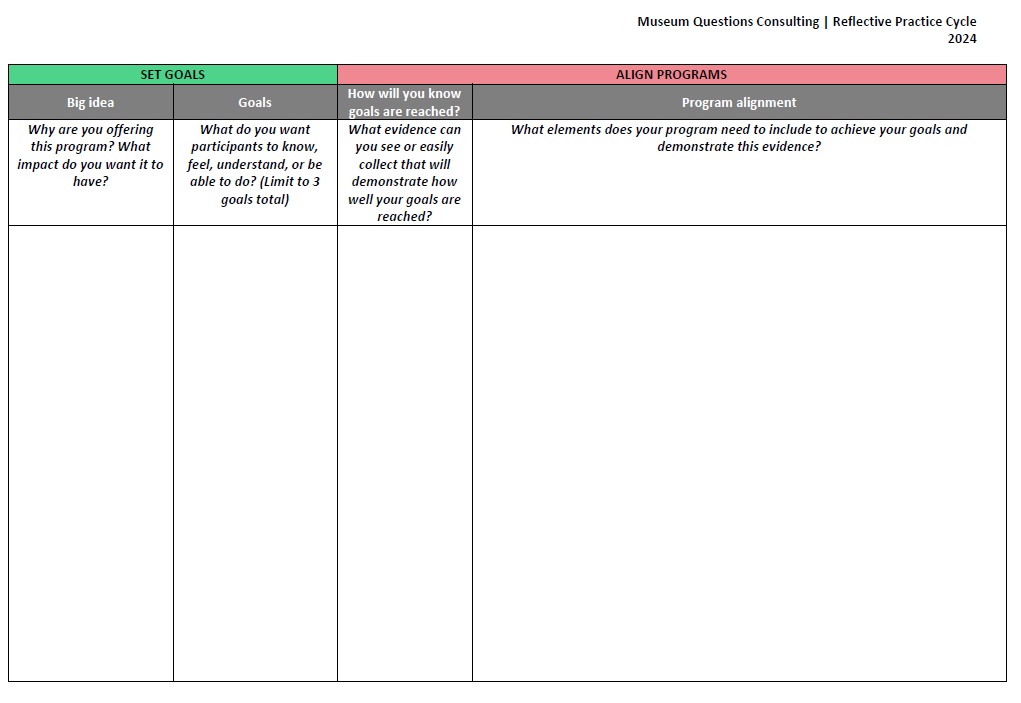
Editable version of Reflective Practice Worksheet
Sample completed version of Reflective Practice Worksheet
 Museum Questions