Set clear priorities, strengthen your capacity, and support your staff in a time of rapid change
We support you through our Strategic Alignment Framework
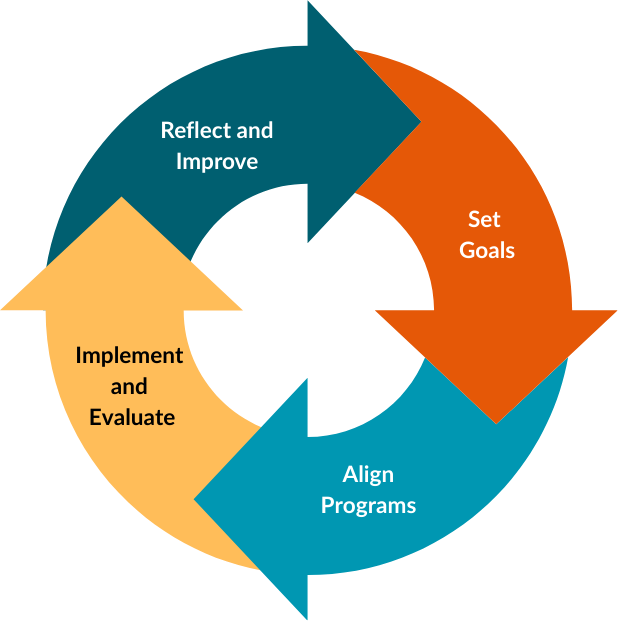
The Strategic Alignment Framework is at the heart of our work.
Clarify your vision and goals, which is essential to creating a strong plan or program
Align your work, and experience the “ah-ha moments” that unlock your ability to reach your goals
Understand the value of reflection and evaluation in supporting the evolution your work — so that you are always working toward your mission
Strategic Planning
Strategic planning is about creating shared vision, and energizing a team to work collaboratively and effectively. It’s a lot of work - especially for a document that sometimes sits in a drawer and gathers dust.
Together, we create a clearly articulated strategic plan that activates your vision and engages and focuses your team. And we don’t disappear once the plan is written: we provide ongoing partnership and support so the plan guides vision-driven decisions, priorities, and action.

Embedded Evaluation
Good evaluation isn’t something you do at the end - it’s an approach applied at the beginning of a project to help you clarify the impact you want to achieve.
We offer evaluation as a planning tool and a way of thinking. We help organizations embed evaluation directly into program design so that learning and improvement happen from the start.
Working together, we clarify the impact you want to achieve, design programs to support that impact, and build in practical ways to assess and adjust along the way. The result is more effective programs, focused time and effort, and deeply meaningful experiences for your public.
Facilitation
Often the first step in moving forward is creating the space for a big conversation. You need someone who can create a space for curiosity, clarity, and collaboration.
We facilitate small and large meetings grounded in good questions, careful listening, and connection-making. These conversations engage and inspire participants, surface real and meaningful feedback, and help groups move from discussion to shared direction—whether launching a new initiative, navigating change, or setting the stage for what comes next.

You will leave our work together excited about what you and your team can accomplish, and with actionable tools to make it happen.
Explore recent projects