One of the great perks of working in the museum field is free entry into other museums. I recently went to Indianapolis, and visited three museums in two days. The cost of visiting these three museums, for just one person, was $51.50. But, being an “insider” in the museum world, I called a colleague before going to one museum, and at the other two I showed my American Alliance of Museums card. In the end, I didn’t pay a dime for museum admission.
Most people pay an admission fee to enter most museums: Hand over money, get ticket, enter.
Because I do not pay for museums, I never have to make difficult choices about which ones to visit, or think about what would make me choose one museum over another. Nor do I ever need to think about whether my admission money was well spent.
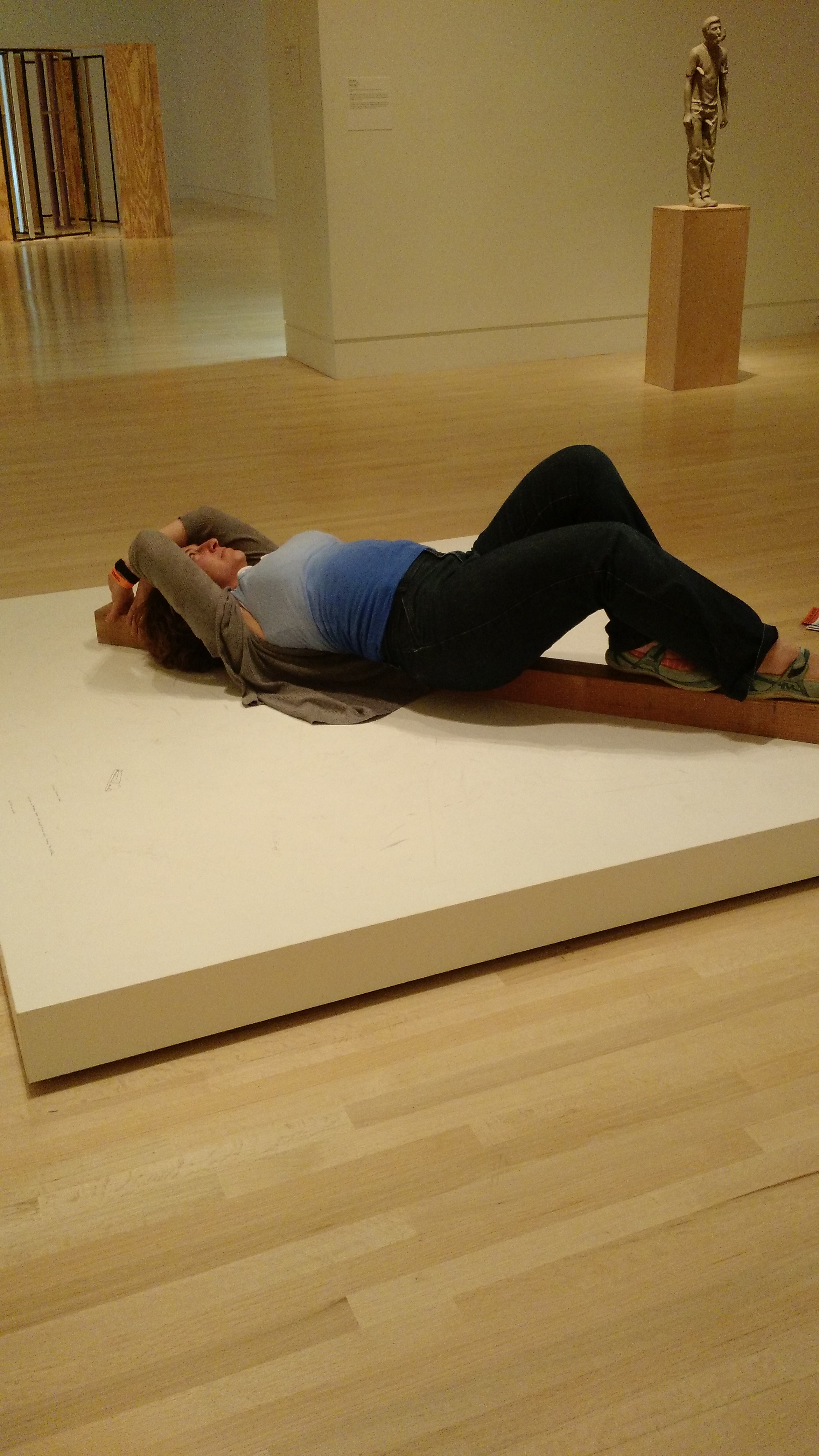
Free admission is partly professional courtesy, but more importantly a form of professional development. Because we can move freely between museums, we can more easily learn from and about each others’ work. Free admission encourages me to be a regular visitor of museums. And once at these museums, I notice how their labels are written, whether the galleries are crowded, when signs are unclear. I look at family guides and membership brochures; I notice which special exhibits are free and which the museum has decided to charge for. And I am inspired: At the Indianapolis Museum of Art I had so much fun with the Erwin Wurm “One-Minute Sculptures” that I am wondering what form something like that might take in a children’s museum. At the Children’s Museum of Indianapolis I saw their end-of-day parade, a fantastic way to gently urge families to leave the museum at closing time.
Me as an Erwin Wurm One Minute Sculpture at the Indianapolis Museum of Art
But free admission sets museum professionals apart from our visitors. Without paying for museums, it becomes hard for us to weigh whether or when cost is a barrier to admission.
There are a lot of things that become invisible to us once we acclimate to a place, or an industry: Once you are immersed in an environment, it is difficult to see it from the outside.
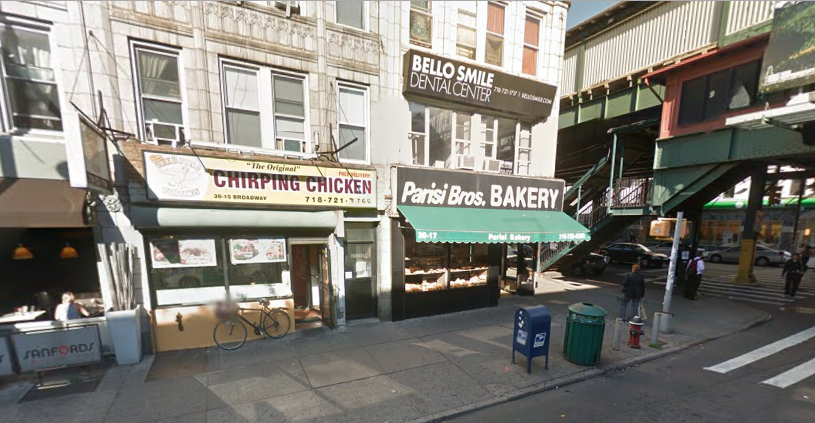
On my first day at The Noguchi Museum, I had trouble figuring out which way to walk from the subway, and could not understand why there weren’t signs placed somewhere. I mentioned something to a colleague who had been at the museum for decades, and she shrugged. Within a few days, I didn’t think about which way to turn anymore. Institutionally, it was difficult to see this immediate barrier to visitation, and so we did not address it.
Just off the subway at 30th Street and Broadway in Queens. How would you know which way to walk to get to The Noguchi Museum?
How can we consider and challenge the things that deter museum visitation or enjoyment? How do we see our our own museums with fresh eyes? Certainly spending time in the galleries, during general visiting hours, is a good start. But even better might be driving there on our day off, waiting in line, paying admission at the door. Imagining, if possible, that we are unfamiliar with the neighborhood, with membership policies, with where the bathrooms are.
I welcome other ideas for how to re-acquaint ourselves with the visitor experience to museums. And thoughts on whether we should all be paying money at the door.
This week’s guest post is by Christine Baron, Assistant Professor Social Studies and Education at Columbia Teachers College. Chris is a former high school history teacher and museum educator, and directed the development of educational and interpretation programs at the Old North Church, Boston. Her research focuses on using museums and historic sites as laboratories for history teacher education.
After reading Michelle Grohe’s guest post on the role of research in museums, as a university-based researcher whose work focuses on museum education, I felt compelled to respond. I wholeheartedly endorse Michelle’s position that action research should be a regular part of museum program work. While it does take some planning to do, it is ultimately well worth the effort and results in richer, more meaningful k-12 programming.
However, I must quibble with the notion that the research in the field is primarily divided into large and small research projects, and that large-scale research projects predominate. As part of my own research into the use of museums and historic sites as spaces for teacher education, I recently reviewed over 600 research articles, books, reports, and dissertations to write a literature review on the state of the field. From this review, it is clear that much of the published research is typified by short, qualitative, case study, action-research-type projects that ask perennial questions of practice.
Perhaps a better way to characterize the divide in museum education research is emic, the view of a research site from within the site or etic, research conducted by an external observer. Much of the large-scale research that Michelle refers to is etic (external) research conducted in conjunction with university-based researchers. There are benefits and limitations to being an external researcher. I have a degree of objectivity that is not possible to have if you are involved in running a program. From my vantage point, I can see things that people working inside the organization cannot. I can bring resources and practices to bear that are well outside of the workings of most museums. Much of the benefit to museums of working with etic researchers is that we provide a different perspective on the workings of the museum.
Conversely, from inside the program, conducting research from an emic (internal) position allows museum educators to see things that I cannot. An emic position permits museum-based researchers to bring to bear all of their understanding of the program, its history, its staff, scheduling, and a thousand other tiny details that only insider knowledge permits.
This difference in positionality affects the kinds of questions we ask and the type of research we are capable of undertaking. The questions that I am interested in are largely removed from daily practice, and focus instead on a few narrowly constructed questions that are “generalizable” to teaching and learning across museums and historic sites. My goal is to discern what works most of the time across most sites, the distillation of which is often referred to as “best practice”. In my own work, I am interested in the types of cognitive maneuvers that content experts (historians, archivists, curators, etc.) use to analyze historic places and visual imagery. I believe that understanding this will help us to develop program models, based on those expert practices, that support student learning.
For many museum educators this work may seem painfully abstract in the face of daily questions of practice. It is, because I am not trying to address questions of daily practice. Instead, I am interested in finding the principles that are the underpinning of daily practice and, from them, developing the templates from which programs can be built. Often museum educators and researchers are asking different kinds of questions, and are interested in different kinds of data, because we are coming from very different positions.
Many of the answers that museum educators seek about daily practice are best done from an emic position. While some university-based researchers operate within research traditions that permit this stance, the current state of research funding does not encourage this kind of work. This is why the museum-based action research that Michelle is advocating is so critical. Museum educators know their own sites, and can discern the best ways to implement programs—and make it clear what works, what does not, and under what conditions. Doing purposeful, systematic, on-going review of student work and other program products is the single best way to understand and improve museum education programs and procedures.
Making this kind of systematic review a regular part of daily life in your museum education department also makes your site more attractive to external researchers. Systematic use of action research provides verifiable information that, while improving daily practice, also provides greater insights for external researchers to ask better questions and solve problems generated from the field. As an external researcher, I need data about how things actually work internally. Having museum-based partners who are already engaged in reflective practice working in partnership with a university-based researcher means that collaborative research can provide information needed to improve the work on-site as well as a perspective on practice that can answer larger questions for the field as a whole.
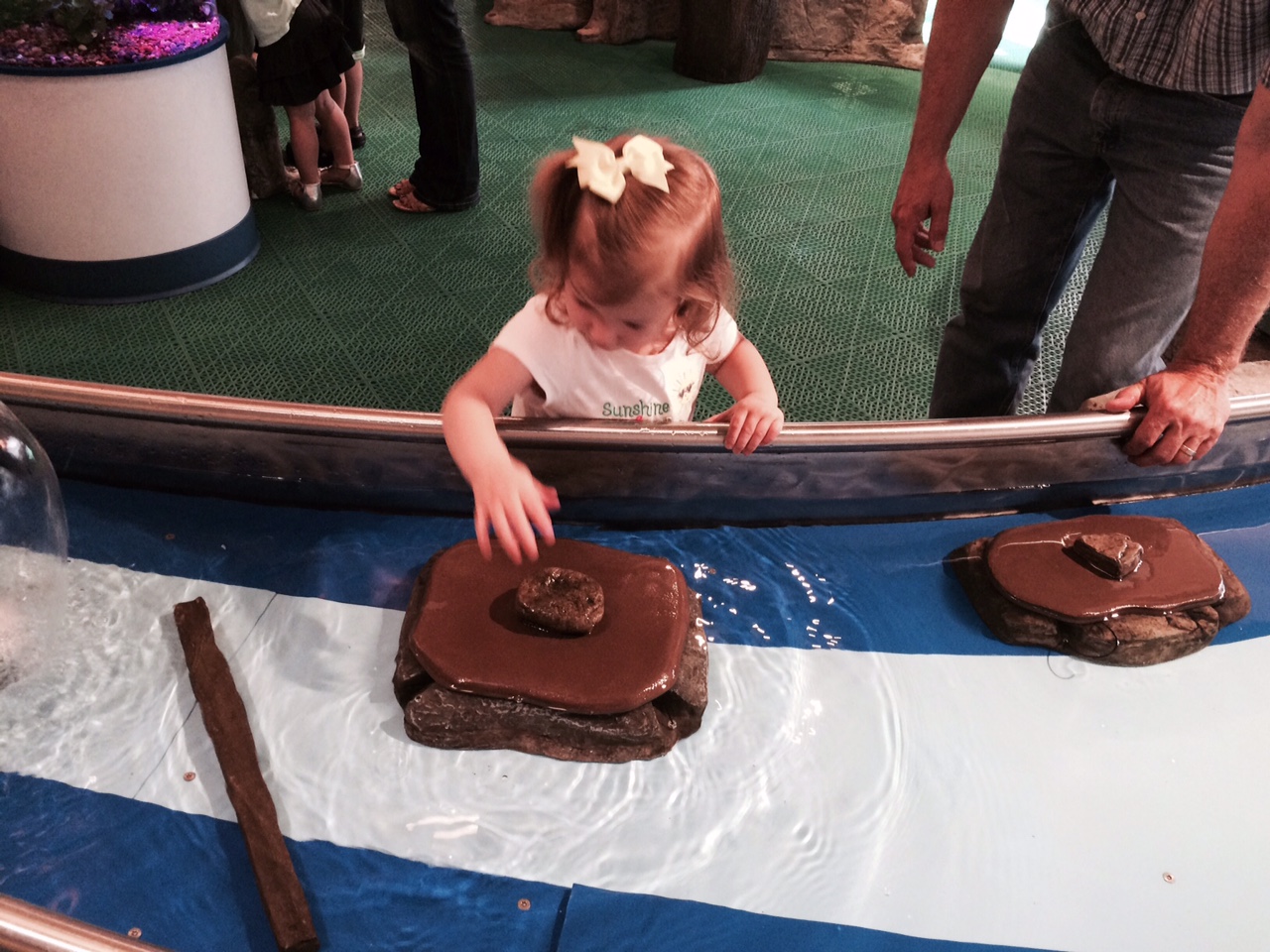
Visitor at the Peoria PlayHouse Children’s Museum, during the museum’s first week of operations.
As I emerge from the chaos of opening a new museum, I am still thinking about the question “Why are children’s museums museums?” which I blogged about in February. In that post I offered three ideas, which grew out of speaking with Barbara Meyerson and Elaine Heumann Gurian, and reading articles by Stephen Weil. In a nutshell, their answers boiled down to:
Children’s museums are museums because they were originally object- and collections-based, and aligned themselves with the museum field.
Children’s museums are museums because they are spaces for three-dimensional experiential learning.
Children’s museums are museums because they serve a public good.
I now have a fourth idea to add to these, which grows out of my work this spring with teachers, and our collaborative work thinking about what a children’s museum could and should offer their students:
Children’s museums are museums because they broaden our understanding of the world.
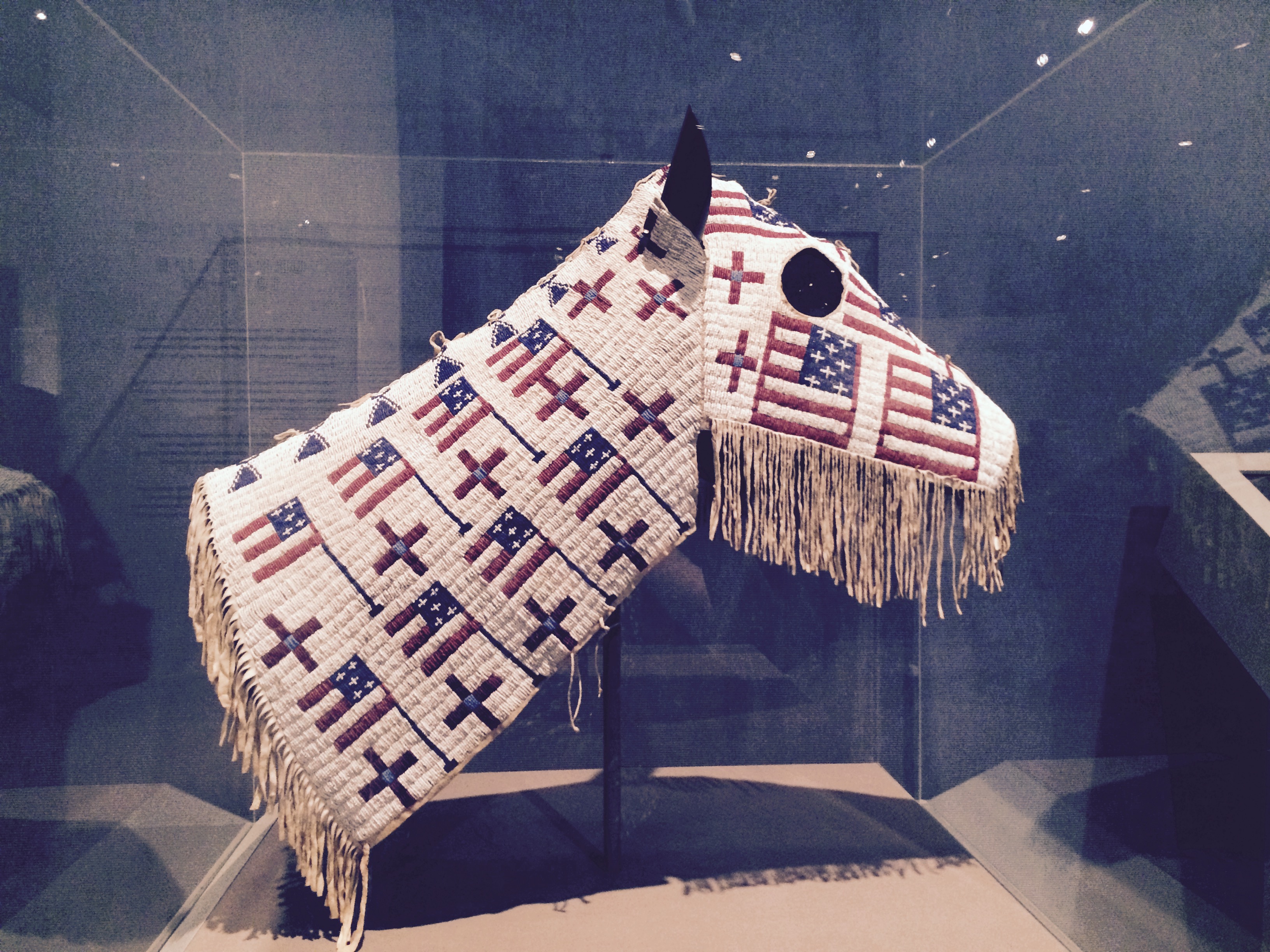
This idea resonates with me because it captures what I understand as one of the original intentions of museums and public collections: to introduce people to areas and aspects of the world that they might not otherwise have the opportunity to see or experience. When I visited the Peoria Riverfront Museum’s exhibit Stuff: The Art of Collecting, I left with new ideas about collecting and its intersection with hoarding, as well as an introduction to some specific collections, like handmade boy scout neckerchief ties (who knew?). When I visited the Metropolitan Museum of Art’s exhibit Plains Indians: Artists of Earth and Sky, I left knowing about early collaborations between Plains Indians and Europeans, and with a new curiosity about the use of American flags in late-19th and early 20-century Plains Indian art.
Ornamental mask used for Fourth of July celebration on a Lakota reservation, displayed at the Metropolitan Museum of Art in “Plains Indians: Artists of Earth and Sky.”
So, if children’s museums are museums because they broaden visitors’ understandings of the world, what are the implications of this? Because of our audience, this is a little tricky: As one teacher pointed out, everything broadens a 4-year-old’s understanding of the world. In fact, one way to understand play is that it is a way to explore and experiment – to broaden understandings – even in familiar environments.
Even so, having a responsibility to broaden visitors’ understanding of the world indicates a few commitments on the part of the museum. Here are a few quick thoughts on what this might look like, and some of the opportunities and challenges:
Helping older children and adults find ways to learn new things in the museum – Here at the PlayHouse we are developing “challenge cards” to offer older visitors, which engage them with exhibits at a more sophisticated level.
Introducing novel ideas, phenomena, and artifacts – Our Motion Commotion exhibit is supposedly about physics, but right now it is mostly about playing with ways to shoot balls into a hopper. We are considering a pop-up activity that offers hands-on activities related to some of our wall-panels, which talk about levers, pulleys, and other ways to manipulate heavy objects.
Training floor staff to engage with visitors in ways that support experimentation and curiosity – During our interviews and training we put a heavy emphasis on supporting experimentation. We are now finding and solving problems that occur when visitor experiments have the potential to damage exhibits.
Introducing new cultural traditions to visitors – We are working with community members to develop activities and workshops around holidays and traditions from as many different cultures as possible. We hope to offer the first of these soon, in conjunction with Ramadan.
Ramadan card entitled “Ramadan w” by Setareha. From Wikimedia Commons.
What do you think about this answer to “what makes children’s museums museums?” Do museums broaden visitors’ understanding of the world? Must they? If so, how do we best do this, and when do we fail?
Museum Questions is going on a six-week hiatus. It turns out that opening a new museum and producing weekly blog posts are a challenging combination. And really, between now and June 12th, I need to focus on getting the Peoria PlayHouse Children’s Museum open.
This is a difficult decision, because there is so much out there to think about and respond to. If I were going to blog this week (which I’m not, because I have no time), I might write about the intersection of two articles I just read. The first is this article, about the behavior and treatment of a group of African-American high school students visiting the Guggenheim Museum, and the intersection of what seems to be a racist response to rowdy schoolchildren and the commitment of the museum to protect its collection (which leads to all sorts of questions about group management and field trips). And the second is this NY Times Op-Ed, from Charles Blow, which is about the ways in which generations of inequity impact cultural access, but fails to meaningfully address the ways in which museums respond might, or fail to respond, or pretend to respond. What does meaningful response look like?
Why do we (museum practitioners) think museums, without acting in collaboration with other societal forces, can change things? And how often do museums work with partners not to increase attendance but to support causes which do not result in an immediate change in “numbers served”? During a conversation in Atlanta during AAM, Mary Ellen Munley suggested that what museums call collaboration is generally not collaboration at all, but the engagement of non-museum partners in helping museums achieve their very specific goal of increasing visitorship. To what extent do most museums – even those espousing outreach or access programs – care who visits, as long as visitorship is high? If a museum had to choose between 50,000 wealthy white visitors a year and 50,000 visitors from a more diverse, but less affluent, pool, which would it choose?
The whiteness of museums is a difficult, self-perpetuating loop. At the PlayHouse I intended to hire a diverse staff; I read articles about equity vs equality and spent hours strategizing about where to post job descriptions to attract a diverse group of candidates. In the end, nearly all our applicants have been white. I would guess this is because the people who apply to museum jobs are those who had the privilege of visiting museums, and for whom museums are positive and meaningful places. But can a staff of almost entirely white women appear welcoming face to a diverse audience? And, looking forward, can teen programs, paid internships and fellowships, and working with community partners diversify the applicant pool and change the face of this museum? Of museums more generally?
The complexities of this train of thought overwhelm me. Can we change museums? If so, how? And would changing museums make a difference to the larger challenges of racism and inequality we face in the United States and elsewhere?
See you in June, when I hope to have time to better tackle this and other museum questions.
This post shares a presentation made by Adam Nilsen, Miriam Bader, and myself at the American Alliance of Museums conference last week. Adam Nilsen is a graduate student in Stanford University’s School of Education, where he is studying empathy in a variety of settings, including museum settings. Prior to working on his PhD, Adam was a researcher at the Oakland Museum of California, where he researched and curated exhibits on California history. Miriam Bader is the Director of Education at the Tenement Museum.
During the presentation, I offered an introduction, Adam shared research on empathy, and Miriam illustrated with examples from the Tenement Museum. In order to indicate the speaker, I have divided sections with horizontal lines, and indicated the speaker for each section.
Rebecca:
This is a picture of The Tenement Museum in New York City. The Tenement Museum tells the stories of the apartment building at 97 Orchard Street, which housed nearly 7000 immigrants between 1863 and 1935. Visitors are taken through the building on guided tours which generally focus on one or two historical families and their experiences.
Last year I was working as a consultant, and I was fortunate enough to do some work with this museum. We were looking at their tours and a set of visitor responses, including an empathetic response. Empathy seemed, and seems, like a critical outcome of a visit to the Tenement Museum – in fact, one past study showed that, after their visit to the museum, nearly a quarter of visitors reported feeling empathy with immigrants of the past.
But it is also problematic: How do we know if people are experiencing empathy? Is empathy always good? What is empathy, and why should museums care about it?
In order to learn more about empathy, I reached out to Stanford’s school of education, and found Adam Nilsen, who is an expert in this area, which led to this presentation. Before Adam talks about the research, I am going to set the stage by briefly defining empathy, and talking about why it is important, and what this has to do with museums.
So here is a quick definition:
Empathy is a feeling of shared emotion with another person. It is not “I understand what you are feeling,” but rather, “I am feeling what you are feeling.”
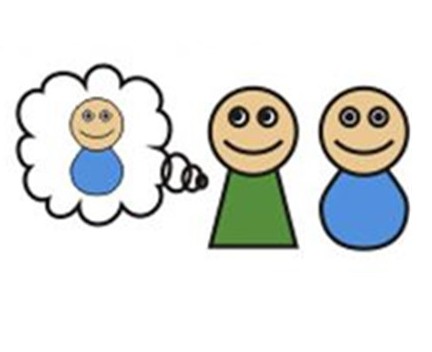
Empathy is often the result of what history educators call “Perspective taking.” Perspective taking is imagining or hypothesizing about what it would be like to be in another person’s shoes. Because they are so entwined, the phrase perspective taking is often used interchangeably with the word empathy.
At this conference we are talking about the social value of museums. We should consider empathy as one area of social value. It seems likely that museums are particularly effective vehicles at engaging people in empathetic responses. Museums provide immersive, personal experiences. Looking at a portrait of someone, or visiting an exhibition about a historical figure or moment, these distant people are palpable and present.
The 19th century author George Eliot spoke beautifully about this, although she did not use the word empathy. She was talking about art rather than more generally about museums, but the impact she describes will resonate with any museum professional or visitor. In her 1856 essay “The Natural History of German Life,” Eliot wrote,
“The greatest benefit we owe to the artist, whether painter, poet or novelist, is the extension of our sympathies. Appeals founded on generalizations and statistics require a sympathy ready-made, a moral sentiment already in activity; but a picture of human life such as a great artist can give, surprises even the trivial and the selfish into that attention to what is apart from themselves, which may be called the raw material of moral sentiment…. when Hornung paints a group of chimney-sweepers, — more is done towards linking the higher classes with the lower, towards obliterating the vulgarity of exclusiveness, than by hundreds of sermons and philosophical dissertations. Art is the nearest thing to life; it is a mode of amplifying experience and extending our contact with our fellow-men beyond the bounds of our personal lot.”
So empathy is important and museums are good at eliciting empathy. I’ll put that in my next grant proposal – done! What more do I need to know?
There is, in fact, a body of research about empathy, and how to elicit it. Museums can draw on this research to improve our chances of evoking empathetic responses, and for understanding the potential impact and value of evoking these responses.
Adam:
Around age 5, we start understanding that other people have different thoughts/feelings, and distinguishing between what we know and what others know.
Empathy is different from sympathy, which is feeling sorry or concern for a person in distress, as opposed to imagining the person’s perspective or sharing their emotion.
Empathy is seen as essential to smooth social functioning (imagine issues you may have had where someone is unwilling to see your perspective).
Furthermore, people who are highly empathic tend to behave in more caring, considerate ways toward others. Plus, researchers have also found that when we are encouraged to take the perspective of a member of a stereotyped group, we are less likely to apply stereotypes to that person. It is more powerful than telling someone “don’t stereotype,” which does the opposite.
SO, there are plenty of reasons why educators want to promote it.
It can be difficult to get out of our own heads. Although we’re not 5-year-olds, we still have egocentric bias – our initial instinct is to view things from our own perspectives. It takes mental effort to understand the perspective of another person.
History educators have used the term “presentism” to describe egocentric bias in reference to understanding people in the past. It is hard for us to not assume that people of the past thought the same way that we do. We easily think that they are just like us, but with weird clothes. As a result, history educators have reported volumes of examples of students thinking that past people were stupid and backwards. “A town full of people accusing each other of witchcraft? Eating ‘witch cakes’ to determine who was guilty? What idiocy!”, students think as they fail to understand the complexities of a time and place where such an act was perfectly logical.
So how do we combat presentism/egocentric bias? Two possibilities:
(1) Context is essential: We need to be informed, or we need enough evidence so that we can develop an idea of the context in which another person lives/lived. To help understand the Salem Witch Trials, we need to understand the Puritan beliefs of residents and what else was “in the air” at the time. In the classroom, it might be like this: We might provide a sermon where the minister hammers the message home: beware, the devil is everywhere. We might provide an excerpt from a book providing accounts of the devil terrorizing New Englanders. When we have these in mind, it makes it easier for us to step back and say, “I can see how someone living in that kind environment would think that way.”
What does this look like in the museum, with less time to spend with visitors, and a different set of resources?
(2) We need to reflect on our own positionality – what our views are, where they came from, how they might differ from others’. Not only do we discover things about ourselves, but we are more able to understand the perspectives of others.
So how might we promote empathy?
Some research has shown that encouraging people to imagine themselves in a position similar to another’s will help. Going with our Salem example, perhaps imagining a time when we felt pressures from around us to do and say what everyone else was thinking could help us understand similar dynamics in Salem. (Mendoza)
Some research has also shown that explicitly instructing people to empathize, encouraging them to question their assumptions, to really imagine themselves in another place and time, is more effective than saying “try to understand where this person is coming from.” (Galinsky)
Miriam:
The Tenement Museum provides context to all the family stories we share. On our living history programs, we take this one step further by giving visitors the directive to become a character from a different time period. The goal of this is not for them to become actors, but to help create an environment where empathy is fostered.
In this example, from our Meet Victoria program, visitors are given the role of Italian immigrants in the year 1916. During the first part of their tour they are given a variety of resources including images and historic records that provide context and help them get into character. As they become an immigrant family starting a new life in America, they take on a role analogous to Victoria’s experience. This role-play helps visitors to connect to Victoria and limits egocentric bias. By creating a scenario where they need Victoria’s advice and perspective, we invite visitors to see Victoria not as a stranger from the past, but as a contemporary – a view that will help to see the world from her perspective.
The first part of the program prepares visitors for the second part of the program: a visit with a costumed interpreter playing the role of Victoria Confino, a 14 year old that immigrated with her family from Kastoria in 1913. Giving the visitors context and a role analogous to Victoria helps them to leave their egocentric bias at the door, and leads to more quality interaction. The immersive and sensory experience of visiting with Victoria in her apartment helps visitors maintain their role. We have observed that in the majority of our programs this combination of preparation + role-play + immersive storytelling supports visitors in leave their egocentric bias behind.
Adam:
Now we are going to complicate our picture of empathy with some recent research findings. Empathy is a BIG topic among social psychologists right now. Many nuances of what promotes/hinders empathy are being explored. We’re now turning to three recent findings from this body of research.
One line of research compares “hot” and “cold” emotional states. A “hot” emotional state is one that is emotionally charged, e.g. fear, hunger, anger, thirst; a “cold” emotional state is the opposite. Studies have shown that when we ourselves are in a “cold” state, we have a hard time empathizing with or predicting what it is like to be in the opposite (i.e. “hot”) state. For instance: “People who are just about to exercise and are in a relatively neutral state predict that they would be less bothered by thirst if they were lost without food or water compared with people who have just exercised and are therefore relatively thirsty and warm” (study cited in Van Boven, Loewenstein, Dunning, & Nordgren, 2014).
The implication for museums is: When visitors are in a comfortable, climate-controlled museum, free from fear or cold or hunger, are they really able to grasp what it is like to be terrified or freezing or starving?
Here is another brief example,from Nordgren, Morris McDonnell, & Loewenstein, 2011:
Participants in a study were asked to imagine being a student who was being punished by standing out in the cold without a jacket. The participants were divided into three groups. One third of participants were asked to stand out in the cold themselves. One third of participants were asked to keep their arm in a bucket of ice water. And one third of of participants were asked to keep their arm in a bucket of warm water.
Those who had their hands in ice water and those who stood out in the cold both made the same estimates about how uncomfortable the hypothetical student would feel. THAT IS, it didn’t matter if you were actually experiencing being in the cold or just having your arm in ice water. Just having a “sample” of the situation, having your arm in ice water, led people to empathize just as much as people who were experiencing the full situation first-hand by standing out in the cold!
In museums, if we want people to grasp the experience of another person, are these good strategies to try? For example, are there ways that we can encourage empathy in museums by giving people a small sample of what a situation would feel like for another person?
Miriam:
When visitors crowd into the small spaces of our exhibits, they can better relate to the crowding experienced by the residents that once lived there. Harris and Jennie Levine (pictured above) lived in this space in 1897 with their 2 children. They immigrated to New York City from Plonsk, Poland. At the time depicted, a very pregnant Jennie would share the area in front of the coal stove with a presser doing the ironing for her husband’s garment shop, which was located in the front room of the apartment. You can picture her tending to her toddler in the crib in the foreground, cooking his food on the stove, and working tirelessly to take care of her growing family. Immersing visitors in the details of Jennie’s experience while having them crowd into the small space she inhabited, helps them to empathize with her daily situation.
Adam:
It may feel easy for us to pass judgment about people living in other times, but we often lose sight of the fact that we have privileged information. We have the benefit of hindsight. We can look back at a summary of a person’s life or get an overview of a historical period and see/know things that a person living in that context did not see/know. This can easily lead us to fall prey to the hindsight bias: the failure to empathize or put ourselves in the shoes of another person because we don’t realize that we know more than they did.
History educators have long sought to combat students’ tendency to judge people of the past as stupid or backward. This may be easy to say, because we know the “big picture” of history.
One participant in a study I am working on currently said that those who mined for gold during the California Gold Rush were “idiots,” because people often made more money providing goods and services to the miners. She had the benefit of hindsight and wasn’t empathizing with gold miners – she was quick to judge, not weighing the information that a miner actually would have had at the time or what a miner’s motivations may have actually been.
In museums, how can visitors be encouraged to be more thoughtful about what would people in different times may have been thinking, instead of being quick to judge?
Miriam:
Many visitors are appalled to discover residents used chamber pots as toilets and would throw the contents out of their windows. Upon hearing this, they express disgust explaining that people in the past were dirty, and commenting that they would never do that…
To counter this hindsight bias, Museum Educators offer a different way of seeing the chamber pot, helping visitors to imagine what it would have been like to have lived in 97 Orchard Street before there was running water and electricity. For example, s/he might prompt visitors to imagine they are living in a building where the only toilets are outside in the yard. There is no source of light so you must take the candle or kerosene lamp and carry it along with the chamber down four flights of narrow stairs. How will you stop it from spilling on the floor, or even worse on you? Now picture yourself in a long billowing skirt… With this background information and detail, visitors can understand that throwing the contents of the chamber pot out the window was actually the smart thing to do.
Adam:
Another finding is that repeatedly being exposed to some sort of stimulus, whether it is something that makes us sad or joyful or irritated, desensitizes us so that we have a hard time empathizing with someone who is experiencing it for the first time.
For instance, Campbell, Van Boven, O’Brien, Schwarz, & Ubel, 2014 found that repeatedly exposing someone to an annoying noise desensitizes them to that noise – they don’t care any more. When a person is asked how another person would feel hearing that annoying noise for the first time, they tend to say that the other person wouldn’t care that much.
If we want people to empathize with others, it might make more sense to encourage them to try and remember how they felt the first time they encountered a stimulus, e.g. the annoying noise, and by encouraging them to look at how other people around them, who are experiencing the noise for the first time, are reacting.
In museums, is it possible to give visitors too much of a stimulus, e.g. too many upsetting images of people in danger (like in a Holocaust exhibit), such that they become desensitized and no longer empathize with the people in the images?
Miriam:
At the Tenement Museum the experience of crowding can lead to desensitization.
Initially, visitors are often surprised by how small the living spaces are. This can be followed by discomfort. However, after visiting a few spaces and surviving the experience, desensitization bias can leave them feeling like the space is not that bad after all. Of course, it is important to remember that the study of empathy is “tricky” as the session title denotes, and creating exhibits that will find the sweet spot where empathy is fostered is complex.
During the conference presentation, after sharing research findings and examples from the Tenement Museum, we opened up the floor for questions. There were a range of questions indicating that this is a topic colleagues have thought deeply about. For example, one attendee asked about empathy in relation to people perceived as good vs. those seen as bad. Another asked about the possibility of empathy not with people, but with the environment. The conversations continued well afterward, and we hope they continue even further.
Here are some of the resources cited during this presentation:
Campbell, T., O’Brien, E., Van Boven, L., Schwarz, N., & Ubel, P. (2014). Too much experience: A desensitization bias in emotional perspective taking. Journal of Personality and Social Psychology, 106(2), 272.
Fischhoff, B., & Beyth, R. (1975). “I knew it would happen”: Remembered probabilities of once-future things. Organizational Behavior and Human Performance, 13, 1-16.
Galinsky, A. D. (1999). Perspective taking: Debiasing social thought. (Unpublished doctoral dissertation). Princeton University, Princeton, NJ.
Galinsky, A. D., Ku, G., & Wang, C. S. (2005). Perspective-taking and self-other overlap: Fostering social bonds and facilitating social coordination. Group Processes & Intergroup Relations, 8(2), 109-124.
Gehlbach, H. (2004). Social perspective taking: A facilitating aptitude for conflict resolution, historical empathy, and social studies achievement. Theory and Research in Social Education, 32(1), 39-55.
Hunt, L. (2002). Against presentism. Perspectives, 40(5), 7-9.
Mendoza, R. J. (1997). Emotional versus situational inductions of empathy: Effects on interpersonal understanding and punitiveness. Unpublished doctoral dissertation. Stanford University, Stanford, CA.
Nordgren, L. F., McDonnell, M. H. M., & Loewenstein, G. (2011). What constitutes torture? Psychological impediments to an objective evaluation of enhanced interrogation tactics. Psychological Science, 20(10), 1-6.
Van Boven, L., & Loewenstein, G. (2005). Empathy gaps in emotional perspective taking. In B. F. Malle & S. D. Hodges (Eds.), Other minds: How humans bridge the divide between self and others (pp. 284-297).
For the past year, I have been wondering about Marshall McLuhan’s ideas of “hot” and “cool” media, and how they might apply to museums. Marshall McLuhan was an influential voice in media theory, and thought a great deal about popular culture, and how the dominant media shapes the way we think. (If you aren’t familiar with McLuhan’s work, perhaps you will recall him from this scene from Annie Hall.)
I started thinking about McLuhan’s ideas when pondering the current interest in storytelling in museums, and grew further interested when working on my post, “Why are children’s museums museums?” In looking at work about McLuhan on line, I encountered the work of Twyla Gibson, and called her to ask if she would be willing to be interviewed for this blog. She graciously said yes.
Twyla GibsonisAssistant Professor of Information Science, University of Missouri. She is also a founding editor of the journal MediaTropes. Professor Gibson specializes in the history and philosophy of information, media, and communication.
There is a basic principle that distinguishes a hot medium like radio from a cool one like the telephone, or a hot medium like the movie from a cool one like TV. A hot medium is one that extends one single sense in “high definition.” High definition is the state of being well filled with data. A photograph is, visually, “high definition.” A cartoon is “low definition,” simply because very little visual information is provided. Telephone is a cool medium, or one of low definition, because the ear is given a meager amount of information. And speech is a cool medium of low definition, because so little is given and so much has to be filled in by the listener. On the other hand, hot media do not leave so much to be filled in or completed by the audience. Hot media are, therefore, low in participation, and cool media are high in participation or completion by the audience. Naturally, therefore, a hot medium like radio has very different effects on the user from a cool medium like the telephone…
-Marshall McLuhan, Understanding Media: The Extensions of Man, 1965
Marshall McLuhan wrote about what he called “hot” and “cool” media. As the quote above shows, he identified radio as hot and a speech as cool, photographs as hot and telephones as cool. What does this mean?
A rough rule of thumb in distinguishing hot from cool media is the amount of data or information offered. With hot media, there is not a lot of information to fill in. Radio and movies are examples of this. A cool medium is one in which you must fill in or complete a lot of information. It involves what McLuhan called participation, but we would probably call interaction.
The concept of hot and cool has to do with the amount of data or information. And we are in the age of big data. In a cool — or low definition – medium, data must be filled in and completed by observers. This requires a high participation level from audience members. A hot medium expands on a single sense and involves little participation – just walking by and observing.
In museums, we like to offer more cool media, allowing people to interact with a display or a concept. Leave it to them to fill in the dots, rather than passively observing. With a hot medium, there is not a lot left for the observer to do.
Is cool media better than hot media?
The terms hot and cool just describe the amount of data the viewer has to supply. McLuhan used the terms in ways that imply both are good. For example, we could say, “That song is really hot,” or “that song is really cool.”
Would you argue that one type of media is better than the other when it comes to education?
In terms of educational experience, in the past we have provided people with a hot medium. Let’s use the example of the gallery label, which tells people what they are seeing when they look at an object, and explains to them what is in front of them and why it is important and why it is the way it is.
Early in the 20th century – the era of the rise of many of the museums in the United States – “high art” was commandeered by the university, and museums were left with an educative function. This led to the creation of labels intended for a very limited audience. One of the debates in museums right now is the educative function of the label, through which the museum asserts its authority to determine the meaning of the object, as opposed to leaving that meaning-making function to the interpretive action of the viewers.
Now the challenge for museums is to provide positive experiences to people from all walks of life. And the only way to do that is if the museum does not take advantage of its position to tell the viewer what it is they need to know about the object, but instead helping the viewer come to terms with the object, and figure out how to find information for themselves.
New technologies offer novel ways to create cool media experiences. Visitors might be guided by mobile apps that tell the history or background of an object, but in a way that it doesn’t foreclose on the viewer’s own perspective. Instead, this history should stoke creative juices and allow the visitor to make meaning. In future I think we’ll be seeing more experiential displays interwoven with standard museum exhibits.
For example, museums might give you a hand-held recorder or a cell phone. If you’re a professor you can look at an object and learn about its history. If you’re a school child you might hear things interesting to a child your age. In this way museums can provide information that helps viewers make their own meaning, not just passively accepting the meaning that the museum has prescribed through its institutional authority.
Isn’t that still prescriptive? Aren’t museums still telling people what to think – they are just offering some people one label, and others, a different label?
That’s the tension that interpretation always involves. How much of the understanding of the observer is limited by the object and what’s around it, and how much of it is there for them to take what they will?
I saw an exhibition in Australia about life “down under” in the 1950s, and this exhibit found a way to short circuit the museum’s authority to determine meaning. The exhibit presented an entire array of objects from the 1950s that contextualized individual objects in the display by providing a context that showed what was going on in the entire culture at that time. As a visitor, you got a sense of how a painting was a reflection of the entire culture during that time period, and how it was innovative in the context of a total environment. This “cool media” approach leaves a lot more to observers, allowing them to start to make connections for themselves.
That’s ironic – by giving more information the museum left interpretation more open?
The more you know the more you know you don’t know.
All of this is about is communication, and how the museum is a medium of communication. McLuhan’s method was to look for ways to examine culture. He taught us to observe any book or text or television program as reflections of that culture and context, and not isolated things. This is the approach that allowed him to make so many prescient comments – comments which still seem relevant 70 years later. He had a way of examining a medium as the ground that allows the content to figure forth. In this way, the museum is a medium or ground that makes the objects or contents the figure. McLuhan looked at changes from print to electronic media in relation to revolutionary stages in history for these insights.
Museums relate types of data and messages. We attempt to live up to museum’s mandate to educate the public.
In March I started a “Museum of Museums” on Pinterest. Thank you to readers who suggested additions from Dylan and Collins, as well as the film “Museum Hours.” Here are two more additions, which I share in part because I find them so beautiful. But also because they remind me of the mystical aspects of museums, the ways in which museums can open new external and internal worlds for visitors.
Anthony Doerr, All the Light We Cannot See
Her father sends her on a children’s tour of the museum where he works. The guide is a hunchbacked old warder hardly taller than a child himself. He raps the tip of his cane against the floor for attention, then leads his dozen charges across the gardens to the galleries.
The children watch engineers use pulleys to lift a fossilized dinosaur femur. They see a stuffed giraffe in a closet, patches of hide wearing off its back. They peer into taxidermists’ drawers full of feathers and talons and glass eyeballs; they flip through two-hundred-year-old herbarium sheets bedecked with orchids and daisies and herbs.
This tour ends with a locked door, and a story about a priceless jewel that may or may not bring bad luck, that may or may not be real.
An herbarium sheet
What if museum exhibitions and tours simply shared wonder? After all, this is what museums once were – cabinets of curiosity, wunderkamer, places to encounter the marvelous and the unknown. This is much harder to achieve in today’s world, when the “unknown” can be known – on some level – through a google search. But it must still be possible…
Thomas Pynchon, The Crying of Lot 49
In Mexico City they somehow wandered into an exhibition of paintings by the beautiful Spanish exile Remedios Varo: in the central paintings of a triptych, titled ‘Bordando el Manto Terrestre’, were a number of frail girls with heart-shaped faces, huge eyes, spun-gold hair, prisoners in the top room of a circular tower, embroidering a kind of tapestry which spilled out the slit windows and into a void, seeking hopelessly to fill the void: for all the other buildings and creatures, all the waves, ships and forests of the earth were contained in this tapestry, and the tapestry was the world. Oedipa, perverse, had stood in front of the painting and cried. No one had noticed; she wore dark green bubble shades. For a moment she’d wondered if the seal around her sockets were tight enough to allow the tears simply to go on and fill up the entire lens space and never dry. She could carry the sadness of the moment with her that way forever, see the world refracted through those tears, those specific tears, as if indices as yet unfound varied in important ways from cry to cry. She had looked down at her feet and known, then, because of a painting, that what she stood on had only been woven together a couple thousand miles away in her own tower, was only by accident known as Mexico, and so Pierce had taken her away from nothing, there’d been no escape.
[There are no uncopyrighted images of this Remedios Varo painting that I can share on this site, but you can view it here.]
When does a museum visit lead us to discover something about ourselves? Oedipa has an epiphany about her life because of this painting. How often does this happen? How would we know? If it can’t be measured, does it matter? (Yes.) If it is an individual response, is it worth considering this possibility in our exhibition and program planning? (Yes.)
If you know of novels, poems, or other sources that convey the mystical wonder of museums, please share them. It’s a nice way to remind ourselves of what museums can be.
Anthony Pennay drafted parts of the following post as a comment on my post “Why do we need classroom management in museums?” He had so much to say that I asked if we could delve a little deeper into some of his points.
Tony was a classroom teacher for a decade before becoming a museum educator. He taught middle school English, Social Studies, Journalism, & Creative Writing formally, and basic rules and codes of conduct informally. He is now the Director of the Walter and Leonore Annenberg Presidential Learning Center at the Ronald Reagan Presidential Foundation.
What are some things you learned about classroom management as a teacher?
Advice on what it took to manage a classroom well was as varied and contradictory as the teachers, books, articles, and videos that professed expertise. One teacher told me I needed to scare students straight and encouraged me to throw a book across the room in frustration. One teacher told me I needed to enforce each and every rule immediately and without any consideration of the circumstances or context. One teacher suggested a three strikes and you’re out policy. Any student who thrice (over the course of a semester) broke one of the classroom rules and expectations, regardless of which offense or how severe, was immediately sent off to the office for suspension.
When I observed these teachers, their classes seemed to work well. The kids sat quietly. They seemed like they were paying attention, and there were no interruptions in the class. Generally, their approaches worked well in terms of “managing” the classroom. But “managing” a learning environment is much different than creating a powerful learning experience. The single best piece of advice I ever received on “classroom management” was from Rafe Esquith. (His book, Teach Like Your Hair is On Fire, is a great read.) He said that the best form of classroom management is a great lesson plan. If the learning is engaging and meaningful to the students, they will be so into the learning they won’t have time to misbehave.
Does this mean that you agree with Kylie Peppler that classroom management problems in the museum reveal design flaws in our programs?
Yes and no. I believe that most behavior/classroom management issues that occur in a museum come from programs that are flawed in their design. Is it reasonable to expect a group of elementary school students to sit quietly and listen to an interpreter speak about a piece of art for 15 minutes? Or to expect 30 middle school students to silently sponge up the finer points of the differences between SALT and START arms discussions? Probably not.
One of the key ideas that Kylie Peppler mentions in her interview is the idea of connection. Whenever students encounter new pieces of information, or new environments, or new learning scenarios, we know that, neurologically, their brains begin to act like librarians. The brain takes the new piece of information, and immediately tries to connect to it and put it in the context of prior experience and learning. For example, let’s say a student visits the Getty Villa and sees the Lansdowne Herakles. Once they see the statue and know that it is of Herakles, their brain, sometimes naturally and sometimes with the right bit of prompting, is connecting to other statues they’ve seen, is thinking about the Greek Mythology book they read back in the fifth grade, it might connect to the cartoon, or even to the movie 300. The brain might compare his muscles to those of LeBron James or other famous athletes they’ve seen on SportsCenter. The brain might connect in any of a thousand different ways. The stronger or more emotionally intense the connection, the more the student will engage with the content and the experience.
The Lansdowne Heracles, c. 125 CE
I think that one of the major reasons museums experience behavior issues is because the students feel absolutely no connection to the material, the environment, and the experience. That said, brilliant, engaging program design won’t always solve behavior issues in museums. Sometimes you get the class that comes with a substitute teacher, sometimes something happened on the bus ride in, sometimes you’ll get a student who has been traumatized or bullied in such a way that nothing would cause them to be productively engaged. There is no perfect program! Our challenge as museum educators is to create an engaging experience, help foster connections, and continue to evolve and improve our programs to ensure maximum impact.
So what does it take to ensure that students are focused and appropriately behaved in a museum?
If a year in a classroom is a steady progression up a hill, then a visit to a museum is an exciting leap across a chasm. It’s an intense, hands-on, beautiful assault on the senses that breathes life into art, history, science, culture etc., in a way that is nearly impossible to replicate in a classroom, through a textbook, or via the internet. This is not a knock on classrooms. They are just as essential to a holistic learning experience as are (hopefully frequent) visits to museums and cultural institutions.
Museums should have a distinct and separate set of “engagement in learning” strategies rather than “classroom management” strategies. Three strategies are key to this: Context, Clear Expectations, and Engagement.
First, context: Students should have context around where they are visiting, what they can expect, why it is important, and how they can best take advantage of the learning opportunity they will have at your institution. Ideally, this would involve the students being prepared beforehand by their teacher, a member of the museum education team, or some combination of the two. I know that budgets and time are always a consideration, but taking the time to ensure some sort of contextualization is key. Is it better to lose 20 minutes of a tour or experience to provide this context, or to spend two hours working with students who are disengaged and missing the content anyway?
Just to clarify: I think you are suggesting that if students are going to spend an hour in a history museum learning about a facet of late 19th century US history, and the teacher has not done any pre-visit work, the museum should consider spending the first 20 minutes with students in a lecture hall, to give them context. Is that correct? How do you make this 20 minutes of content delivery engaging?
Absolutely, that is what I am suggesting. Would you rather have 40 good minutes, or 60 minutes that cause your staff to consider early retirement?
At my museum, we send out packets of materials that give some background, so the students should be relatively familiar when they arrive on site. The truth is, as I am sure will not surprise you, many classes come in completely cold. When I first started here, the pre-brief consisted of a map and a lecture with our educators. There would be discussion and questions, but the educator was doing most of the work.
When we received a grant to redesign the pre-brief, we wanted to shift the lion’s share of the work from the educator to the student. We built an app for the iPad that is filled with questions, photographs, information, interactive maps, etc… Now we have moved from the educator delivering 90% of the content with a few students raising their hands and answering specific factual questions to a model where the educator poses big questions, but turns the students loose to explore and interpret information from a variety of sources. The students now find and share the context with each other, and the educator helps make sure they don’t miss any of the big stuff. But we still use the first 30 minutes to build context.
Students using the iPad app at the Annenberg Presidential Learning Center
So the first strategy is to give the students the content background, or context, they need to engage with the program. What’s next?
The second strategy is clear expectations. Students should know what it looks like to learn effectively in the environment you create for them..
For example, we have a simulation here at the Library. In the pre-brief, before the simulation, students are presented with a general overview and they are asked to work with a small group to review primary source documents, photographs, and begin making decisions about the information they encounter. Our educators do a nice job of showing them that in this particular learning environment, you will collaborate with your classmates, you will critically examine important pieces of information, and ultimately you will combine these to make decisions that will drive the simulation. At the same time, you just might learn a thing or two.
And the third strategy is engagement. The visit must be engaging. Just as our field has focused intensely on the visitor experience in the museum, as educators we must focus on the student experience. Are we asking a coterie of squirming 8th grade students to listen quietly as an interpreter speaks at them for 45 minutes, or are we giving them the tools to explore, learn, and engage themselves? Part of effective engagement in learning means pushing the onus of responsibility for learning onto the students and visitors. Give them the tools to be successful, certainly, but then allow them the freedom to utilize those tools.
I am certainly not suggesting that this approach will cure all behavior issues in museums, but if educators ask themselves, Are we giving students the context they need to understand what it means to learn here? Have we painted a clear picture of what it means to engage with our content? Are we allowing the students to engage with our institution? And if we are honest in their answers and evaluations, then I believe we will find the answers they need for effective engagement in learning.
This week’s post is by Lisa Gilbert, a doctoral student in education at Saint Louis University. Lisa studies the pedagogical nature of public history spaces as well as ways individuals relate to historical narratives. The National Council for History Education asked Lisa to write a related article for teachers on strategies for making the most of student visits to museums.You can read what she wrote here.
Back when I worked as bilingual gallery educator at the McCord Museum of Canadian History, we always ended our tours by asking the children what they had seen at the museum that day.
Sometimes their answers were what we expected – beautiful Inuit carvings, evocative photos of Montreal’s Japanese immigrant community, early examples of hockey or lacrosse sticks.
Other times, their responses sounded more like the drawings on thank-you cards I sometimes received during my tenure as K-12 Programs Manager at the Missouri History Museum: careful diagrams of the tables in the classroom, a picture of the payphone by the drinking fountain in the hall outside.
While the goal of the “what did you see?” question was to do a quick review of what the children had learned that day, the truth is that these responses taught me an important lesson about museum education. They reminded me that, while I saw a clear difference between the museum building and the exhibit they were there to see, the children were experiencing the institution in a more holistic way than I had for a long time.
While an initial response might be to label the children’s answers as off-topic (or worse, simply wrong), I think we should return to the beginning of The Little Prince. There’s a moment when the prince shows the narrator a drawing and asks the most basic of museum questions: what do you see? Now, the adult narrator has been socialized away from answering the question and toward giving an expected response. As a result, he misses the point: clearly, it’s a snake that swallowed an elephant.
Illustration from “The Little Prince.” “I showed my masterpiece to the grown ups and asked them if my drawing frightened them. They answered: “Why should anyone be frightened by a hat?” My drawing did not represent a hat. It was supposed to be a boa constrictor digesting an elephant.”
I think something similar happens to us as museum educators. Neoliberal reforms have impoverished our notion of education itself, reducing it to filling children with testable bits of information. As a result, we’re clutching to the idea that our value is in disseminating content. We think that, in order to be seen as legitimate educators, we have to convince teachers that our content is special, and we’re experts in getting that content into children.
I beg to differ.
In my experience communicating with K-12 teachers, no amount of ostensible Common Core alignment is worth as much as speaking to their deepest hopes as educators. They too are tired of a reductionist view of learning that focuses on picking up twigs of information rather than seeing the forest for the trees. They know how much paperwork it’s going to take to get the children out of school that day, how many conversations with administrators, and yet they’re still willing to take on that headache. I think it’s because they want to feel the same excitement their students do on the way to the museum.
The good news is, what we’re especially good at is exactly what our society’s all-too-often diminished concept of education is missing.
We’re ideally situated to champion process over product.
If museum experiences are special, it’s not the content itself, even if it’s backed up by the presence of artifacts or staged in immersive environments. These experiences are special because the day you come to a museum is a special day. And on that special day, as I used to tell my staff, children’s brains go into High Fidelity Recording Mode: you never know what they’re going to pay attention to, but you can trust that what they’re experiencing is going into the part of the memory that’s reserved for the exceptional.
In this context, everything matters. The important thing that happens that day may not be inside the exhibits or even inside the building. But if we’re interested in education that has ripple effects over a lifetime, museums are great places to be.
The downside is that the result is unpredictable, and unable to be measured by a standardized test. This doesn’t mean there aren’t ways to articulate it, however. One of the museum theorists I wish people would read more often is Dr. Jay Rounds, a scholar I had the good fortune to study under during my time at the University of Missouri – Saint Louis.
Rounds reminds us that, while most content-centered education tries to posit a tightly coupled system in which inputs lead to outputs, museum experiences flow through a confluence of influences. There are too many streams in motion for the museum to control (or even predict) outcomes; this isn’t a problem, because this is a theory that recognizes the agency of visitors within institutions.
Diagram of a loosely coupled system, from Jay Rounds. From Rounds’ article, “The museum and its relationships as a loosely coupled system” in Curator.
As visitors – including students – move through this sea, they direct themselves in ways that have personal meaning. Rounds suggests that museums are ideal spaces for identity work: drawing a parallel with biology, he says that museums are outstanding places for visitors to pick up ideas that may serve no practical purpose at this point in their lives, but which may serve them in the person they may someday need to become.
Many of us are familiar with Falk & Dierking’s work in the ways different visitors pursue different goals during their time with us, stemming from the different motivations they had for their visit. Rounds uses optimal foraging theory to suggest that a comprehensive use of the exhibit (e.g., reading every single label) may not maximize returns, even for visitors who are motivated by curiosity about the exhibit content.
While Rounds intended this theory for adult free-choice visitors, I am sure these ideas hold true for student visitors, even if they didn’t choose to enter the museum that day, and even if it’s likely to be an unpopular idea in an era when we want to be able to predict the returns on an educational investment.
This means challenging prevailing definitions of “education,” in both K-12 and museum contexts. So instead of trying to show our ability to engage in content- and skills-based work to classroom teachers, let’s respect the fact that certain valuable tasks, like the critical inquiry skills involved in evaluating historical evidence and building arguments, take time and repeated effort to develop. We value these things (and often tap into skills students bring with them into the museum) but we’re not well positioned to teach them effectively. These claims actually diminish our trustworthiness with K-12 audiences because teachers know when we’re overreaching. It’s not only hard to convince them that one or two hours at the museum will somehow do what they work an entire year to accomplish; it’s disrespectful. And it misses our expertise.
Instead, let’s ask to be recognized on our terms and develop language for celebrating the ways we know how to capitalize on anonymous and ephemeral encounters. While we do this, I would make a modest suggestion that we treat students more like adult visitors and stop enforcing behavior toward a goal of content acquisition. The scavenger hunt is one of our oldest strategies for this, and I’d like to advocate its retirement. Here’s why.
Years ago, while visiting the Abraham Lincoln Presidential Library and Museum, I struck up a conversation with a volunteer about her experiences with school groups. She was frustrated with the education department’s recent decision to discontinue the use of scavenger hunts. I secretly cheered on my museum education colleagues but frowned in sympathy, asking her what kinds of questions had been on them. She lit up talking about how there was a penny sunk into the mosaic on the floor, and students had to find out what year was on the penny. “They were so motivated,” she said sadly, “They used to work so hard to find it. Now what will they do?”
Children looking at the penny in the floor of the Lincoln Museum. From the blog MundaneMagic.com
The docent was mourning the excitement she had seen in children’s faces, and she didn’t know if anything worthwhile would replace what had been lost. While I join her in valuing excitement and fun as an important part of museum experiences,I didn’t feel as anxious as she did because I don’t think activity is the same thing as engagement.
For my part, I was thinking about everything Lincoln’s presidency represents in the history of our nation, and feeling strongly that their time in that highly imagination-sparking environment should be spent engaging with fundamental questions about our democracy. Otherwise, I thought, all they’ll remember will be looking for a penny on the floor.
But the truth is, I can’t control what they’re going to remember.
None of us can.
I think, like this docent, we can feel uncertain as to whether something worthwhile will replace what might be lost if we loosen our grip on content as the goal of museum experiences.
But then I think about how Lonnie Bunch III, Director of the Smithsonian’s National Museum of African American History and Culture, has suggested that one hallmark of a successful exhibit or program is that audiences will “become more comfortable with ambiguity and with complexity.” He’s absolutely right: both as a profession and as a society, we need to become more comfortable with ambiguity. Museums can serve this important role.
Ironically, even though this sounds like an uncertain goal, I know that each of us has the certainty of our own experiences.
Here’s mine: one of my earliest museum memories is of being a little girl in the Missouri Botanical Garden’s gift shop with my grandmother. Perhaps still in kindergarten, I was fascinated by the wind chimes for sale. They were tuned to specific notes that matched various chords, and for some reason I had never considered that a wind chime could be as precise as the piano in my family’s home. I was entranced, and then I went home.
That experience lay dormant in me until, decades later, when I bought my first house, one of the first things I did was return to that shop to buy a wind chime. Now whenever I hear its tones outside my bedroom window, I am subtly reminded of a plethora of experiences, from my relationship with my grandmother to my connection with that institution as a place for exploration and beauty.
Lisa’s wind chime, from the Missouri Botanical Garden
It’s deeply meaningful. But if a guide had asked me what I had seen at the museum that day, they might have been upset with the answer being an item in the gift shop.
I also don’t know how (or, for that matter, when) museum staff could have captured this information on a post-visit survey.
It poses a problem in an era of standardized testing in the K-12 realm and donors who want to see measurable results in the museum realm. But we’re educators, after all: let’s start teaching people that we need to be held accountable to something higher.
Sources:
Bunch, L. G. (2010). People need to remember: American museums still struggle with the legacy of race. Museum (Nov-Dec), 42-49.
Falk, J.H. and Dierking, L.D. (1992). The museum experience. Washington, DC: Whalesback Books.
Falk, J.H. and Dierking, L.D. (2013). The museum experience revisited. Walnut Creek, CA: Left Coast Press, Inc.
Rounds, J. (2006). Doing identity work in museums. Curator 49(2), 133-150.
Rounds, J. (2012). The museum and its relationships as a loosely coupled system. Curator 55(4), 413-434.
Rounds, J. (2004). Strategies for the curiosity-driven museum visitor. Curator 47(4), 389-412.
The other day my 11-year-old son told me, “Poor people are poor because they don’t try hard enough.” I hope that he said this just to provoke me into debate (like mother like son). But the truth is, I think that empathy is something that he – like many people – struggles with. Intellectual smarts, which he has plenty of, are an entirely different aptitude than being able to imagine oneself in someone else’s shoes.
We had a long conversation about how hard it is to move out of poverty, and all of the barriers to success posed by a lack of access to good schools, health care, friends and relatives with interesting jobs and good connections, and all of the other advantages my son has. But discussions are not enough. Empathy is an ongoing, difficult struggle in ourselves and in our culture.
In a much-quoted 2006 speech, Barack Obama said,
You know, there’s a lot of talk in this country about the federal deficit. But I think we should talk more about our empathy deficit – the ability to put ourselves in someone else’s shoes; to see the world through the eyes of those who are different from us – the child who’s hungry, the steelworker who’s been laid-off, the family who lost the entire life they built together when the storm came to town. When you think like this – when you choose to broaden your ambit of concern and empathize with the plight of others, whether they are close friends or distant strangers – it becomes harder not to act; harder not to help.
Despite this speech, fostering empathy is not a visible priority in either the school curriculum or whatever remnants of civic dialogue are present in the United States. In fact, empathy is poorly defined, poorly understood, and rarely taught. What is the role that museums can and should play in addressing this gap?
A child in Owsley County, Kentucky, median household, which has one of the lowest medium incomes in the United States.
What is empathy?
Empathy is a feeling of shared emotion with another person. It is not “I understand what you are feeling,” but rather, “I am feeling what you are feeling.” Empathy is often the result of what history educators call “Perspective taking.” Perspective taking is imagining or hypothesizing about what it would be like to be in another person’s shoes. Because they are so entwined, the phrase perspective taking is often used interchangeably with empathy.
On another level, museums may be particularly effective vehicles at engaging visitors in empathetic responses. Museums provide immersive, personal experiences. Looking at a portrait of someone, or visiting an exhibition about a historical figure or moment, these distant people are palpable and present.
The 19th century author George Eliot spoke beautifully about this, although she did not use the word empathy. She was talking about art rather than more generally about museums, but the impact she describes will resonate with any museum professional or visitor. In her 1856 essay “The Natural History of German Life,” Eliot wrote,
The greatest benefit we owe to the artist, whether painter, poet or novelist, is the extension of our sympathies. Appeals founded on generalizations and statistics require a sympathy ready-made, a moral sentiment already in activity; but a picture of human life such as a great artist can give, surprises even the trivial and the selfish into that attention to what is apart from themselves, which may be called the raw material of moral sentiment…. when Hornung paints a group of chimney-sweepers, — more is done towards linking the higher classes with the lower, towards obliterating the vulgarity of exclusiveness, than by hundreds of sermons and philosophical dissertations. Art is the nearest thing to life; it is a mode of amplifying experience and extending our contact with our fellow-men beyond the bounds of our personal lot.
Last year, working as a consultant, I was fortunate enough to do some work with the Lower East Side Tenement Museum in New York City. My job was to uncover the types of connections visitors were making, and to help the museum understand what educator techniques and behaviors fostered these impacts. Although we weren’t looking at empathy specifically, we kept circling back there. Of all of the types of connections made, empathy – which for this study we defined quite loosely as “exhibiting a response that indicated that visitors understood what someone else might have been thinking or feeling” – was the most common. Visitors were twice as likely to exhibit or claim empathetic responses (either on the tour or in focus groups after the tour) than connections with their own family story. They were four times as likely to exhibit empathetic responses as they were to make connections between these historical families and contemporary social issues. An earlier study at the Tenement Museum also emphasized the prevalence of empathetic feeling as a visitor outcome: In a 2013 study researcher Laurajean Smith found that 22.5% of visitors reported feeling empathy with immigrants of the past after the tour.
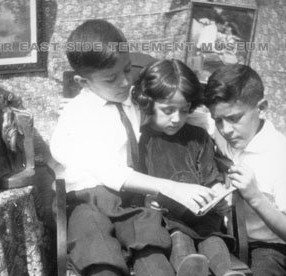
Three children from the Confino family, one of the families that lived at 97 Orchard Street, now the Tenement Museum.
So empathy is important and museums are good at eliciting empathy. I’ll put that in my next grant proposal – done! What more do I need to know?
There are some techniques that history educators recommend for fostering empathy. Some of these are better rooted in research than others. But it appears likely that empathy – like other museum outcomes – is something that we can do a better job of fostering if we know what works, and why.
5 tips for Fostering Empathy
Empathy requires hard work. People often imagine how others feel or felt based on their own personal experience or on stereotypes. If you are going to make empathy a goal of your programs or tours, make sure to provide time and support for this.
Provide context before asking people to imagine the lives or feelings of the historical figures visitors are studying. Make sure this context is relevant, and will help visitors answer or consider empathy-related prompts.
Explicitly ask visitors to imagine themselves in another’s position. The question “How might they have felt if…” may be more productive than “How would you feel if…”
If you are teaching about people who lived in the past, make sure not to compare the past and present in a way that suggests people suffered because they don’t have what we have now. No one in the 19th century felt like they were suffering because they did not have computers, television, or air conditioning, so it is not useful to suggest this to visitors.
If you are talking about people who are physically uncomfortable, consider making your visitors (mildly) physically uncomfortable. Research shows that when people are physically comfortable, it is harder to empathize with people in states of discomfort.
Empathy Resources
Here are some articles worth reading:
Converse, B.A., Lin, S., Keysar, B., and Epley, N. (2008) In the mood to get over yourself: Mood affects theory-of-mind use. Emotion, vol. 8 no. 5, 725-730.
Cunningham, D. L. (2009). An empirical framework for understanding how teachers conceptualize and cultivate historical empathy in students. Journal of Curriculum Studies, v. 41 n. 5, 679-709.
Epley, N. (2008). Solving the (Real) Other Minds Problem. Social and Personality Psychology Compass, v. 2 n. 3, pp 1455-1474.
Galinsky, A. D., Ku, G., & Wang, C. S. (2005). Perspective-Taking and Self-Other Overlap: Fostering Social Bonds and Facilitating Social Coordination. Group Processes & Intergroup Relations, v. 8 n. 2, 109-124.
Lee, P. & Ashby, R. (2001). Empathy, perspective taking, and rational understanding. In O.L. Davis Jr, Elizabeth Anne Yeager, and Stuart J. Foster (Eds.), Historical Empathy and Perspective Taking in the Social Studies (pp. 21-50). (New York: Rowan and Littlefield Publishers, Inc.
Riley, K. L. (2001). The Holocaust and historical empathy: The politics of understanding. In O.L. Davis Jr, Elizabeth Anne Yeager, and Stuart J. Foster (Eds.), Historical Empathy and Perspective Taking in the Social Studies (pp. 139-166). (New York: Rowan and Littlefield Publishers, Inc.
VanSledright, B. (2001). From empathic regard to self-understanding: Im/Positionality, empathy, and historical contextualization. In O.L. Davis Jr, Elizabeth Anne Yeager, and Stuart J. Foster (Eds.), Historical Empathy and Perspective Taking in the Social Studies (pp. 51-68). (New York: Rowan and Littlefield Publishers, Inc.














 Museum Questions
