Schools and Museums: Interview with Cindy Foley and Caitlin Lynch

The Columbus Museum of Art has spent the last seven years rethinking the museum’s value and the visitor experience. Much of this work is documented in the July 2014 issue of the Journal of Museum EducationRethinking value and visitor experience has led museum staff to reconsider school programs, including the field trip.

Cindy Foley is the Executive Assistant Director and Director of Learning and Experience at the Columbus Museum of Art. Caitlin Lynch is a teaching artist for school programs at the Columbus Museum of Art.

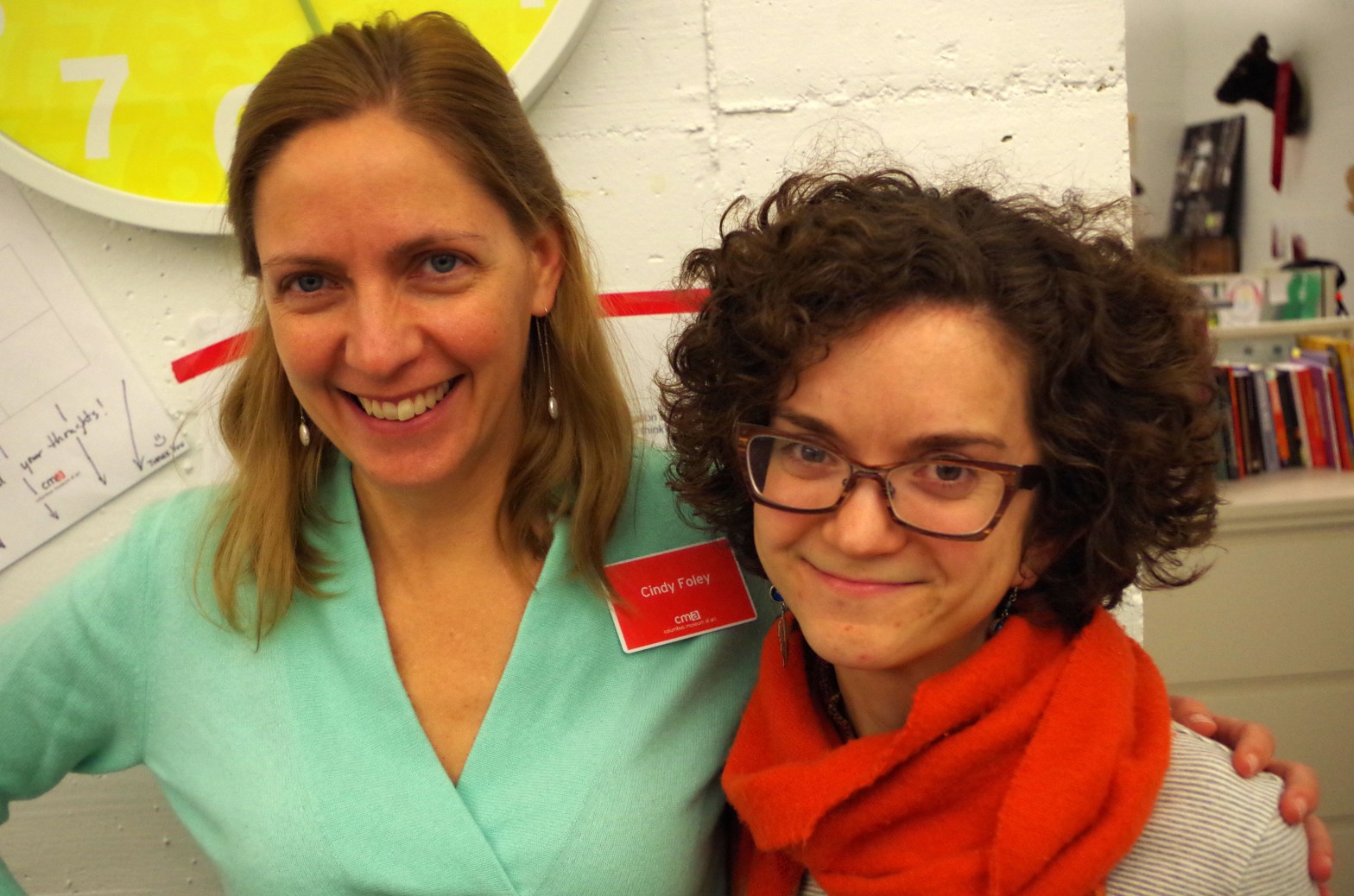
CMA - Cindy and Caitlin
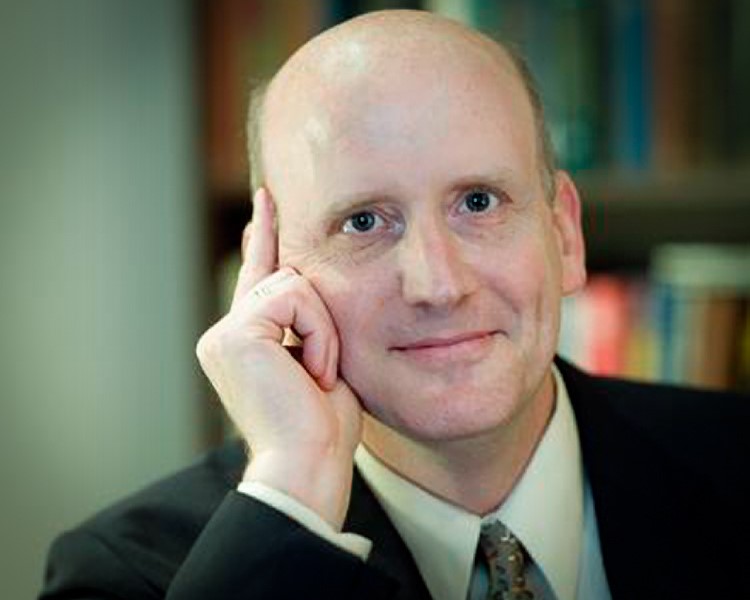
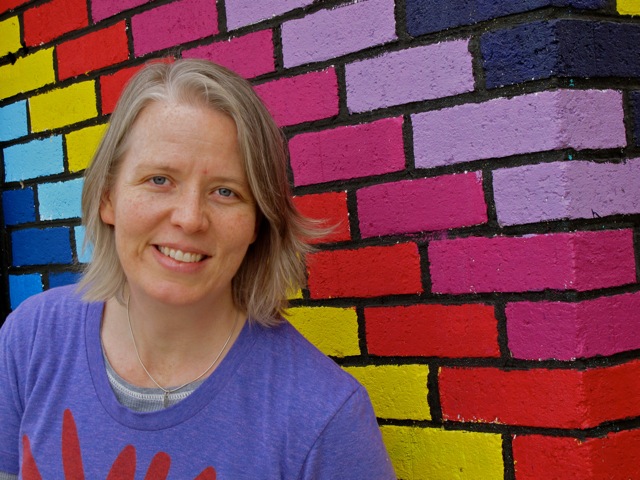
Cindy Foley (left) and Caitlin Lynch of the Columbus Museum of Art


When Caitlin first reached out to me, she told me that you are in the process of rethinking your school programs. Can you tell me more about this?

Cindy: About seven years ago we started to wonder: What value does the Columbus Art Museum (CMA) bring to our community? Working with Jessica Luke, we generated questions as guideposts to moving forward. One of those questions was, “Is the field trip the future of our relationship with schools and teachers?” We believed it was not — there had to be something more impactful.

To test this we decided to embark on two strategic initiatives that we would research: A redesign of an ongoing program and a new program. The new program, Project Pivot, started with a call from the Arts and College Preparatory Academy (ACPA). They said, “Have you ever wanted to do something totally experimental, and never had a school to work with? We’d like to be that school.” We were taken by their openness to risk and exploration. We used the invitation to imagine and design an ideal partnership with a school and teachers – one that was – a partnership rooted in trust, joint vision, and commitment to experimentation, that would function very differently from the transactional model of school field trips or school outreach.

Cat: That pilot year looked vastly different than the fifth year, which this report documents. The first year was rooted in the needs of the school.  The guiding theme was chosen by school and museum educators. We met with students every Wednesday for four months, mostly in the school itself. Students visited the museum a few times. The takeaway from that first year was the value of the relationships developed between CMA and ACPA educators.

Cindy: We were so excited by how the teaching artists demonstrated and encouraged new ways of teaching and partnering. When we reflected later, we realized that the creativity we had aimed for was evident, but primarily between CMA and ACPA educators. The next phase of the program was possible because we had established that relationship, but the program needed to shift so that students were doing the creative thinking.

Cat: By the final year, a shift had taken place in how we facilitated the experience to allow the students to lead their learning. The project was really just a loose scaffold for students to plug in their interests and develop ideas. We met with students almost every week at the Museum. A few times we met at the library to do research, or at other sites around town.

Cindy: Here’s how we describe Project Pivot now: Students, teachers, and teaching artists work together to develop ideas, conduct research, and translate their creative thinking to experiential interactive and socially driven art and activities.

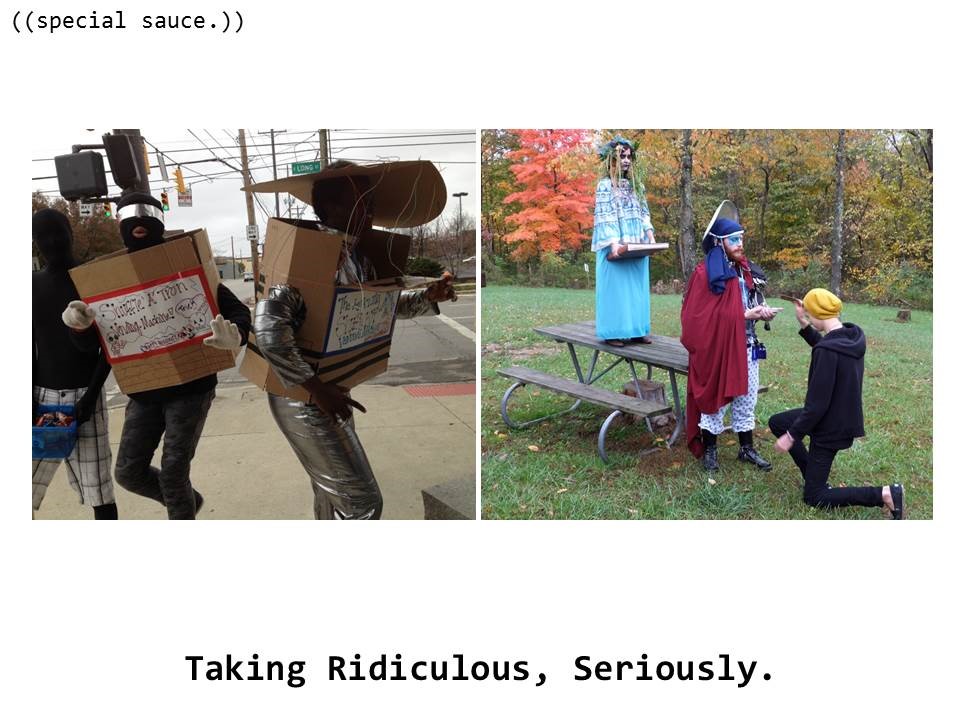
Cat: The final projects are events students put on, which are open to the community. They are always interactive and sometimes feature performances, games or music. One event involved a mermaid telling fortunes; another had snacks that you had to pass a challenge to get to.

Cindy: The whole purpose of the project was to get the kids to imagine: What are experiences we want to have?

Here are some of the key factors in the success of the Pivot Project:

  • The projects are co-created between educators at both institutions.
  • As students’ interests develop, that’s what leads the curriculum. So teachers don’t know from week to week what they will be dealing with.
  • We rooted the project in essential questions and inquiry. While I’m sure everything could be mapped to standards, that was not our intention and we did not allow that to interfere with the direction of our work.
  • Pivot projects are collaborative and project-based, not individual assignments.
  • We used the city as our campus. We used the library. And as students’ interests develop, they might visit a tattoo artist or a spiritualist. We sought out resources to support them in trans-disciplinary research.
  • Pivot was rooted in the notion that artists are voracious researchers. We held students to high standards around that.

In our research, we looked at outcomes around creativity, critical thinking and problem solving. Those outcomes proved difficult to capture and assess. Our evaluators, Jessica Luke and Jeanine Ancelet, were able to measure a number of skills and habits that fall within Positive Youth Development Frameworks like increased competence, connection, caring – outcomes related to personal and social development.

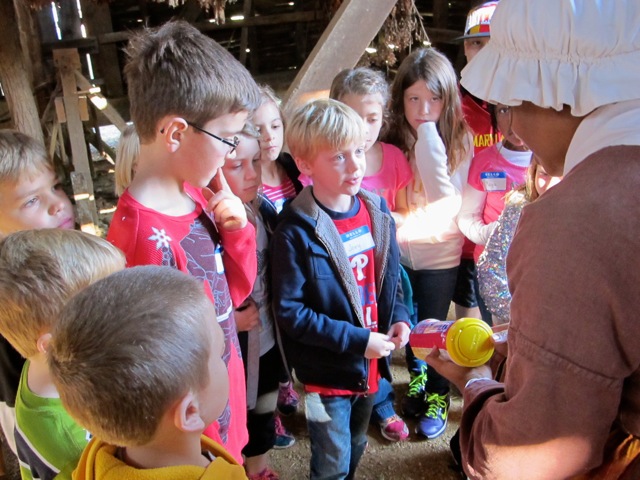
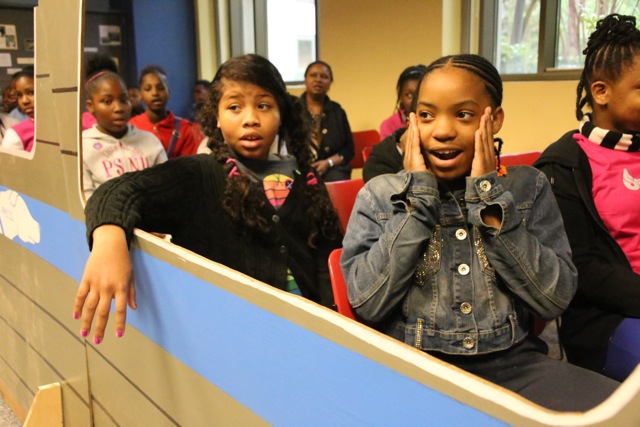
Students participating in Project Pivot at CMA

Before we discuss how Project Pivot is influencing your ideas about field trips, tell me about the second program – the one that you redesigned, which is helping you rethink your relationship with schools.

Cindy: A version of our Artful Reading Program has been around for 40 years. All 5000 fifth graders in Columbus City Schools (CCS) come to the museum as part of this project. Six or seven years ago, we determined that we had to make changes to address declining participation in the district as well as what we viewed as the essential need that we weren’t effectively addressing – impacting critical thinking skills.  Leadership from both the museum and CCS vowed to significantly change our Artful Reading Program field trip model and pair it with research to determine if our new outcomes and outputs could garner deeper impact. The changes we all committed to were:

  1. Monthly meetings between CMA and CCS educators. About four CCS art teachers serve as liaisons with the schools and lead professional development for the other 80 or 90 art teachers in the city. They work with us to design professional development around creative and critical thinking, rooted in themes like idea generation or developing comfort with ambiguity. The teachers also learn to use our thinking routines.
  2. We require that each class have a pre-visit led by CMA docents, during which they teach students and educators the thinking routines.
  3. We co-create a post-visit activity with our CCS liaisons. The project is facilitated in the schools by the art teachers. This proved to be challenging for them. The educators were more familiar and comfortable with step-by-step lessons with predictable products. We really pushed for project- or challenge-based activities rather than activities in which students create objects that look like “art.” For example, one project allowed students to work in groups to create their own board games.
  4. We decided we needed an annual Columbus City Schools Day for Families – a day to celebrate the relationship between the schools and the CMA. This day now averages 3000 visitors.

So the goal of this field trip program is to change teaching in the schools?

Cat: Yes. What we are interested in is changing how we are valued, and the culture around museum use and visits. You can’t change a culture without a relationship, and to have a relationship, you need a common language. And right now, the common language we have is field trips.

Cindy: We are six years into this redesigned program now, and educators see us as a lifeline. We offer them coaching, advocacy and empowerment. They don’t want to go back to the old field trip model, but we had to gently trick them into this model. The field trip is now just a tiny piece of the larger picture of impact.

So how are these programs impacting your school visit program?

Cat: After five years of evaluating the impact of Project Pivot, we are taking this year to really think about how it will influence our next projects. An important part of this process is taking time to have these conversations and to think.

Cindy: We are coming to terms with the idea that field trips will always be a portion of our work, but they are no longer our bread and butter.

So why do it? Why offer field trips?

Cindy: Because… at this point primarily because our community still asks for it. We actually don’t overtly advertise our tours, and we haven’t seen any significant drop in tour numbers. I think the bigger question is how much energy we put into the one-off field trips.

Cat: We always try to circle back on our larger mission of creativity. Our pre-school visits, Artful Adventures, used to be about playing in front of art. It’s still very much about play, but over the past couple of years we started to make the provocations more open-ended, and build in reflection. We ask kids: What did you see? What did you hear? What does this mean? We wanted to make them more aware of their own creative thinking.

Cindy: Dewey said, “We don’t learn from experience, we learn from reflecting on experience.” We are thinking about how to better embed reflection in field trips. We have done some experimenting. Last year we invited two schools to be what we call “museum schools.” We gave memberships to all of the students, so that they could come for as long as they wanted, as often as they wanted, and use the museum as they want to. One progressive suburban school came eight times, each time reflecting on how the museum impacted their learning and leaving evidence of their thinking behind in our classroom.

Cat: We want schools to see value the way that we see value. That’s why we do the work with the 5th grade teachers – to ensure that the experiences are part of a larger plan for student learning. We want them to think, “How the museum can be valuable beyond a break from teaching?” But until we have that common ground we don’t really have the canvas on which to experiment.

Cindy: I had this conversation with Ken Kay, the former Director of P21 and one of the architects of the idea of 21st century skills. He said that instead of catering to schools, we need to be modelling what is possible in learning and education, so we give schools models and hope. This is one of the philosophical shifts we make, away from producing lesson plans and field trips. It’s a difficult shift: Museums have always felt that we are a secondary educational tier, but informal learning environments are needed to lead and take an important seat at the top tier.

When we decided to zero in on creativity, it became our lens for impacting learning and experience in our spaces and our programs. When we announced this change, we were shocked by the number of school principals and superintendents that called asking us to advise or help them. They knew their cultures were suffering, because their staff were so wigged out by testing, and their teachers so focused on content. They didn’t have clear pathways for how to change that, and they wanted our help.

Field trips are problematic. But how do we mine them for something better? How do we allow them to advance our work in some way?


The Moth: A Student Perspective on Field Trips

The Museum Questions series on field trips includes interviews and guest posts from school teachers, museum educators, scholars, and others. However, until now we have been missing the voices of students.

The Moth podcast for November 25th included a short (five minute) story from a high school student, Truly Johnson, about making a friend during a trip to the Metropolitan Museum of Art. The Moth is a not-for-profit dedicated to the art of storytelling, and The Moth Radio Hour is a weekly program featuring some of these stories. You can listen to Truly Johnson’s story here on The Moth website, or below.

Schools and Museums: Interview with Karina Mangu-Ward

Karina Mangu-Ward is the Director of Activating Innovation at EmcArts where her work fosters a field-wide movement around the importance of innovation and adaptive change in the arts.

 Karina Mangu-Ward

In a recent blog post on ArtsFwd.org, you said, “We don’t need new models, we need a new mindset.” Can you share your thinking around this?

When I was invited to Barry’s DinnerVention and asked to respond to the topic “Broken Models: Picking Up the Pieces and Moving Forward,” I took a literal approach, and looked up the definition of a model. I found that a model is essentially a best practice that is predictable and replicable. I was sort of disturbed by that. Going into a conversation with leading thinkers in the arts, I felt it was fruitless to be thinking about best practices, because I have a strong belief that we are in an era where best practices are of limited use.

Why is that?

At EmcArts we talk a lot about complicated vs. complex problems. Complicated problems, like building a rocket, have a solution. That solution might take time and research, but they are knowable, solvable. Complex problems have a non-linear, non-rational relation between cause and effect. Only later can you go back and tell the story of how something unfolded.

We live in an era of complexity. This has to do with shifting technology and demographics, and our new expectations of the world. In an era in which the problems are complicated, best practice is great. But in an era governed by complexity you need a different approach, one that prizes questioning, experimentation, reflection, openness to conflict, diverse perspectives, and recognizing the system of complexity in which you are operating. We are moving out of an era of best practice into an era of emergent practice. To be open to emergence you need to be open to a different mindset.

A few people who responded to my blog post on this topic have argued that this mindset is in and of itself a new model. That’s fine. But it’s very different than a model that describes a replicable set of behaviors.  It’s more of a set of approaches that can be adapted.

How do you know whether a model – field trips, for example – needs to be tossed or rethought?

Ronald Heifetz, who developed the model of Adaptive Leadership, makes a distinction between when something needs a technical (or incremental) fix – more of, less of, better – versus an adaptive response, which involves cracking something open and rethinking assumptions, coming up with something discontinuous, throwing out a model in favor of new mindset.

Heifetz says (and I’m paraphrasing) that if you have thrown all the technical fixes you can at a problem and it’s still broken, that’s how you know you need a different kind of approach, that you might need to let go of an old model. But if you’ve thrown all the technical stuff at it and it hasn’t improved the program then you might need a new mindset.  For example, cultural organizations often say they want more diverse audiences, and try many fixes, but these fixes aren’t as successful as they’d hoped. That’s a signal that the model itself needs to be questioned. The problem is, of course, that if you spend all of your time on the technical fixes, you can exhaust your resources before you try a new approach.

One way to examine whether a model is broken is by unearthing core assumptions. For example, core assumptions might be, “the best place to learn about art and culture is at the museum,” or “spending a day to take a field trip is worth the time because of how much more amplified the learning experience is in the museum.” You’ve got to surface and name these assumptions, so that you can discuss them with all stakeholders — teachers, administrators, museum educators, parents, students.

Models evolved because at one point, they were the best solution. So it makes sense that people would want to hold on to the idea of a model. Teachers would want to hold onto field trips, because it’s what they’ve always done. It is much harder to call up the museum and say, I want something you’ve never done before that works better with the logistics and goals of my job as an educator.

Over time the conditions changed, and that thing that was working becomes no longer useful. But the assumption that field trips are the best exchange between teachers, students, and museums is so far beneath the surface that it no longer gets discussed. To wrench that assumption back to the surface to contest it is difficult. It requires looking at data, real trends in the environment.

What data or trends are useful to look at?

One kind of data would be existing numbers around participation. If you have evidence that participation is declining, that’s powerful evidence.

Another piece of data might be to look at every teacher who brought students for a field trip last year, and see how many come back. If teachers aren’t returning, why?

At EmcArts, our approach is to get everyone — students, parents, museum professionals, teachers — together, to explore, what it would mean to let go of the field trip? To live in an ambiguous space? Then, we design experiments around doing things differently, to see what stakeholders can learn.

Once a cultural institution decides to establish a “new mindset,” how does it go about doing this?

To me, a model is replicating a set of actions. A new mindset requires you to draw on a set of practices that position you to be nimble. It is about questioning, embracing ambiguity, experimentation, systems thinking, reflection.

The field trip model has been around for a long time. What would happen if we let that go? There would be a great deal of ambiguity about what lives in the space that that leaves. It takes a certain mindset to allow for this. Institutions that best live up to their values in the long run are those who are good at coming up with strategies that are radically divergent from or a radical renewal of what they have done before.

Schools and Museums: Interview with Jody Madell

Jody Madell teaches 9th grade at the Lyons Community School, a school serving 6th through 12th grade students in East Williamsburg Brooklyn. She is also the co-director of the school, and has been at Lyons since 2007. Before Lyons, Jody taught for seven years at the New York City Museum School.


Jody Madell nov 24

Why should schools visit museums?

Without field trips, many students at my school might not be exposed to the great cultural institutions of the city – lots of kids rarely leave their neighborhoods. We like to take kids to different places, so that they can see what’s out in the world.

In part our museum visits are academic; I would like students to learn specific things that I am teaching about. But also, we want them and their families to know that this is something that’s available to them in the city.

How do you use museums?

We take field trips every week, although they are not all to museums.

In 6th, 7th, and 8th grades we have units that culminate in museum-based presentations at the Brooklyn Museum. Teachers from each grade have a three-hour professional development with an educator at the Brooklyn Museum. The museum educator works with the teachers to plan the unit, including 1-3 visits that the museum educator will guide. During these guided tours the museum educator models giving a tour using objects, so that sixth graders can see how it’s done. We worked Rachel Ropeik at the Museum for years; she was recently promoted so now we are working with Adjoa Jones de Almeida.

We have been so happy with the professional development from the Brooklyn Museum – we really love that place. Each year they adjust to our needs. Last year, both 6th grade teachers were new to 6th grade; one was a brand new teacher. So Rachel showed them objects in the collection and modeled object-based learning. Another year, they might talk about what worked, what didn’t, what’s a skill you want to work on, what do you want to work on with the kids.

A few years ago, Rachel observed that the Lyons teachers were making the trip too much like school, using five-page worksheets with lots of questions. Rachel pushed teachers to rethink their worksheets. She wanted them to allow the kids to have conversations, even if it was going to be messier; to slow down, have discussions with other kids about the objects.

Lyons at Brooklyn Museum
Students from Lyons Community School at the Brooklyn Museum


Are all your museum trips to the Brooklyn Museum?

In the 9th grade we study world religions. We spend a lot of time on this – months. We visit places of worship, and also the Metropolitan Museum of Art. The Met has an impressive collection of art from world religions, so we go there throughout the project to study objects.

For their final project, we have the kids bring a parent to the Met and give them a tour. We want students to identify a theme, something to compare across religions. For example, how do different religions represent God? What are the powers of the Gods? They have to pick objects for their tour, and think about questions that the person they will be touring around might have. By that point the kid knows the museum well enough to show the parent around, and the parent gets to see the museum.

Why do you use museums for this final project? Why not have kids write an essay comparing religions?

It’s an engaging project. With religions, objects are so important. By interacting with the objects you get a sense of the religions that you wouldn’t get from reading or a power point. And the project offers an emotional experience that leaves students excited about religions other than their own.

A student from Lyons Community School at the Metropolitan Museum of Art

Do you ever book guided tours for your students at different museums?

Teachers at my school are very skeptical of going on a museum tour led by someone we don’t know. We pretty much never book tours led by museum staff.

Our kids can be difficult to manage, especially for a museum educator who does not know their academic needs or interests.  One museum wouldn’t let me book a self-guided visit, so the tour was led by a museum educator, and it was terrible. The educator couldn’t communicate well with the kids. She might have been fine with another group of kids, but there was no clear lesson, and the kids felt like the tour was purposeless. And one-off visits can be difficult even when they are taught by great museum educators because they don’t know exactly what the kids need.

Also, because of the way we use field trips at Lyons, they are very linked to the classes the kids are taking. So it’s not like we’ve been studying a subject for eight weeks, and then we go to the Met. Instead, teachers are really trying to use the museum to continue the instruction of content – it’s more woven-in than a one-off would really help with. For example, when we study Hinduism as part of world religions in the 9th grade, in the classroom I will explain attributes of a god, and we’ll compare different images of that god. Then we’ll go to the museum and do something similar. The kids know what they are supposed to be doing because of the previous lesson; they don’t need tons of direction. Museum educators can’t do this – they don’t know the kids or the classroom work.

If you taught at a different school – with a different population, and without weekly field trips – do you think you would book guided tours?

I don’t think so. My own kids get taken on field trips that involve walking around museum all day. At my daughter’s elementary school it seems like field trips are fun, but they are not vitally contributing to education of the kids.

Sometimes I wish that I could take my students to a random exhibition that sounds interesting. Two years ago the Brooklyn Museum had an exhibition of work by Mickalene Thomas – a really cool show, enormous pieces with sequins all over them. I felt like kids would really love it. Rachel led a professional development for teachers and introduced us to the show. She suggested that we should just take some seniors to the museum to see the show, but no one ever did it.

Art by Mickalene Thomas
Art by Mickalene Thomas at the Brooklyn Museum

What advice would you give teachers about planning field trips?

I would tell them not to consider taking kids to a museum on a guided tour if you can’t work with the museum educator in some way before going.

Assuming that the trips are integrated into the curriculum, I would advise teachers to pick just a couple of objects that are going to help the kids understand some aspect of the content that you can’t really teach as well in the classroom. The most common mistake that someone new to planning trips makes is to take students to see too many things.

Teachers need to go to the museum themselves to plan. When I plan trips I look at the museum website first to orient myself, but then I visit the museum to see the work in person and learn more about it. It is important to have that experience yourself with the object, figure out what will be exciting to kids, what will inspire them, what’s physically around the objects that could be brought into a discussion. If we have a planning day at school I’ll try to go and visit museums and plan. When I go to the museum I try to make a map of where objects are. I try to plan two student trips with one visit on my own. I don’t plan the whole lesson, but I pick the objects.

When I started working at the Museum School, my colleague Rebecca Krukoff just took me to museums and talked to me about art. We had experiences in museums together. That’s the model the Brooklyn Museum is following, as well – they want teachers to have experience in the galleries.

Putting the Learner First

This is the third guest post in the Schools and Museums series. It grew out of a comment that Brian posted on LinkedIn, in response to this series.

Brian Hogarth is Director of the Leadership in Museum Education program at Bank Street College in New York City. He has held Education Director positions at the Asian Art Museum in San Francisco, the Nelson-Atkins Museum of Art in Kansas City, and related managerial positions at the Indianapolis Museum of Art, the Glenbow in Calgary Alberta, and the Royal Ontario Museum in Toronto. Brian has spent many years training docents, developing educational resources (including many short video documentaries), public programs, as well as working on exhibition development and interpretation. He has a special interest and background in Asian art and culture.

My own comments are in italics at the end of the post.

 Brian subway at AMNH

What is the value of museums?

All of us involved with museums discovered, at some point in our lives, the immense pleasure and interest that comes from experiencing and working with things. But museums now encompass so much more, including the environment in which the experience with things takes place.

The experience of objects and things, and the environment in which they are housed, plus the ideas, dialogue and socializing that goes on in that environment, constitute what is valuable about museums. But that value is something constructed in the hearts and minds of every individual and the community, and is therefore organic and not fixed. We’ve all experienced that sensation of walking into a place that seems alive, versus another that seems to be somewhat past its prime.

We need to concentrate on the child or student experience of the museum first, not the agenda that we wish to impart. Museums are not entitled to be here by virtue of what they possess, but are continually revitalized through the active participation and support of individuals and communities.

One reason objects still have currency is because we are living in an increasingly virtual world. Museums can help retain our focus on what is real, tangible, lasting. I keep on my shelf a 1990 teaching guide from English Heritage called “Learning from Objects.” It is full of interesting bits of information to consider about objects. For example, when compared with photographs, it says that real objects offer details, exact coloring, sensations of smell, tactile elements, three-dimensionality, weight and mass, all experienced in close proximity, plus a sense that something is original, not a reproduction. Perhaps we are drawn to singular objects because we sense that there is only one of us, unique in the world?

Looking at objects, we can slow down, practice focusing, accumulate evidence through close observation, describe what we see or touch, develop a hypothesis by citing evidence. To put it simply, we can learn how to articulate what we are experiencing. We can be understood. We can practice listening to the experiences others are having. We can share information with others.

How can school tours reflect this value?

It’s almost a given creed of our profession that we must tie what we do to what the teacher has to teach in the classroom. We’re beginning to question that assumption. Museums too often conflate ‘education’ with busloads of school visits each year. So in order to attract those busloads, our educational mission has become tethered to what is happening in schools.

Both schools and museums are smitten with numbers, data, and results. The industrial model that Rebecca cited is absolutely correct, only it has shifted from creating factory workers to preparing students to be engineers and programmers.  But is education about job training, or should it be about increasing the opportunities for children to learn, discover, and engage with the world, to develop their own passions and interests?

Mizuko Ito’s group, Connected Learning, speaks eloquently about the need to stop chasing curricular goals, and to focus instead on the engagement of the learner, letting each student tap into the vast world of expertise that exists online and across communities of interest worldwide. This shifts the emphasis from orchestrating learning to facilitating the pursuit of individual investigations. What does that mean for museums?

What I hope is emerging is the idea that museums are not extensions of the classroom, but rather engender exactly the kind of learning that we believe students should engage in. Museums could play a significant role in pointing the way to this new kind of education, one that is not isolated to a classroom, or to curriculum. The recent AAM report Building the Future of Education explores how museums can position themselves in this larger ‘learning ecosystem’ model.

As John Dewey noted, we need to start with the students’ experience. What sort of world do they inhabit day by day? What can they take back to their world that is useful? How can the museum experience meet the world of the student, opening up related doors of exploration and discovery? What can the students do here to free up their imaginations, and to make connections beyond the boundaries of textbooks and curriculum? Dewey, by the way, conceived of schools having museums and libraries inside the school, not the other way around.

School buses in front of the American Museum of Natural History

How can we transition to this new model?

The museum needs to refer not only inward to its collections, but also outward to the world that the visitor inhabits, as if to say, ‘here is a place where you can explore and examine things closely, and this is how it connects back to the larger world’. I’m reminded of the Monterey Bay Aquarium, where the displays are constantly referring back to what is directly outside in the bay. So your museum experience extends back out into the community.

Museum educators need to think about how the whole museum experience should be learner-centric, rather than an orderly display of things based on academic disciplines. For example, galleries could be organized around interesting, compelling questions – the Burke Museum at the University of Washington in Seattle has an orientation gallery that presents the essential questions that make up any museum, the who, what, why and how of what we collect. You sense that the museum is not a finished exercise, but a work in progress.

Orientation gallery at the Burke Museum in Seattle

We need to encourage the students’ sense of agency. They can (and should) take an active part in the world and make something of it, not just find themselves endlessly consuming things. We need to position the museum as a malleable space, in which the arrangement of artifacts is only one of many possible compositions.  The architecture itself can speak to the changing ways we are positioning the museum in society—as repository, as authority, as shared civic space. How does this space make you feel? What is the museum emphasizing by displaying things this way? Only when some of these conceptual frameworks are addressed, can students begin to realize the possibilities that museums offer.

Rather than constructing what we think is a meaningful path through a set of exhibits, we should pose a problem that the children have to solve in the galleries. Children love a challenge, whether it takes the form of a game, task, or simple question. They can work in teams, to learn from each other and accommodate various learning styles. The museum can set the parameters for the activity, but the students need to be on center stage, not the docent or educator. To do this, each museum has to not only re-think programs but reinterpret its assets from the perspective of real world questions and issues. So the art museum tour focused on portraiture in early American art could be re-framed as an examination of self-image and beauty: How do we define who looks good today? What defines fashion? How do images of ourselves get shared and preserved? What makes a person look important, and how does setting support that?

We should be utilizing the full range of senses and other multimodal techniques for engaging students in the museum experience; focusing on ‘viewing’ and ‘discussing’ as core activities potentially diminishes the innate ability of many to make art as its own form of communication. We ought to have an activity at the heart of every program. I imagine school programs having children dress in the manner of the figures seen in historical paintings, or actors telling stories about what is going on in a work of art. Children often respond first with their bodies when encountering a new environment or phenomenon. I was reminded of that recently, when I noticed a child dancing freely in front of the large Matisse painting of dancers at MOMA, while adult visitors stood at a distance, their bodies in respectable poses of contemplation or discussion. Is it any surprise, then, that we find independent groups like Museum Hack tours providing opportunities for adults to strike poses around works of art?

child in front of Matisse Oct 14
A child dancing in front of a Matisse painting in the Museum of Modern Art.

Why is this important?

We need to have a broader vision in mind that gradually transforms the museum into a place where students and other visitors have a greater capacity to make their own meaning. This is not an easy task, and assumes that the education agenda—the ‘lens’ through which visitors see the museum experience unfolding—will need to be extended beyond considerations of programming. The traditional didactic, discipline-based information that museums present will no longer frame the experience. We have to slowly background the traditional ‘tour’, foregrounding the learner in all their guises. Reimagining school tours can help point the way, and perhaps help us to remake the experience for other visitors as well.


Brian’s post leaves me with two questions. He writes “We need to concentrate on the child or student experience of the museum first,” and suggests a series of strategies for putting this into practice. For me, this means in part having a clear idea of what benefit the child should be getting from the museum, and aligning the program with these outcomes (or goals – choose your own language). I have been leading workshops lately in which I walk people through articulating visitor outcomes, and for almost everyone, the idea of articulating visitor outcomes (not the benefit to the museum, but the benefit to the visitor) is challenging. How can we, as a field, get better at articulating how our programs benefit the visitor, and align programs accordingly?

Brian’s formulation also suggests a focus on the individual visitor. This has been raised in other posts, and poses a challenge for school programs. When an educator is working with 15 students he or she has never met before, how can the educator focus on ensuring that each individual student has the opportunity to follow his or her interests? Is this even possible?

Schools and Museums: Interview with Daniel Willingham

Daniel Willingham is a Professor of Psychology at the University of Virginia. Until about 2000, his research focused solely on the brain basis of learning and memory. Today, all of his research concerns the application of cognitive psychology to K-16 education. He writes the “Ask the Cognitive Scientist” column for American Educator magazine, and is the author of Why Don’t Students Like School?, When Can You Trust the Experts?, and Raising Kids Who Read (forthcoming).

Daniel Willingham


Why should schools visit museums?

There’s no doubt, as you have noted in previous posts, that the cost to teachers in time is high. It’s not just that they lose teaching time the day of the field trip. The amount of time they invest in making arrangements, organizing students, lining up chaperones – it’s an incredible nuisance for teachers. But there are things that can happen in a museum that can’t happen in a classroom.

There is a difference between seeing a great work of art, or a reconstructed skeleton of a dinosaur, and looking at a picture online or in a book or hearing teacher tell you about it. There’s something about being in the presence of physical objects that is really moving. Once you are an expert, a reproduction is notably not the same. When you’re a 4th grader you don’t have this expertise, but even so, being in the presence of a palpable object and being told it’s 400 years old is really motivating.

There is psychological research on the way people think about physical objects. In one study, people were asked to imagine a sweater, and then walked through various scenarios relating to the sweater’s previous existence.  When asked to imagine that this sweater had been worn by Hitler, people did not want to wear the sweater. Odd. It’s not like the shirt is now contaminated with the qualities of Hitler, but there’s some sense in which we feel like the shirt is contaminated. That’s what I’m talking about when I talk about the quality of being in the presence of physical objects, knowing what their histories are, that makes them more exciting than reading or hearing about them. [Note from Rebecca: On a related note, the Yale Daily News recently published the article, Contagion Helps to Explain Art Value.]

Herbert Simon once said about travel:

Anything that can be learned by a normal American adult on a trip to a foreign country (of less than one year’s duration) can be learned more quickly, cheaply, and easily by visiting the San Diego Public Library

Herbert Simon was one of the great thinkers of 20th century intellectual life – a towering figure in cognitive psychology, a Nobel Prize winner in economics, and the winner of similar recognition in computer science. In his autobiography he said that traveling was an incredibly inefficient way to gain knowledge.

As we have said, it takes a full day of school for kids to get an hour in the museum. So if the goal is information transmission – to maximize the knowledge kids are going to learn – museum visits are really inefficient. But museums are wonderful for school groups because you get something that goes far beyond information transmission – the possibility of enthusiasm and motivation.

The San Diego Public Library (although not the building with which Herbert Simon was familiar)

Museums often articulate value for school visits in terms of the school curriculum. How do you see this enthusiasm and motivation as relating to the curriculum?

Like so many decisions that teachers and administrators are facing, field trips are a balancing act. There are many schools that feel there is no space for anything except standardized testing.

The word “curriculum”… You can make museum visits part of the curriculum, and have broader goals than particular content knowledge. For example, helping kids understand what excites and motivates and interests them can be part of the curriculum.

So it’s really about how you are creating a curriculum that is going to meet standards and goals for a particular school. A lot of educators are worried that their goals for education are being overwhelmed by standards that are being set externally.

If we understand the purpose of a school field trip to a museum as to excite and motivate kids, what needs to be in place to make field trips successful?

That’s no small challenge for teacher, because he or she needs to follow up. If your goal is simply for children to think of museums as exciting places, then the teacher would not need to do anything.

For a field trip to motivate… If a child sees and gets excited about a work of art or a science demonstration, or discovers an interest in animals, the teacher will want to pursue that and figure out how to help the child continue to pursue that interest, and how that interest can be leveraged in other content areas.

Museum educators often create class lessons for before or after the visit. But in this model, the teacher’s role is to respond to the individual child – it’s a more personal response.

It is certainly worthwhile for teachers to lead a whole-class preparatory or follow-up lesson. It will further interest for some students, and it also communicates to the whole class that the museum visit is taken seriously – worthy of preparation and thoughtful post-visit follow-up.

But individual follow-up is equally important. And the right way to follow up depends on who the child is, their age and abilities, and what they are interested in. If the child is in 8th grade, and is a strong reader, and you’ve lit a flame on a topic through a museum visit, the teacher may not need to do anything more than offer a very carefully selected book to the child, related to his or her interest and the museum content. That won’t work for 2nd grader, or for a weaker reader, so it’s hard to generalize.

You spoke about the appeal of objects. Some museums – science centers, children’s museums – don’t have objects. What about them? And arguably, more traditional object-centered museums are displaying fewer objects to make room for computers and other interactive displays.

The point of museums is that there is stuff there you can’t do at home. Think about art museums. You can access those works of art from home, but they are faint imitations. They are not faint because they are imperfect reproductions, but because you know it’s not the real thing. In science museums there are cool activities that you can’t do at home, which motivate and excite visitors.

As for web simulations… it seems to me what you are looking at an artificial copy. At science centers you can engage in activities that are much better than those you have access to at home. This is not true with computer interactive activities. Sure, you’re not going to get the same science content at home, but, depending on the age of the kids, they don’t care about that. They are not excited because the content of a computer game is science, they are excited because the activity or object is interesting and cool.

Talking as a parent – I take my seven- and nine-year-olds to science centers. They run up and start fiddling with touch screens because they are screens, not because they are interested in nutrition or whatever the content is. They like interactives because they like games, but I am not persuaded that this is the kind of thing that makes a museum special.

Child in the exhibition "Henri Matisse: The Cut-Outs" at the Tate Modern, drawing on a touch screen.
Child in the exhibition “Henri Matisse: The Cut-Outs” at the Tate Modern, drawing on a touch screen.


Is there anything else you want to add about school visits to museums?

Any of the things that we are talking about can be implemented well or poorly. To be effective they need to be implemented well.


Student Learning in Museums: What Do We Know?

The Museum Questions exploration of school visits to museums has been sorely lacking the context of a literature review, as noted by Christine Castle of Museum Education Monitor. Happily, Dr. Lynda Kelly told me about a report she wrote in 2011, which is excerpted below. The report was commissioned by The Sovereign Hill Museums Association in Australia. Lynda is Head of Learning the Australian National Maritime Museum, and prior to this worked in digital and audience research at the Australian Museum, Sydney. She has written and consulted widely in this field in Australia and for museums internationally.

 The full report, with a full bibliography included, can be found here. Thanks to Lynda for allowing me to share this much-shortened version.

Lynda Kelly

STUDENT LEARNING IN MUSEUMS

It has long been recognised that museums are educational institutions and that their school audiences are critical in both sustaining visitation and, through offering a positive and inspiring experience, can influence lifelong museum visiting habits (Falk and Dierking, 1997). This report outlines the evidence for student learning in museums under the frame of the contextual model of museum learning (Falk and Dierking, 1992, 2000), coupled with review of published studies primarily drawn from the work of DeWitt and Storksdieck (2008) and Groundwater-Smith and Kelly (2003-2011). Given the parameters of this review, the focus is on the physical museum space, coupled with the role of the teacher and museum staff. For more information about the impacts of the online and mobile spaces on educational activities see the list of resources at the end of this report.

The Personal Context and Student Learning

Field trips offer deep cognitive learning beyond facts and concepts to include process skills and draw on other places of learning such as museums. Learning on a field trip is a valuable supplement and addition to classroom instruction and a way to prepare students for future learning (DeWitt and Storksdieck, 2008).

Students are more likely to remember social and personally relevant aspects of field trips, yet also dislike and keep less favorable memories of these trips that seem overly structured and leave little room for their personal visit agenda (DeWitt and Storksdieck, 2008).

Based on the elaborateness of children’s descriptions it was concluded that high personal involvement, links with the curriculum and multiple visits to the same institution embraced long-term learning impact (DeWitt and Storksdieck, 2008; Wolins et al, 1992).

Affective outcomes, such as increased motivation or interest, sparking curiosity or improved attitudes towards a topic, may be more reasonable given the short-term nature of field trips (DeWitt and Storksdieck, 2008).

Visits to science centres can positively impact attitudes towards science for students who are already interested in and engaged with science (Jarvis and Pell, 2005).

Students felt that in order to be substantively engaged in cognitive learning they needed to: know how things worked; be able to think through ideas; have opportunities to ask questions; be able to handle, manipulate and closely examine artefacts and exhibits; be able to seek out information from several sources in language that is appropriate to their age and stage of development; and be stimulated through all their senses (Kelly and Groundwater-Smith, 2009).

When looking at emotional learning, students expressed a desire to be emotionally connected, while at the same time not emotionally confronted. The students in this study indicated that they welcomed opportunities to be fully engaged with provocative questions, fascinating and puzzling exhibits and clear, well-structured and accessible information (Kelly and Groundwater-Smith, 2009).

In the majority of cases the aspect of the field trip that was recalled subsequently was the content and/or subject matter presented during the field trip (Falk and Dierking, 1997).

Even after years had elapsed, nearly 100% of the individuals interviewed could relate at least one thing they learned during an early-elementary-school field trip, and most could relate three or more things (Falk and Dierking, 1997). Students retained information about sharks from an exhibition in a marine park in Italy up to three months after a visit (Miglietta et al, 2008). Sixteen months after visiting a science centre in Israel students recalled facts and details of their visit such as exhibitions, activities and guides’ input (Bamberger and Tal, 2008).

The Social Context and Student Learning

Students are more likely to remember social aspects of their visit. The social interaction occurring on a field trip is an important part of the experience and supporting students’ in sharing their experiences enhances learning (DeWitt and Storksdieck, 2008; Kelly and Groundwater-Smith, 2009).

Students like learning with their friends. While they recognised that a visit to the Museum was primarily designed by their teachers to assist in their learning, they also wanted it to be a satisfying social occasion when they could learn with and from their peers (Kelly and Groundwater-Smith, 2009).

Visits are highly social experiences for students. A study of sixth graders stated that they had more control over their own learning when interacting with their peers rather than adults who tended towards control (Birney, 1988).

A study of student talk found that school visits to museums assisted in building relationships between students through cooperative interactions and discourse (DeWitt and Hohenstein, 2010).

The Physical Context and Student Learning

Students wanted to feel safe and comfortable and to move around readily unimpeded by a number of prohibitive signs. They also wanted areas to be well-lit and inviting and find physical spaces scaled to their ages and needs (Kelly and Groundwater-Smith, 2009).

The novelty of the setting may distract from students’ conceptual learning if novelty is strong (DeWitt and Storksdieck, 2008).

The degree of structure of a field trip is the subject of much disagreement in the literature – how much should the experience be mediated and teacher/educator-led, and how much should be student-led, based on free-choice learning? DeWitt and Storksdieck (2008) identified several issues around structured visits:

  • To maximise cognitive and affective outcomes field trips need to provide moderate amount of structure while still allowing for free exploration.
  • Well-designed worksheets can be effective in promoting discovery-based enquiry if exposing students to a wide range of relevant information.
  • Well-designed worksheets may tap into already available interpretive material thus extending the richness of information.
  • The use of pre and post visit activities can enhance the cognitive and affective learning outcomes.
  • In a museum setting structure experiences, such as guided tours, specific detailed tasks can increase cognitive learning but may dampen enthusiasm.
  • Structure, including worksheets, may limit the ability for students to explore and engage with the unique aspects of the museum setting.

Based on a rage of studies, McManus (1985) recommended that worksheets should be designed to encourage observation, allow time for observation, focus on objects not labels, be unambiguous about where to find information and encourage talk.

THE ROLE OF THE TEACHER

Teachers value museums as sources of rich learning and social experiences (DeWitt and Storksdieck, 2008; Falk and Dierking, 1997; Groundwater-Smith et al, 2009). Teachers’ agendas for the trip will influence their subsequent classroom practice (DeWitt and Storksdieck, 2008).

Research reveals that teachers have complex and comprehensive reasons for field trips, valuing these as learning and educational opportunities and as chances for social and affective learning (DeWitt and Storksdieck, 2008).

Teacher motivations for school trips include connecting with classroom curricula, providing a general learning experience, enhancing student motivation, exposure to new experiences, change in setting or routine and student enjoyment (Kisiel, 2005).

Students with teachers who were both enthusiastic about science and engaged in extensive follow-up activities expressed more positive attitudes towards science after their museum visit than students in other classes (Jarvis and Pell, 2005).

DeWitt and Storksdieck (2008) report that field trips are enhanced when the teacher:

  • Becomes familiar with the setting before the trip.
  • Orients students to the setting and agenda and clarifies learning goals.
  • Plans pre-visit activities aligned with curriculum goals.
  • Plans and conducts post-visit activities to reinforce the trip and enables students to reflect on their experiences.

THE ROLE OF THE MUSEUM AND MUSEUM EDUCATORS

Limited research has been undertaken into the role of museum educators in school visits and researchers are only beginning to examine the role of the museum in the student visit (Griffin, 2004). However, of the literature consulted it is clear that collaboration between teachers and museum educators and other staff in program development brings positive results in terms of enhanced outcomes of student visits and in strengthening relationships.

DeWitt and Storksdieck (2008) report that teachers’ goals may not be the same as those of museum educators which, in turn, can cause confusion and impediments to learning. Teachers also may have multiple goals for the visit, whereas museums may be too focussed on the logistical aspects of the visit, such as wayfinding, parental consent, safety forms, transportation, financial transactions and orientation (DeWitt and Storksdieck, 2008).

When programs are developed in alignment with school curricular and teacher goals rather than the museum’s objectives, integration of the visit into classroom practice is more likely (Xanthoudaki, 1998).

Successful museum-school collaborations are often characterised by the museum reaching out to teachers and developing material in conjunction with them (DeWitt and Storksdieck, 2008; Groundwater-Smith et al, 2009).

Australian Museum staff who had participated in the 2009 Teachers’ College found this had a positive impact upon all participants, and that teachers had a great deal to offer in the way of advice. Staff felt that they had benefitted in terms of getting close to their audience; learning about how the Museum could better engage teachers and students; networking and connections made to enable further discussion and consultation to take place; and stimulating new ideas for programs (Kelly and Fitzgerald, 2011).

Visit this page for a full copy of this report.


Schools and Museums: Interview with Andrea Jones

I think it’s really important to frame programs around a question that gives it a compelling reason to exist. I don’t think we should learn anything “just because.” So when I start designing, I read everything I can get my hands on about a particular topic, and then ask, what is this really about? What is here that is so interesting, and so unanswerable?

Andrea Jones is the Director of Programs and Visitor Engagement at the Accokeek Foundation in Accokeek, Maryland. Before working at Accokeek, Andrea was Education Specialist at the Atlanta History Center.

Andrea

Why should museums offer school tours?

I worked as a teacher in two different public school systems before moving to museums. Although there are a lot of teachers doing innovative things, the basic structure of public education does not engage students in the things that matter – museums are better set up for that. Museums can disregard testing and assessment, and focus on inspiring students, igniting their interest, and exploring bigger questions about the human experience. Students should be hungry for more when the program ends. They should be filled with questions that they want to go answer on their own.

Museum tours go wrong when they try to be like schools. I respect the teachers who go into museum tours with an assignment for their students. It shows an attention to detail – they are really trying to get kids to pay attention. But if the museum has designed a dynamic program, you don’t need an assignment to keep kids’ attention. I encourage museums to throw out the old guided tour. It’s didactic, it’s often boring, and we know it doesn’t work. I don’t think we should be “covering” content like the schools do. It’s not our job to teach the entire Civil War. Museums are a place to get the gears turning.

How do you “ignite interest”?

Part of my formula is to create a narrative storyline and to involve kids in role play that requires decision-making. We just launched a new tour at Accokeek which poses the essential question “Which modern inventions are worth their cost to the environment?” Here is the set up: Imagine that a group of humanitarian time travelers went back to 18th century Maryland and placed modern objects around a colonial farm to help the family that lives there. The humanitarians left a flashlight, pesticides, toilet paper, a disposable lighter – things that they thought might help this family. Students on the tour are told that they are Eco-Explorers, and their mission is to go back in time, find these objects, and decide whether to confiscate them, bringing them back to the future before they are discovered by the colonial family. And students are asked to make these decisions by weighing the objects’ environmental impact against their relative benefit to the family.

Some things may be worth the environmental cost. This tour was inspired by the conversations I heard at Accokeek. Some visitors would say, “See how awful it was back then, and think about all the modern conveniences you have now.” But the conveniences have an environmental price. We are all dependent on fossil-fueled cars, electric light . . . even toilet paper. The point is that there are certain moments in history – certain forks in the road – where we adopted these things. What if we had it to do over again? Would we? The question is important because these forks in the road are happening today.

When we go to the grocery store and make decisions about what to buy, most of us take into consideration some aspect of the environmental cost. How much you do that depends on the person. Some people say recycled toilet paper is really pushing it. We make decisions every time we purchase a product or decide not to purchase it, or throw something away.

Our aim is to  help kids build the skills they will need to make these decisions, while teaching them history and environmental science. We don’t claim that there are right answers:if a group of students decides to leave the disposable lighter in the past, if they think the benefits outweigh the environmental impact, then we leave it.

Eco Explorers 1
Students on an Eco-Explorer tour at Accokeek attempt to talk a historic character out of using the pesticide that she has just discovered in the tobacco barn.

You mentioned that this tour is framed around an “essential question.” Good essential questions are incredibly difficult to craft. Tell me more about how and why you use essential questions for school tours.

I didn’t really like history – my content area – until I was in my late twenties. History in school was about regurgitation of names, dates, and facts. I realized later that history was boring me because it wasn’t about something. So I think it’s really important to frame programs around a question that gives it a compelling reason to exist. I don’t think we should learn anything “just because.” So when I start designing, I read everything I can get my hands on about a particular topic, and then ask, what is this really about? What is here that is so interesting, and so unanswerable? I test out questions with people in the office and with friends. If people want to talk and argue, then I know it’s a good question.

I once heard a speaker who said that there is really only one essential question, which every other one fits in, and that is “who am I?” These questions help us figure out “how do I feel about this?” My question about modern inventions and environmental cost – that’s about each of us trying to figure out what WE are willing to do.

Would you say that the goal of a museum visit is self-discovery?

I never really thought about it like that. It’s a huge component. I am always trying to figure out, “Who am I?” There is not a definite answer – it changes every day. The more you learn about the world, the more this knowledge helps you to figure out who you want to be in the world.

Your tours are very theatrical. Can you talk about the design process?

I think about four different ingredients. Experiences need to include multiple perspectives and an emotional connection, and be participatory and thought provoking. Theater is a vehicle that allows experiences to involve all of these.

I consider the age group of the audience, the spaces I have to work in, and what’s going to be compelling. For example, when designing a “Fight for Your Rights” tour about Civil Rights, I wanted to focus on school segregation because it’s about school-aged people, and what it took to overcome segregation. But I couldn’t figure out how to make that something that all the students could participate in, something more dynamic than just splitting kids into two different rooms..

So I migrated to the story of the Freedom Riders, because it’s about people on a bus, the adventures that you have on the way, feeling danger on the bus together. We (the Atlanta History Center) could make a bus façade out of wood, we could use regular chairs from our classroom, we could use a power point projection to show what you would see outside the bus window, and speakers for sound effects like angry people and explosions outside the bus. We could create a high impact experience that would elicit emotion.

The essential question was: Do you have what it takes to be a freedom fighter? This was inspired by watching Eyes on the Prize with my partner. As we watched footage of people being attacked we were asking ourselves, would we – both of us are white – have stood up for black people in that era? We had a really long conversation. We wondered if maybe it’s different for us than for people who don’t have the privilege we have. What about people who are working really hard, unable to take a break to go on a protest? We started talking about class issues. Thinking about how the answer may be different for different people. So that’s why I created different roles for the students to play in the simulation. Theater is a powerful tool for altering perspective.

Kids as Freedom Riders
Kids as Freedom Riders at the Atlanta History Center

When we first spoke, you were advocating for scripted tours. Can you talk about what the scripts are like, and what’s open for the students and educators?

Every time there is an opportunity to interact things can go in unpredictable ways. We have a sit-in simulation in the Fight For Your Rights tour I just described. In the simulation a restaurant owner, Lester Maddox, is trying to get protesters out of his restaurant. He is yelling at them, telling them why they shouldn’t be there. Testing their will to stay. Different things happen every tour. Once a group of students decided to start chanting about the 14th amendment. In that case the interpreter playing Lester Maddox can’t use the script.

The script we give to the interpreters is in pieces – paragraphs, lines that an interpreter can insert depending on what kids are doing. But the interpreter has to be the character, and do what the character would do. So they definitely have to think on their feet.

Here is another example – at the Atlanta History Center we had a Cherokee tour that involved an interpreter playing a Cherokee grandmother standing by her grandbaby’s grave. The Cherokees – the kids – are marching along the Trail of Tears when they encounter this grandmother who can’t leave, because the Cherokee mourning custom is to stand by the body for seven days. The kids have to decide what to do. One group suggested that she dig up the baby and take it with them. It sounds crass, but this is perfectly logical to a second grader. So the actor had to think about how she would respond to that. Another time a kid said, “If we convert you to Christianity you’ll have different rules.” The kids gathered around and said a Christian prayer. That’s them – the students – being in role. The interpreter has to respond as his or her character. People think that scripting means the program becomes robotic. But on the contrary, this type of scripting results in a different experience every time.

Kids as eco explorers
Kids with Interpreter playing a Cherokee grandmother at the Atlanta History Center

You said earlier that one of your four tour components is that it is participatory. That is a very popular idea right now. Can you talk more about what “participatory” means to you?

Think about a kid at science center. The educator asks for a volunteer, and a kid comes up and holds something, or maybe touches something so his hair stands up on end. The kid just participated, but they haven’t learned anything from their participation, or grappled with anything. They were just a prop. I want people to feel something from participation, more than just embarrassment.

Schools and Museums: Interview with Paula Gangopadhyay

Paula Gangopadhyay is the Chief Learning Officer at The Henry Ford, which is a multi-site destination located in Dearborn, Michigan. It consists of the Henry Ford museum, Greenfield Village, Benson Ford Research Center, Ford Rouge factory Tour, IMAX and a public charter school, The Henry Ford Academy. Prior to joining The Henry Ford, Paula’s leadership roles included Executive Director of the Plymouth Community Arts Council and Curator of Education, Public Programs, Visitor Services and Volunteers at the Public Museum of Grand Rapids. Paula has also worked closely with schools as Executive Director of the Commission for Lansing Schools Success.

It is worth noting that Paula has significant institutional support for the work she is doing at The Henry Ford. She notes that, “The Henry Ford was initially conceptualized as Edison Institute, a school where Henry Ford wanted students to ‘learn by doing’, and only later opened as a museum, so education is in the DNA of the institution. When I was hired in 2008, the institution felt that we had a bigger role to play in education, but they didn’t know at that stage what that role would be. I was humbled to be given this responsibility to envision changing the paradigm for education, not just for The Henry Ford, but for the American education system.”

IMG_3405

In the Center for the Future of Museums’ “Building the Future of Education: Museums and the Learning Ecosystem” you highlight The Henry Ford’s new educational website, Oninnovation.com, and the way you are using this website with teachers. What is the relationship between the site and school visits?

As we all know the K-12 curriculum is a mile long and an inch deep. There are so many standards in each subject area that teachers are rushing through each topic, but not really able to give kids the opportunity to learn or analyze in depth.

Most museums align K-12 programs with existing state and national education standards. Very few museums take an advocacy role. At The Henry Ford we are taking an advocacy role – we are advocating for changing the curriculum. How can teachers change how they engage students? How can teachers offer deep-dive content exploration opportunities to students? How can they make room for creativity and innovation? And how can we at The Henry Ford support this work?

We get over 200,000 school visitors each year. Teachers have traditionally brought students to our venues and used resources we provided, or designed their own scavenger hunts. We said, “Let’s create some innovative and content-rich pre-visit digital modules that the teachers can use to set the context for the field trip.” This led to the establishment of a multi-pronged digital platform housing classroom resources that can be tapped by any teacher. For teachers bringing students to The Henry Ford, it can really deepen the students’ experience and make the field trip a true learning trip. We also created some post-visit learning experiences, where kids could synthesize what they saw, digitally play around and express their understanding with some of the artifacts that they might have seen while on a field trip.

Often museums create resources, and place them on their websites, and teachers still don’t know about them. How do you tell teachers about these resources?

That is very true. We have a long way to go still as most teachers – even those who bring their students on field trips to The Henry Ford – have no idea about all these new digital resources we have created for them. It’s a constant educational process.

Our Call Center makes teachers aware of related curricula when teachers book a trip. We hold annual educator open houses. We had more than 800 teachers and guests come to open houses this year. They become our ambassadors and tell other teachers.

We started sending out about 75,000 hard copies of the ‘Educator Guide’ that lists all our onsite and online programs, the educational topics, and where teachers can go on the website to find the curriculum connections, as that is still the most critical element to justify a field trip. All our online resources are currently offered as free downloads, for teachers to use as they want.

We have since introduced e-newsletters. We have over 22,000 e-subscribers, and every month we highlight engaging ways teachers can use our resources before and after visits. We also have partnerships with PBS and other national distribution channels that list our resources and reach large numbers of teachers.

Educator Open House 2
Teachers at an Open House at The Henry Ford


How many classrooms are using the OnInnovation website? How do you know that teachers are using it in conjunction with a visit to The Henry Ford?

We developed digital curricula supporting various topics that we have expertise on, such as Transportation in America, America’s Industrial Revolution, American Democracy and Civil Rights, and more. Then we presented them to teachers, to see what they would use. We found that because innovation is such a hot topic in the education arena, and because The Henry Ford has unduplicated assets on innovation, our Innovation 101 curricula became very popular.

Once we learned that, we tested the Innovation 101 curriculum by training 40 teachers to use it with 1000 students nationwide. They gave us positive feedback, saying that it was a very effective tool in engaging students and teaching innovation, STEM and 21st Century skills. (Evaluation results from this pilot program can be found here.)

We are now scaling up that effort nationally to reach 5000 teachers over five years through the Innovation Learning Accelerator. We plan to individually reach out to all the teachers (nearly 5000-6000) who bring their classes on field trips to The Henry Ford every year, and explicitly invite them to join the Innovation Learning Accelerator initiative.

Are you offering all 5000 teachers professional development?

Yes. We are offering on-site and on-line professional development. The on-site professional development is a 6 hour workshop.

We teach teachers how to teach innovation to the students. In the process we share insights on how they can unlearn traditional ways of teaching – how, instead of being a “sage on a stage” they can be facilitators of learning, encouraging students to learn from failures and think in new ways. Teachers leave the workshop with an instructional kit; they are asked to take the kit and implement the curriculum during the school year. They don’t have to implement it exactly how we have taught them – we empower them to infuse their own creative ideas. They love being given that flexibility. Once they implement it, we ask them to fill out an online survey about how the implementation went. That way we are constantly improving our offerings and learning what works.

The online workshop is two-and-a-half or three hours, through video conferencing and conference calls. We have staff who are constantly following up with these teachers.

We are in the first year of this five year plan. We are steadily inching close to training 250 teachers and may exceed the first year target goal of 500 teachers, as there’s a lot of interest.

It sounds to me like you have an overt agenda – teaching content around innovation – but also a more important covert agenda, to change the way teachers teach.

Yes. That’s where the advocacy comes in. We are not only sharing our content, but we are teaching them a new methodology of teaching as this generation of students can be engaged very effectively if we adjust our ways of teaching them. Our innovator stories guide us in believing that allowing creativity in education is essential.

We are also helping teachers become innovative leaders. Many times we hear the educational community complaining about not having enough resources, such as funding. We teach teachers how to be resourceful, a key trait of innovators.  We teach them that by being innovative and resourceful, they can still do a lot, against all odds.

I want to step back to a very basic question. Why should museums offer school tours?

True learning is not just about acquiring new knowledge but about processing knowledge and then exhibiting it in real-world situations. Making relevant connections is essential for absorption and retention of knowledge – this has been proven over many years by brain research I regularly attend Learning and the Brain conferences; Dr Judy Willis talks about how students, focus and memory can be enhanced with practical engagement strategies. Field trips offer a layered learning experience that can help a child think critically which automatically supports the retention of information. Field trips help people develop into divergent thinkers.

The other thing that research has proven again and again is that there are many kinds of learners, and there should not be a one-size-fits-all way of teaching. Field trips are multi-dimensional learning experiences, which make learning by osmosis possible. Especially for kids who are creative learners, who don’t learn the rote way, the field trip might be the only way to learn.

Because we have assets that no other institution has about American innovation, and the United States needs more innovators and STEM practitioners, we feel that we have a responsibility to help develop the next cadre of innovators. We want to walk the walk on our recently adopted vision statement which is, The Henry Ford will be a nationally recognized destination and force for fueling the spirit of innovation and inspiring a ‘can-do’ culture.  If Edison, Ford, Wozniak, Gates and others could do it, YOU can do it, too.

What if teachers could teach these critical thinking and innovation skills without museums? What if your professional development were so successful that teachers could do this in the classroom, on their own? Would there still be any reason for schools to visit museums?

Absolutely, there will always be a reason for schools to visit museums because what we offer is not just methodology, it is content – content that is not available in books. Museum visits are also about experiential holistic learning experiences.

I see our role as catalysts that bring about positive change with how we teach and what we teach. Teachers are already asking me for more innovation teaching units. The content that we have can be constantly deployed by teachers. Museums, whether we are small, medium, or large, have unique content, collections, and sometimes local stories. We are the providers of ‘relevant content’ that schools need. I don’t think we can ever become obsolete. In fact, I see the opposite happening. I envision newer, tighter ‘co-creation’ partnerships developing between teachers and museums to benefit today’s learners. We haven’t even scratched the surface.

What would school tours look like in an ideal world?

In the ideal world, students would have enough contextual information given to them in the classroom so that when they come to the museum they are curators themselves. They would be recognizing artifacts, making connections, discussing diverse viewpoints among themselves, asking pertinent questions of museum presenters and then interpreting the artifacts and exhibitions. Students would be divergent thinkers and knowledge creators themselves. In the ideal scenario we, the museum staff, are facilitators for the teachers, the teachers are facilitators for the students, and the students are the real knowledge creators and presenters. It’s all about empowered education.

ROUNDHOUSEcontrast_6224
Students visiting The Henry Ford


What kinds of knowledge are they creating? After all, you don’t want them creating or inventing history.

They would be juxtaposing historical knowledge – or content from, say, a science museum – and juxtaposing it with relevant examples from their life, or what they know from social media and their own explorations. There is no way one teacher or one museum can offer all the information these kids have access to today. The knowledge or interpretations they might create may be something we can’t anticipate and should not try to manage. For example, students may want to compare Edison with Steve Jobs, offering their own interpretations of common traits and phenomena.

So in your ideal scenario teachers are the facilitators, not tour guides hired by the museum?

Yes. Learning is best when it’s self-exploratory. The Henry Ford is one of the few museums that doesn’t offer the traditional docent-led tours at its venues, but we have strong history and education principles that guide every nugget of experience the visitor will have. We have very well-trained presenters at key exhibitions and buildings, who go through rigorous content and skills training for effective visitor engagement. We also offer many layers of added-value experiences such as dramatic presentations and arts and crafts demonstrations. So if a teacher is well informed about what we have, she can easily facilitate a stellar educational experience for the students.

But there is something which breaks my heart: teachers often have to rely heavily on chaperones, and many times we see the chaperones on phones or texting. As a result the experiences that the different student groups are getting may be totally varied in quality.

Ideally the teacher would have an orientation meeting or briefing or phone call with the chaperones. They would lay out the expectations for the learning goals, lay more responsibility on the chaperones. The chaperones’ role can be make or break for a kid. Museums might offer wonderful dramatic presentations and opportunities, and if chaperone is not managing time well, she may just be rushing them through a compromised learning experience.

It sounds like the pre-visit lesson is essential?

Yes. It comes back to what I said earlier about school learning being a mile long, inch deep. That’s where the paradigm needs to change. We need to make the knowledge deeper, more contextual. This can only happen if you scaffold the learning experience between the pre-visit, visit, and post-visit. The post-visit is equally important: it’s the opportunity for these knowledge creators to analyze and synthesize, and give their own perspective on a given issue.

One of the frameworks that I have used in my 20-year career is the 4 As of Learning – Acquisition, Association, Application and Assimilation. We as classroom and museum educators do a good job with the first three As. But where we fall through is with assimilation, because we do not really allow time for synthesis. That’s an opportune window in education for all of us to bring some positive change.

Schools and Museums: Interview with Jay Rounds

Jay Rounds is the recently retired founding director of the Graduate Program in Museum Studies at the University of Missouri St Louis. He is also an anthropologist and a former museum practitioner, notably serving as Chief Curator of the California Museum of Science and Industry, Executive Director of the Los Angeles Conservancy, and Executive Director of the Museum of Creativity. Jay has written numerous articles applying organizational theory and intellectual history to museum practice. He is currently writing a book which argues that museums are in a moment of paradigm flux.

I heard Jay speak at the American Association of Museums (now American Alliance of Museums) annual meeting a number of years ago. I asked to interview him for this series because his ideas about paradigm shift relate to the heart of this investigation – questioning whether the way in which we work with schools makes sense in our current context, and whether there are new ways of thinking about this work that might be more helpful in the 21st century.

(Note: A special thanks to Jay for this post. Although it looks like an interview, it reads more like a well-written article, thanks to Jay’s extensive editing, which he did to ensure that these complicated – and, I believe, very important – ideas were clear.)

Jay Rounds - image from UMSL

I have been asking people why schools should visit museums, and everyone has a different answer. Many of the ideas are not even compatible with others. Why is it so difficult to get agreement on what we should be doing?

That’s a good description of the whole museum field these days. Everyone is faced with an unmanageable number of demands. There seems to be an endless supply of people telling us what we ought to be doing. No museum could implement all of those changes simultaneously. In the first place, we don’t have enough time and resources. More significantly, some of the voices are telling us to change in ways that are fundamentally incompatible with the changes demanded by others. So we can’t do everything, and we can’t be everything, all at once. We have to make choices.

 Why are these choices so difficult for museums to make?

That question really is at the heart of my research. First of all, I want to dispose of one common misperception. Museums aren’t having these problems because they are museums and there is something uniquely wrong with museums. It’s not because museums are non-profits and need to start operating like businesses. All types of organizations, including businesses, go through the same patterns when they’re in similar situations.

What kind of “situations”?

What we are experiencing now is an episode of what I call “fundamental change”—a rare, deep discontinuity that revolutionizes the fundamental practice in a field or discipline. In scientific disciplines (which are a type of organization), Thomas Kuhn called such change “paradigm shifts” or “scientific revolutions.” Other researchers have identified similar discontinuities in a wide range of fields.

Of course organizations change all the time; but most of the time they change within the boundaries set by the paradigm of their field. For instance, one big discontinuity occurred when automobiles replaced horse drawn carriages. More than a hundred years later, auto manufacturers are still working out all the possibilities of the basic invention. Cars are changing all the time, but they’re still cars.

So paradigm shifts or fundamental changes are relatively rare. In American museums there have only been two such changes; we now, presumably, are going through a third episode, though it’s not yet completed. The first episode occurred right after the Revolutionary War, when a new type of uniquely American museum was created. The exemplar for this paradigm was Charles Willson Peale’s museum in Philadelphia, which opened (in stages) in the 1780s. That museum concept dominated practice through most of the 19th century, but by 1870 new museums were appearing that disavowed the old paradigm. After a period of “paradigm crisis,” the new paradigm finally took form around the turn of the century.

That episode created the museums that we all grew up with in the 20th century. And once again, the final third of the century saw that paradigm come under attack. The process is continuing today.  It seems likely that the pattern will hold, and that sometime soon a new paradigm will emerge that will unite the field again.

Charles Willson Peale, The Artist in His Museum (self-portrait), 1822

How does this account for all of our conflicting ideas about school tours in museums?

The paradigm cycle accounts for the fact that there are such conflicts; but the actual substance of the conflicts reflects some more linear trends in society. Think about the cycle first.

It’s important to recognize that a paradigm is the property of the discipline or field as a whole; it’s what defines the discipline. Individuals become members of the field by affiliating with that paradigm. It doesn’t make sense to say that an individual “has a paradigm,” or that a single museum has a paradigm. Rather, an organization is recognizable as a museum because it practices within the paradigm of the field of “Museums.”

When you work within a discipline or field that has a stable paradigm, it’s easy to know what to do, how to be productive. The paradigm specifies what the work is that needs to be done, and the legitimate ways to go about doing it. It also provides the intellectual or theoretical structure that says why it is worth doing those things, and gives assurances that if you do the work well, you will get the expected results. You don’t have to spend time arguing with colleagues over why you’re all there. You can focus your creativity on becoming more effective and efficient in exploiting the possibilities opened up by the paradigm. A physicist knows how to do physics because she has learned the current paradigm of physics, and practices within that paradigm. (She of course is free to do something else, but then she is not a physicist.) Most professionals spend their entire careers working creatively within an established paradigm. It’s a gratifying way to work because it enables you to get right to work on tasks that you know are meaningful, and ensures that others will know how to value your contributions.

In periods of change, that comfortable consensus deteriorates. Doubts about the efficacy of the old paradigm are voiced; the authority of the experts comes into question, because that expertise is defined by the paradigmatic technologies that are now coming under attack. Freed from the discipline exerted by a stable paradigm, competing ideas proliferate, championed by professionals who had been marginalized in the old technology. As the technology and the goals it serves become increasingly ambiguous and uncertain, there is no longer any overriding principle for deciding which ideas are better than others.

There’s an exciting quality about such times, since there are all these new ideas being debated and new possibilities are opening up.  But it can also be a very frustrating time, because you’re subjected to all these competing demands. How do you choose which to follow?

The cycle is completed when a new paradigm emerges and gains widespread acceptance. It unifies the field in a way that seems to resolve all of the issues raised by the failure of the old paradigm, and it enables people to once again get to work without having to argue over what the work should be. Most people find this to be a big relief.

All that defines the process of fundamental change, but in itself it doesn’t tell us anything about the substance of the changing ideas. For that, we need to look at the historical context of the paradigm shifts.

Can you say more about “the historical context”?

In my book I trace the changes in American museums in concert with changes in American prisons and American schools. When I see all three types of institutions changing at the same time, in similar ways, responding to the same social conditions, and drawing on the same sets of fundamental ideas, then I think that a high level of confidence in the interpretation can be justified. Like American museums, American prisons and schools were reinvented circa 1800, reinvented circa 1900, and went into a new period of paradigm crisis in the late 20th century that is continuing today. In each case, the period was one of high social stress in American life. Each episode followed a major war: the Revolution, the Civil War, Vietnam. Each period was one of doubt and a sense of danger to the society, a time when things threatened to fall apart. In each case, Americans became intensely interested in ideas about how to stave off chaos, how to ensure the preservation of an orderly society by principles that were consistent with the prevailing social ethics and concepts of social justice.

Peale’s museum and its followers were created in the context of Enlightenment social contract theory. A century later, those theories were replaced with new ideas rooted in Evolutionist social theory, and the sociological functionalism that it matured into. Today we have rejected central tenets of Evolutionist thought, but we don’t yet have a consensual replacement.

Most fundamentally, what has changed from one period to the next has been the idea of the proper relationship between society and the individual. America after the Revolution was centrally concerned with establishing justification for the liberty of the individual citizen. The founders were working to eliminate the vestiges of all the years of living under monarchical power, and to show how social order could be maintained in a free society with limited government, through the rational thought and actions of virtuous citizens.

By the end of the 19th century America had changed radically, and had lost faith in the power of the rational individual mind in the face of the uncontrollable forces of urbanization, mechanization, immigration, and the massing of wealth in the hands of the “robber barons.” Evolutionist thought now declared that society was prior to the individual, and that society made the individual into the citizen required for an orderly social life. Society would hang together because the “melting pot” would socialize all citizens into a common culture that each person deeply internalized.

But now we have embraced the ethical imperatives of a multicultural society. Differences are to be respected and even celebrated. Social scientists tell us that individuals do not internalize a culture that then determines their actions; rather they acquire elements of multiple cultures that they deploy strategically in differing situations. But while these ideas have been widely accepted, we do not yet have any persuasive theory of how order can arise out of difference rather than sameness. And that’s why we don’t yet have a new paradigm for museums, or prisons, or schools. Such institutions, to be perceived as legitimate in their own times, had to align their paradigms with the dominant social theory that explained an orderly and just society.

I realize that this sounds very abstract and probably unclear to boot. It’s a complicated argument that requires comparing different institutions across different periods of time. That’s why it needs a book-length treatment.

The idea of a cultural melting pot - an idea with its roots in evolutionary social theory - is exemplified in this 1908 poster.
The idea of a cultural melting pot – an idea with its roots in evolutionary social theory – is exemplified in this 1908 poster.

I find it fascinating. Can you talk about how one idea has changed across the different paradigms?

Sure. Let’s focus on the idea of “rationality.” We hear that all the time these days, such as in the comment that museums need to act more rationally, the way businesses do. That is one of the so-called “new ideas” that is touted as a new paradigm for museums, but is in fact an old idea that was part of the old paradigm.

The key is that the concept of rationality has changed radically over time. During the Enlightenment period rationality was understood to be a quality of the individual mind. Social order was ensured if each individual fully realized that God-given capacity for rational thought, because each person would rationally conclude that his or her self-interest was best guaranteed by helping maintain the social contract. The educational theory of the time described the mind as consisting of the will, the emotions, and the rational intellect. People with poorly developed rationality were slaves to their willfulness and emotions, and so were both sources and victims of constant disorder. Schooling was based on the principle of exercising the “mental muscle,” strengthening the intellect so that it could control the will and the emotions. Peale saw his museum as contributing to that strengthening of the intellect, though he focused on encouraging the study of natural history, rather than the study of the classics recommended by most educators. Criminal codes and penitentiaries were designed to make certain that a person contemplating wrong-doing would do his “rational calculus” and reach the conclusion that the pain to be suffered would exceed the benefits that might be gained.

The dislocations of the Civil War and the huge changes in the American economic system undermined the conviction that the rationality of the individual mind could even understand the forces driving social change, let alone control them. Where the Enlightenment philosophers saw free-willed, rational individuals thinking up the social contract—and so creating societies—the Evolutionists completely reversed the priority. The society came first, and created the individual in its own image, as the type of orderly citizen needed to sustain the society. Relative to the free-will doctrine of Peale’s time, Evolutionism was a very deterministic concept. But rationality did not disappear; rather, the locus of rationality shifted from the individual mind to the collective mind—that is, to the culture, where all the knowledge produced and experience gained over the ages was pooled together. While the individual mind was very limited, an individual could act with relatively high rationality as a participant in the culture. Social order would be achieved because all citizens would learn the same things, and would think in the same way, and so would naturally agree on all the things that counted for social order and justice. Science, as the most highly rationalized element of the broader culture, would provide a reliable guide in all things. The focus of schooling turned from reliance on the teacher as a model of individual rationality, and drill to strengthen the muscle of the mind, to inculcating a curriculum that taught all students the essence of the common culture. Museums were reconceptualized as protectors and conveyors of that common culture, and the penitentiary was replaced by the reformatory, which provided remedial socialization for those who didn’t get the message the first time through the system.

In its turn, that conception began to fail in the latter half of the 20th century. The expectations that science would provide effective answers to all social problems became obviously problematic, exacerbated by the follies of the science-based planning systems applied to the Vietnam War by the “Best and Brightest.” Social theorists declared that individuals did not internalize the culture in the deep, deterministic way proposed by functionalism, and the Civil Rights movement began to challenge the belief that all citizens should be socialized into a common culture. The rationality of the collectivity—of the culture or of the organization—was shown to have to its own limitations and dysfunctions, just like the individual mind. Herbert Simon won the Nobel Prize for his concept of  “bounded rationality,” while psychologists such as Daniel Kahneman documented the systematic errors that affect our thinking.

So now we are in the crisis of the old paradigm, when competing ideas proliferate but we have no way to judge which is better than another. Museums are told to become more efficient; but “efficiency” was a central concept of the old paradigm, epitomized by the Scientific Management movement of the early 20th century. We are told to teach a “common core” curriculum, but that again looks backward a hundred years, and is hard to reconcile with our multi-cultural society. Nor can we swing back to Enlightenment thought, which aimed to assert the power of the rational intellect over the will and the emotions, for modern psychology shows us that the emotions and will are essential to practical reason.

In sum, our problem now is not to choose among either of the previous two paradigms, but to find a way to transcend the very nature of the choices that they presented. And that depends on rethinking our basic assumptions about the “proper” relationship between society and the individual, and how, out of that relationship, we can find a new basis for social order that is consistent with our acceptance of cultural and individual differences. If “education” is a definition of a process for connecting society and individuals, we need to think beyond education to recreate our museums for the new world. The starting place for the museum field, I think, has to be in rethinking our assumptions about what happens when a museum visitor encounters our exhibitions or programs.