What can museums learn from Philosophy for Children? Interview with Ariel Sykes

Ariel Sykes is an educator and teacher trainer who specializes in Philosophy for Children (P4C) and dialogic pedagogy, with a focus on ethics education and community engaged learning. She serves on the boards of the Philosophy Learning and Teaching Organization (PLATO), the Society for Ethics Across the Curriculum (SEAC), the National High School Ethics Bowl (NHSEB), and the Institute for the Advancement of Philosophy for Children (IAPC). Ariel is an endorsed practitioner of the IAPC (Institute for the Advancement of Philosophy for Children), the world’s oldest organization devoted young people’s philosophical practice. 

Ariel, tell us about Philosophy for Children.

I started working in the field of Philosophy for Children as an undergraduate, using a picture book philosophy approach developed by Thomas Wartenberg. With this approach, you can use any picture book to engage young people in questions about big ideas. You pick a book that problematizes a concept that we generally take for granted and then invite students to question the concept through reflecting on the story and their lived experiences. 

An example of this would be Frog and Toad stories, since the author, Arnold Loebel, is a master at taking a big concept and making it seem contradictory within the story. The story of “Cookies” explores the concept of self-control: Frog and Toad have trouble not eating all the cookies at once. They decide to put the cookies further and further out of reach so they don’t eat them, and then claim that they have self control. This leads to the question: is it self control if you’ve created a situation where it’s impossible to do the thing you really want to do? In another story, “Dragons and Giants,” they go on an adventure where they’re trying to be brave, but throughout the whole adventure they get scared, run away, and hide, all the while still claiming they are being brave. This raises this question of what bravery is, and whether you can be scared while also being brave. (You can see discussion plans for”Cookies” here and “Dragons and Giants” here.)

How do you decide what types of big questions to ask kids in the context of Philosophy for Children?

Sometimes the facilitator poses the question for the group to consider and selects a stimulus (like a story or a work of art). Other times the students are prompted to ask their own questions from a stimulus they select or that the facilitator chooses.

In either case it is important that the question(s) selected for the discussion are philosophical. I like to use IAPC’s approach to selecting questions that use three criteria called “The Three C’s.” A big question should:

  • Provoke something that’s central to our lived experiences and that we care about exploring;
  • Be contestable – we can imagine that people will disagree even while they’re logically thinking through something; and
  • Explore something we have in common, so that we can all engage in the discussion.

If a question meets these criteria, then the conversation will be juicy enough to sustain a dynamic discussion and open enough that everyone can find “a way in” to the discussion that is meaningfully connected to their lives.

Different questions appeal to different age-groups. You might find elementary school children more interested in questions about fairness and justice (“Is it unfair if we all don’t get the same thing?” or “If you do something wrong, should you always get punished?”). Middle school students often engage in conversations around relationships (“Can I have more than one best friend?” or “Can I be friends with my sister or my mother?”). And high school students might be preoccupied with life and the value of schooling (i.e. “Is happiness all about achieving your goals?” or “Should we always try to good grades?” or “What is the point of learning something?”).

Philosophy empowers young people by giving them the space to talk with one another about real issues that matter to them. It allows them to share their knowledge with one another without the pressure of being told what the right answer is. It decenters the adult as the keeper of truth and knowledge, which can be a relief to many adults.

How can the ideas from Philosophy for Children help us be better museum educators? 

The Philosophy for Children approach shifts the group’s experience with the stimulus or object away from being information-seeking. For example, in an art museum (where I have done most of my museum teaching), instead of focusing on what the artist intended or what historians think the importance of the particular object is, it encourages us to think about the impact the object has to things we think about or value in the world and with others. The object becomes a shared reference point for a dialogue between visitors.

So what might this look like? Can you give an example of using a philosophical question as the basis of a museum tour?

Mark Rothko, No. 4 (Untitled), 1953. Whitney Museum of American Art, New York; gift of The Mark Rothko Foundation, Inc.

Imagine a group sitting in front of an abstract painting in a museum. Let’s imagine this is a single-tour program, and the facilitator is posing the question. After starting with a prompt such as, “What does this piece of work provoke in you?” the facilitator might choose to explore a concept the painting evoked (for example, loneliness) or a question about how art works. Let’s imagine that in this case, some participants said the artwork didn’t promote or communicate anything, and so the facilitator chose to ask, “Does all art have to communicate something?”  This brings us into the philosophical discussion, where the artwork becomes the test-case for our emerging theories. The facilitator may choose to stay with the artwork for the entire discussion and offer some key facts about the work that help the group test emerging ideas. Or the facilitator may choose to move the group to another artwork in the museum to have it serve as a new test-case for the emerging theories. For example, if some members of the group think that “art needs to communicate an idea that was intended by the artist,” then you might move the to an artwork that could challenge this idea. Or, if members of the group think that “art only needs to provoke a feeling in the viewer” then the facilitator could bring people to an artwork that will likely not do this for everyone in the group.

Ellsworth Kelly, Green Curve with Radius of 20’, 1973. Whitney Museum of American Art, New York; gift of Arthur and Susan Fleischer.

I enjoy the discussion about communication in art because it shows participants that we don’t have to engage in artwork with the sole goal of trying to better understand that piece of art. Artwork can also help us better understand ourselves and how we approach artwork in general. You’re using the artwork as an example to help you understand a larger question and to inspire new questions about yourself and the world. 

Share how this might work in a non-art museum. Consider these two examples: the current traveling exhibit “The Jim Henson Exhibition: Imagination Unlimited,” and a prehistoric display at a natural history museum.

With the Jim Henson exhibit we might want to explore the theme of “favorites.” We could start by sharing what our favorite Muppets are and why. Then, the facilitator could follow up with some emerging philosophical questions like: 

  • Can favorites change? Are there good reasons why we might change our favorites?
  • What is a good reason for choosing something as your favorite? Do I have the same reasons for “favorite” for different types of things (like food, art, animals, color)?
  • If you learn more about something that is “your favorite” does it make you like it more or less? What if you learn that you were wrong about something involving “your favorite”?

You could also imagine visiting the dinosaur exhibits in the American Museum of Natural History in New York City. They have informational plaques that talk about the theory of birds evolving from dinosaurs. In this setting, a philosophical facilitator might ask: 

  • What does it mean for something to be a theory?
  • Can something be a fact and a theory at the same time?
  • If something is true, does it mean that it can’t change over time?
  • What does it mean to believe or trust a theory?
  • How do we know when we should trust a theory?

What are the constraints of using Philosophy for Children – can you use it with adults? Can you use it independently when looking at art? 

Philosophy for Children practices work best in group settings, as it is a system for talking through ideas with others that helps us gain clarity on our own thinking and learn new ways of thinking. It is possible to eventually internalize the process and engage in this process alone, but I think doing so shifts us away from the purpose of introducing this practice in museum contexts, which is to model another way of engaging in dialogue with others around art.

I would say that to engage in this practice you need at least three people and one facilitator. While my preferred group size is between eight and 15, you can do it with up to 40 people if you are well trained. Philosophy for Children is for everyone, and I use it with adult audiences all the time! You can also use it with children as young as PreK if you have training and prior experience teaching this age group. 

If a museum educator wanted to try using some of the tactics from Philosophy for Children, how might they experiment with some of these ideas? 

Ultimately I would encourage anyone interested in integrating this practice into their contexts to be trained. There are online introductory training and more immersive in-person training, as well as one-on-one coaching services you can access. I’m happy to point people in those directions! Learning to facilitate takes time but is very rewarding; participants who engage in a Philosophy for Children session that is well facilitated will leave feeling like they have been deeply heard and seen by other members of their group while also engaging in a lively discussion (with disagreement) that made progress. Both of these are a rarity nowadays.

But here are a few tips:

  1. As a facilitator, make sure that the conversation stays centered on the ideas emerging from the participants, and that you are not co-opting the conversation or moving the group towards your desired conclusion. We call the ability to do this, “being process strong but content weak.” The goal is not for me to impart my knowledge. I might need to know a lot about the object in order to be able to know when to drop a fact about the object or maker or context to help the group test their emerging ideas. I might need to know enough about the museum collection to shift a group from one object to another in order to move the dialogue forward. But I am not telling the group where we should be going in terms of the possible answers to the question.
  1. The facilitator should focus on holding the participants accountable for building on each other’s ideas and making progress on the big question. Conversationally, we’re trying to stay within the general vicinity of the philosophical question. I intervene as a facilitator to offer summaries and to distill key ideas emerging from the group or to ask for clarity when (I or others in the group) are confused about how ideas connect or how they are relevant to answering the big question. 

Want to try leading a conversation using Philosophy for Children methods? Find more tips from Ariel on planning for and facilitating philosophical conversations in museums here.

Are there any other things you want to let people who might be reading this now?

I would encourage everyone to just try going into a museum, generating a big question and moving through the exhibits to see how the museum can impact their thinking on the question. Try to do this without the goal of “am I correct in the answer that I arrived at?” or “What do the experts think the right answer is?” The goal of the engagement is to embrace curiosity and nuance, and to be open to having this wondering about art and wandering through the museum to inform your thinking about things. Philosophy gives us the space to question, think, and examine so that we can live better, more meaningful and more beautifully. I believe we just need to practice doing it more often, and that art offers such a rich opportunity for doing so.

Ariel’s contact information is included in this document. She offers online and in person training and coaching in Philosophy for Children, and develops curriculum for schools, nonprofits, and museums.

What are effective practices in creating a Teacher Advisory Committee?

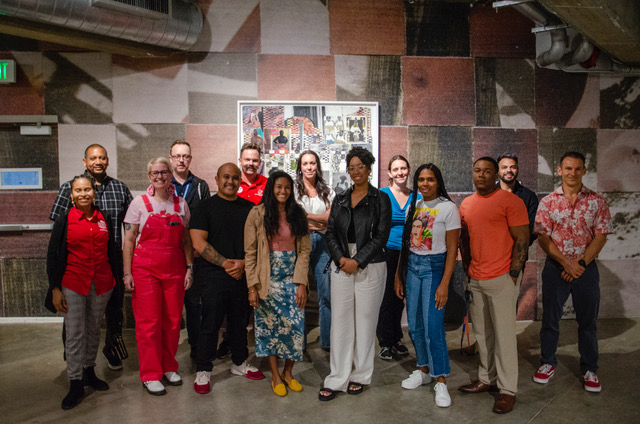
Image: Contemporary Arts Museum, Houston’s Teacher Advisory Group, 2022-23

A few weeks ago (in July 2023), a member of the museum-ed discussion list asked the group for recommendations of effective practices in Teacher Advisory Committees. This question provoked numerous responses from educators who also wanted to learn more, and a few responses from museums who are confident they run successful programs of this type.

This is a topic I have strong feelings about; in 2018 I published an article in the book Professional Development in Art Museums: Strategies of Engagement Through Contemporary Art, edited by Dana Carlisle Kletcha and B. Stephen Carpenter, II and published by NAEA. My article noted that when museums offer professional development to teachers, it assumes that we have expertise that teachers need, but rarely acknowledges the expertise of teachers. In the article I argue for replacing a hierarchical teacher professional development model with a space in which teachers and museums collaboratively address a question and create new programs and practices. Teacher Advisory Committees can be a wonderful space for this work.

In my own practice I developed a collaborative format that could be considered equal-parts Teacher Advisory Committee and Teacher Workshop: teachers met throughout the year to discuss a shared topic of interest with the goal of co-developing something of use for museums as well as in their classrooms. At the Peoria PlayHouse Children’s Museum our Teacher Team spent its first year developing a new field trip model, and the second year considering pre- and post-visit resources. Later topics included arts integration, STEAM learning and Maker Spaces. There were five meetings throughout the year; between each meeting, teachers were asked to experiment with something in their classrooms and share the results. At the end of the year the museum had a new collaboratively developed program or resource, and teachers had new ideas and lessons to implement in their classrooms.

I love Teacher Advisory Committees because they provide a space that is constructed for museums to learn from and with teachers; I hate Teacher Advisory Committees because they often are constructed in a way that feels limiting — after you get feedback on the newest teacher resource guide, then what do you do with the group? How do you make this type of program something that is valuable for both teachers and museums? And what do we mean by “Teacher Advisory Committee” anyway? Technically a Teacher Advisory Committee is an ongoing committee of teachers that share feedback and advice with the museum. However, this is a very limiting format, and I would guess that many successful museums play with this format to ensure that they are using teachers’ time wisely while gathering specific feedback. Also, while teachers’ advice is extremely helpful to school programs staff, Teacher Advisory Committees generally exist at least in part for marketing purposes – to make sure that teachers know about and help promote a museum’s school and teacher programs.

In order to get some insights into effective practices for Teacher Advisory Committees I interviewed two educators: Felice Q. Cleveland, Director of Learning and Engagement, Contemporary Arts Museum Houston (CAMH) and Kira Hegeman, PhD.  Associate Educator, Teacher and Student Learning, Saint Louis Art Museum (SLAM). This interview was guided largely by a list of questions solicited from the Museum-Ed community; the full list of answers to specific questions can be found here.

Felice Q. Cleveland, Director of Learning and Engagement, Contemporary Arts Museum, Houston
Dr. Kira Hegeman, Associate Educator, Teacher and Student Learning, Saint Louis Art Museum

These programs have very different primary goals (although both have multiple goals). The program at CAMH has the goal of supporting individual art teachers in the Houston Independent School District (HISD). The group includes 15 teachers; they can participate for only one year, and have opportunities for different types of collaboration with the museum if they want to continue working with the museum for a second year. The teachers have two main projects: they create lesson plans using the museum that they share with each other (and only with each other), and they create an art exhibition at a community location; the most recent art exhibition featured work by participating teachers and their students and was on view for a month.

The goal of the program at SLAM is to get to know the many different populations served by the 20 school districts throughout St. Louis city and county, and to better engage teachers who serve non-white students, thus diversifying the museum’s school audiences. The program includes 12 teachers who meet four times per year; at each meeting they visit the galleries; engage in art-making activities; share ideas and moments of inspiration in group dialogue; and share feedback on selected museum projects. Most recently they discussed revisions to an “American Journeys” tour theme that is part of a multi-theme, multi-visit program for fourth and fifth grade students, and shared barriers they face in getting student groups to the museum. 

Based on my conversation with Felice and Kira, as well as my own experience with Teacher Advisory Committees, here is a list of recommendations for those looking to start a similar program at their museum:

  1. Pay the teachers. Their time is valuable, and if this is a “teacher advisory committee” than you are asking them to use their time to advise and support the museum.Feed teachers. This is probably a good rule of thumb with any teacher program.
  2. Select a consistent day and time to meet, and make sure that applicants know when meetings will be and that their attendance will be required.
  3. Be clear about your primary goal (for example, do you want to form strong relationships between the museum and teachers, create a specific resource with their help, learn more about them and their students, or something else)? This goal should determine how meetings are structured. 
  4. Create an application system, and promote the committee and the application form as broadly as possible to your target group.

A few notes. Paying teachers makes this a relatively expensive program – most museums will spend around $10,000 for one year, to directly reach about 15 teachers. It’s worth it if you know why you’re doing this, and it feeds your other school programs in a meaningful way. It’s not worth doing it just because it’s something you think you should do. It’s also not the most efficient way to market to teachers – think about what else that $10,000 could get you.

Some museums have teacher working groups, convening a group of teachers with specific interests or skills to address a specific question. These are different than Teacher Advisory Committees in that they are temporary. If you want one-time help with a specific project or resource, consider this approach, instead – gathering teachers for a few project-specific meetings, rather than as an ongoing committee.

Do you have other effective practices to share in forming or managing Teacher Advisory Committees? If so, please share them in the comments to this post!

See Teacher Advisory Committee FAQs here

How do we plan and improve museum programs?

My last post, on the role of education research in planning museum programs, sparked debate in person and on LinkedIn about whether museums emphasize content knowledge or an understanding of pedagogy when hiring, training, and supporting museum education staff. For better or worse, it’s essential that museum educators know both. They need to understand the content they are teaching, and they need to know how people engage and learn in a museum setting (and in any other settings they offer programs in). But there another, vitally important element museum educators need to know when planning programs: they need strategies for program design.

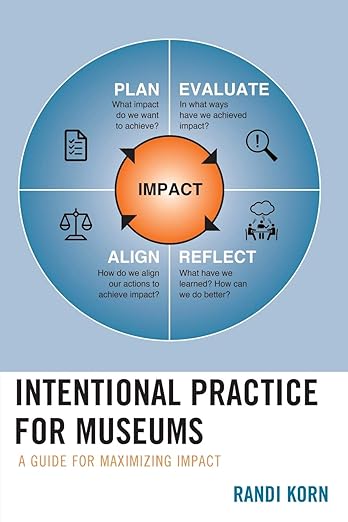
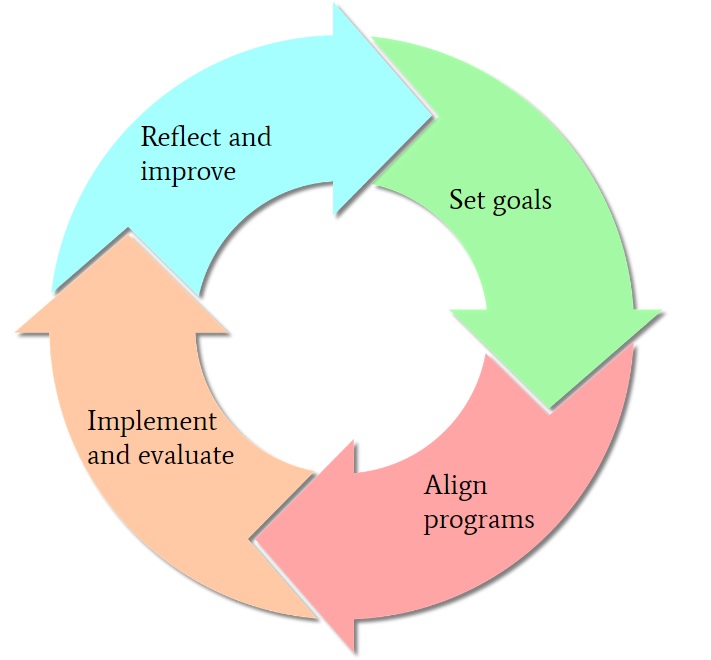
I’m an advocate for a program design and management approach that (for now) I’m calling “reflective practice” (I would love to find another term, as the phrase “reflective practice” is now used in many different ways). Reflective Practice is a cycle that involves defining goals or outcomes, aligning programs with these goals, implementing and evaluating the program, and then spending time to pause, reflect, and improve programs.

This iterative cycle has a few advantages. First, it offers structure when approaching program design: it helps frame the many decisions program developers need to make (Where should we hold this? How many people can participate? Who should teach this? What should participants do first? How should the program end? What might I send people home with?) Second, it ensures that programs do what we say they will do, or at least, they get closer and closer to achieving its stated (and promoted, and hopefully funded) goals. And third, it creates a departmental culture that is collaborative, experimental, and reflective. By examining programs with the assumption that they can and should be improved, and reflecting on them as a team, museum education leaders create a space in which everyone can share ideas and engage in an experimental approach to program design.

Here is a little more about the different steps.

Identify goals

Why do you want people to attend this program? What need are you addressing? What will they experience? The easiest way to think about goals is to consider what people may know, understand, or are able to do as a result of attending the program. You can also look at Bloom’s taxonomy, which in its 2001 version considers remembering, understanding, applying, analyzing, evaluating, and creating. And taxonomies exist for the psychomotor and affective domains, as well.

Sometimes people are hesitant to set goals because they don’t want to shut the door on unintended impact. Museum educators know that one person might leave a program having learned to use a new tool; another might leave having made a new connection with a fellow participant; a third might have learned something new about themselves. When you clarify your goals, you are not limiting participants to your goals – you are not shutting down their freedom to feel and experience in their own ways. You are, however, ensuring that the program has some specified, intended impact that. You are allowing yourself to craft a program that supports the type of learning that your department or museum promotes. And, pragmatically, you are creating a framework that will help you share intended impact with funders, and garner support for the program.

Align program with goals

You are not stating your goals for the sake of it; you are using them to guide decisions that will shape your program. If you want participants to know about an artist, you will need to include information about that artist, as well as some way for them to demonstrate that they are leaving with this knowledge. If you want participants to feel empathy for a group during a historical period, you probably want to activate their imaginations, and also couch this carefully in an accurate understanding of history. And you will need to ask questions that invite them to share their feelings to demonstrate the empathy you designed your program to activate. Any goal you crafted for your program leads to structural and content choices in program design.

Implement and evaluate

These two processes happen simultaneously – you offer the program, and you collect data to let you know whether it was effective at achieving your goals. In order to do this, you need to create a program aligned with goals, and you need to create an evaluation strategy to measure your successes and shortcomings in the context of those goals. The strategy can be simple, and might include a few of the following:

  • Time built into the program for visitor dialogue and reflection, during which participants are asked questions that invite them to demonstrate their personal progress toward your goals
  • A one-page evaluation tool identifying what goal achievement looks like and sounds like. The program leader and a colleague or critical friend can use this tool to observe the program and take notes on what’s working and what can be improved
  • A participant survey completed right after the program by all participants

You will also want to look at the program implementation – if the instructor is taking the actions needed to achieve the goals – and outcomes – if the goals are being experienced by participants. Developing an evaluation tool is a very useful exercise for program designers, as it forces them to identify and articulate what effective program implementation looks like, and what goal achievement among participants looks like. Ideally the program instructors are among those designing these tools, as well.

It’s helpful to include Likert scales or some other way to quantify your data, which allows you to look at the relative ratings of program elements so you can address where you may have fallen short.

Here is an example adapted from an evaluation created for a school program at the Guggenheim Museum.

Reflect and Improve

This step is often skipped, which undermines the value of the entire process. Evaluation is a learning tool, so using the results is essential to the reflective process. Don’t stuff your evaluations in a drawer – use them. If they are not providing you with useful information, then you need to change them. And if they are telling you that you are doing everything perfectly, you may want to be a little more ambitious!

A few tips for reflection:

  • Reflect as a team. Include instructors, peers, supervisors, colleagues from other museums – whoever you need to start a good conversation and creative brainstorming.
  • If you are using an evaluation with a Likert scale (a 7-point scale) s.  If all the outcomes are scoring 5 and higher, refrain from saying “this is perfect” – people tend to inflate their ratings (this is called courtesy bias). Instead, look at whatever is scoring lowest, because this is your space for creativity, experimentation, and improvement. How could the program be improved to come closer to fully achieving your goals?
  • Consider the goals as you review the data. Are they the right goals? Do the goals need to be changed? Added to? Made more nuanced?  It’s ok to realize that that some of your goals may not be the right goals for this program. What can and should this program be doing for participants?
  • Develop a list of program changes with concrete action steps, including deadlines and point people. And make sure there is someone to hold everyone accountable for making these steps happen.

Repeat. Maybe not every time the program is offered, but every quarter or every year. Keep improving. Keep experimenting. Keep generating new and better ideas and programs. And keep learning.

If you have a different approach to program design, I’d love to hear from you! And if you want more information about Reflective Practice, or to work with me for team training or support in this process, please contact me at rebeccashulman[at]museumquestions[dot]org.

What do museum educators need to know about learning and impact in museums?

Recently, I have been thinking about the role of research in museum education work thanks to the podcast Sold a Story. This podcast shares the rise and fall of Reading Recovery, a popular reading program in elementary schools. Reading Recovery took schools by storm in the 1980s, but it is based on ideas that have long been disproven. In fact, results from a large, long-term research study reported on by NPR show that “by third and fourth grade, children who received Reading Recovery had lower scores on state reading tests than a comparison group of children who did not receive Reading Recovery.” The program is based on a system titled “3 cuing,” and this system is based on what we now know to be faulty ideas about how people read. We know more now because research evolves; for example, according to Sold a Story, eye-tracking studies conducted by Keith Raynor in the first two decades of the 21st century “showed that good readers rely on the letters to know what the words say,” debunking the idea that readers are more likely to use context and memorization of what words look like. Ongoing research assumes that knowledge evolves.  Thus, our ideas about what works in education need to evolve as well.  Nothing is constant. 

One other story about changing research: an episode of the podcast Build for Tomorrow titled “The Greatest Myth About Learning,” looks at learning styles, an idea made famous by Howard Gardner, which says that some people learn best visually, others by listening, others through reading, and still others, kinesthetically. But in the last decade this idea has been disproven. Beth Rogowsky, a professor at Bloomsburg University of Pennsylvania, published a book debunking the idea of learning styles, and Polly Husmann, a professor at the Indiana University School of Medicine, has followed up with additional research supporting Rogowsky’s findings. Once again, research can help us teach better, but only if those who teach keep up with the research and change their teaching practices accordingly.

Many schools and teachers use methodologies that they believe help kids learn, but research shows they are misguided. This misstep isn’t due to lack of research, as formal education has an entire research industry; rather applying research in the classroom is complicated and full of road blocks. For example, teacher training at the university level is slow to change—even though their classes are at the institutions doing the research; information about new research may not make it to the individuals running schools and school systems; and large, bureaucratic school systems may find it challenging not just to keep up with research, but to make meaningful changes to teacher training, or to find the resources to retrain teachers.

Museum education has different problems. Without an academic PhD-granting arm of our practice in the United States, the community conducting ongoing research is very small. To the best of my knowledge, museum educators have little time to keep current on research in other spheres of education or psychology. Most program changes are rooted in unfounded ideas about how people learn and what people want, bolstered by small grant-funded evaluation studies designed to determine what worked and what did not in that one programmatic situation.  It’s important to note here that traditional evaluation looks at whether a specific program achieved what it set out to achieve; while evaluation is important and useful, it differs from research.  Traditional research poses a hypotheses and then seeks to disprove the hypothesis using control groups and other stringent protocols; thus, research findings can be more broadly applicable than evaluation reports.   

Elliott Kai-Kee’s discussion of art museum education in the 1980s illuminates the field’s dependence on lived experience rather than research. He cites Elliot Eisner and Stephen Dobbs’s 1986 report The Uncertain Profession: Observations on the State of Museum Education in Twenty American Art Museums, noting that Eisner and Dobbs “concluded that museum education lacked both a scholarly literature and a theoretical foundation” (p40). In response, leaders from the field met in Denver to discuss, among other things, non-research-based ideals for teachers and teaching in the museum, many of which we still follow.

Clearly my own bias is that research is important. I believe our assumptions about learning are shaped by personal experience, and thus are heavily subjective. I believe that research can help us improve how we teach, thereby increasing our effectiveness. But perhaps you disagree. Arguably, conducting research on museum education programs is not the best use of limited resources. Perhaps there is no need to deepen our knowledge on how our programs achieve impact because we are already achieving success, however you may define it. I welcome alternative viewpoints on research, applying research to practice, and achieving impact, so please share in the comments or on my LinkedIn post about this blog article.

Conducting research in museums is complicated. Time-consuming strategies are needed to measure impact beyond the typical evaluation approach of collecting data immediately after a visitor experience; studies involving participant follow-up can become costly (at least compared to the scant evaluation or research budgets of most museums). If we want to know how to shape programs in order to successfully impact participants, where might we look for this? How might we, as a field, better conduct or learn from rigorous research about our practice and the effectiveness of it on the publics and communities we serve?  How might research-based knowledge drive decisions about our practice so we can make a difference in people’s lives?

    • Given the number of individuals graduating from museum education programs and looking for work, one suggestion would be to work with universities to invest in a few PhD programs, or partner with PhD programs from other related disciplines to generate museum-focused research. This is a list of museum programs in the US; neither I nor ChatGPT could find any museum education PhD programs here or by searching the internet. Certainly, some intrepid academics are able to secure a PhD in museum education, but it generally involves finding an adjacent area of study such as art education and making museums one’s focus.  (See this 1996 article from a debate in Curator: The Museum Journal on this topic.)
    • Find ways to obtain access to existing research-rich resources. The website Informalscience.org houses links to the research that exists; however, most of it is inaccessible to many museum educators, because it is housed behind paywalls on sites such as EBSCO or JSTOR. Arts Education Partnership also shares research briefs, although it does not link to the longer reports, most of which are also presumably behind paywalls.  Could the American Alliance of Museums create an online academic library available to members even if it were for an extra fee? Could the Smithsonian do this for all museums?  Or could museums partner with local universities so staff had library privileges in exchange for providing free access to university students, professors, and administrators?
    • Look to research in the broader education field. I have enjoyed learning from Daniel Willingham at the University of Virginia, who writes about the implications of cognitive psychology research for K-12 education. I’d love to know where else people look for updates in research on education and related fields.  Please share your resources!
    • Identify and share new education research findings at conferences and in professional journals. Could the Journal of Museum Education have an annual roundup of related research conducted inside and outside museums? Could this become tradition at annual conferences attended by museum educators?
    • Individual museums can and should invest in learning about research and applying it to our work. I spent much of 2019 exploring this with my team at the Peoria PlayHouse Children’s Museum through distance-learning sessions with experts in approaches such as Reggio Emilia, Playwork, Montessori, and Play Therapy. Our front-line team members activated some of these ideas in the museum and shared their informal findings. We were not in a position to conduct comprehensive research on the impact of using these strategies, but like some practitioners, we adapted these tried-and-true teaching approaches to our own setting. I am passionate about the work of applying research to museum learning and working with staff at other museums to adapt new strategies, so if your museum would find value in working with me, I would be delighted to a create collaborative learning course for your staff and museum (contact me here for more information). 

    What other ideas do you have for how museum educators can learn from research? What was the last new research you found that changed the way you think, teach, or plan? Where and how did you find it? Feedback to this post indicated that the best place for conversations is LinkedIn, so I strongly encourage you to share your thoughts on this post in that space – I look forward to this conversation!

    What do museum educators need to know?

    Over the past few months, numerous experiences have been driving me toward the question: What do museum educators need to know? First, in February I attended a MuseumExpert webinar during which Martin Storksdiek discussed an attempt by ASTC and NSF to identify “the skills, knowledge, values, and other capabilities that enable [an informal science educator] to be effective in their job.”  More recently, while in conversation with a group of museum educators, I learned that many program developers don’t use a toolbox with known effective practices; instead, they think about what program might work, try it, and if it works, great!  But what was the goal? How did they define success? And what about the program worked?  A number of podcasts and articles have raised similar questions about research and academic approaches that professionals in different fields use, leading me to think about the limited research about various approaches in museum education.* (More on all of these to come in future posts!)

    With this in mind, over the coming months, I will be thinking about what museum educators need to know to create and lead the strongest programming possible. Because of my background, my explorations may skew toward practices in art and children’s museums, but I hope to balance that out by including other voices here. If you have strong feelings on this subject and would like to contribute to this series, or know someone else I should talk to, please let me know.

    It’s useful to place this investigation of our profession in a historical context. For art museums, I recommend reading the chapter “A Brief History of Teaching in the Art Museum,” by Elliott Kai-Kee, in the book Teaching in the Art Museum. For children’s museums, I recommend the Boston Children’s Museum’s book Boston Stories; I also edited a virtual issue of Curator Journal that looks at the history of literature on children’s museums from that journal (if you cannot access that easily, your local library may be able to help).  I invite you to share any additional encapsulations of the history of museum education, especially in science,history, or living museums, in the comments below.

    To jump-start this investigation, here are a few questions:

    What do we teach?

    • Are we expected to be content experts or delivery experts, or both?
    • Are museums spaces to teach information, teach field-related skills, or incite curiosity? Are art museums spaces to share academic information or to cultivate aesthetic approaches to art? Are history museums spaces for civic engagement or instruction about past events and movements? Are science museums spaces for fostering careful observation and investigation, or teaching scientific information? Can museums do all these things, and if so, how?
    • Are we expected to be content experts or delivery experts, or both?
    • Are museums spaces to teach information, teach field-related skills, or incite curiosity? Are art museums spaces to share academic information or to cultivate aesthetic approaches to art? Are history museums spaces for civic engagement or instruction about past events and movements? Are science museums spaces for fostering careful observation and investigation, or teaching scientific information? Can museums do all these things, and if so, how?

    How do we teach?

    • What do we know about learning in museums and more generally?
    • What is or should be in the toolbox for museum educators of any museum type?
    • Museum educators often offer professional development for classroom teachers – what expertise do we share in this context?

    What do museums look for in their education staff?

    • Are we teaching or engaging? When should we think about what people are learning, and when should we think about how they are experiencing exhibits and programs? What do we mean by engage? 
    • What skills do museums prioritize when they hire educators? How do they train? What skills do educators think they should have to excel in their work?
    • What criteria do administrators use when conducting annual reviews of educators?

    What questions am I missing? What else do we need to think about to define what museum educators need to know to be successful in their work? Please share your thoughts in the comments or on my LinkedIn post about this article!

    *A search of informalscience.org’s community repository for research in museums offered only two studies that appear to share research on what program frameworks lead to specific learning outcomes: a study on the impact of programs on STEM careers and a dissertation on the role of novelty and motivation on developing interest in science

    Do museums have a responsibility to name and address issues of contemporary importance? 

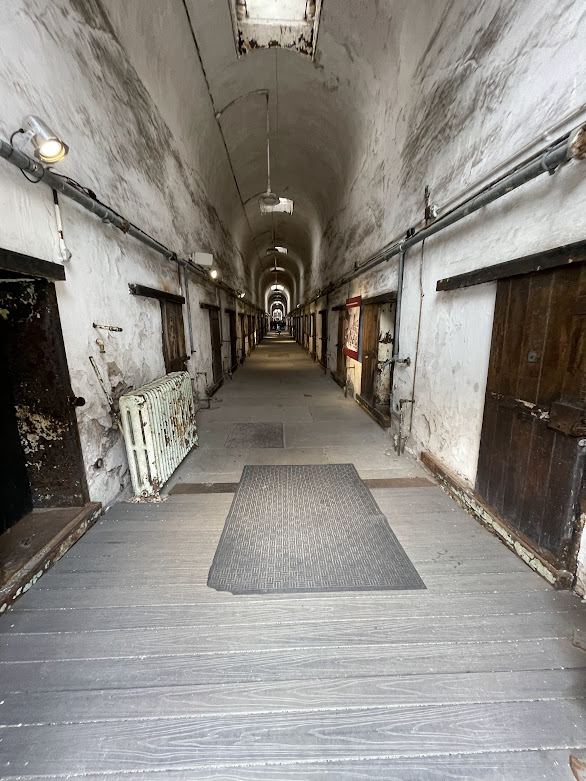
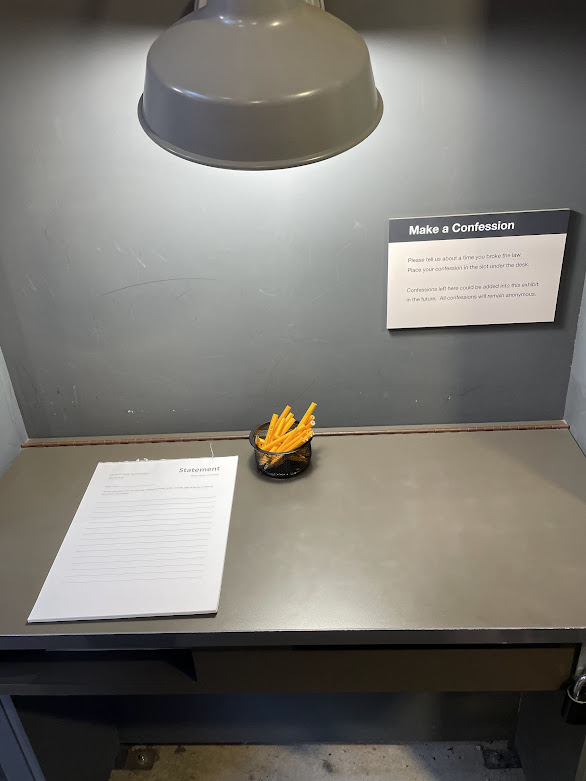
    In the past few months, I’ve visited the museum Eastern State Penitentiary twice. The museum is exemplary for its excellent audio tour (which you can hear parts of here) and the way it incorporates art into a historical site.  More strikingly, it is notable for drawing attention to a contemporary issue (largely, but not exclusively, through its Prisons Today exhibit) and challenging visitors to both think about their own role in our criminal justice system and take direct action. Visitors can write postcards to people who are currently in prison, hear from people who have been incarcerated, and pick up brochures about criminal justice reform organizations with opportunities to volunteer. Visiting the museum is a powerful experience – one that left me thinking about how things I have done as a White woman might have landed me in jail if I were a Black man, and with a better understanding of how our society got to this place and the pressing need to make change.

    Eastern State Penitentiary. Photo by Alex Herz.


    One of the spaces in “Prisons Today” that asks visitors to engage with the subject matter on a personal level. This station asks visitors to “tell us about a time you broke the law. Place your confession in the slot under the desk.” Photo by Alex Herz.

    Museums and exhibits are not usually designed to encourage people to take action on an issue. I recently visited the Queens Museum to see the exhibit Crisis Makes a Book Club featuring work by Xaviera Simmons. I love the title of this exhibit, which suggests that in the face of crisis, our response is to read or listen and learn, but not to take action (or, in the art-history-speak of the museum, the exhibit “reflects on the stasis of reading groups, podcasts, listening sessions, and other non-active movements offered as a stand-in for true action in the presence of state-sanctioned violence and death.”). There were some beautiful moments in the exhibit – enormous fertility-goddess-like statues, enlarged colorful poloroids, video clips of landscapes. But nowhere did I see an issue to engage with, or a call to action.

    Did this exhibit have a responsibility to name and address issues of contemporary importance? Do museums bear this responsibility?

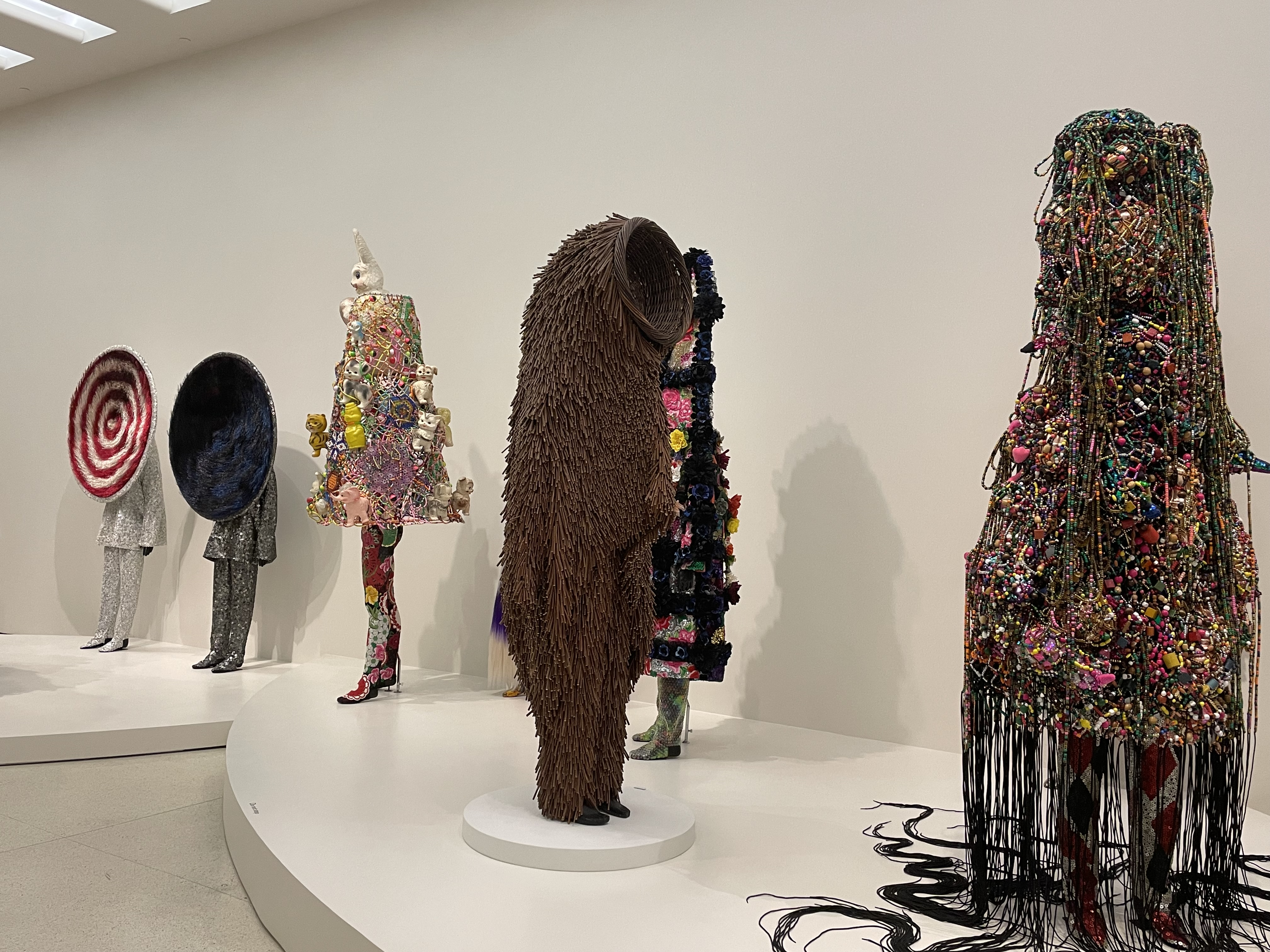
    Forothermore, the Guggenheim Museum’s current Nick Cave exhibit, features three galleries of Cave’s work. Cave’s soundsuits are his best-known pieces. These soundsuits are responses to violence and racism; the first soundsuit was created in response to the brutal police beating of Rodney King in 1991. Cave’s other work is also loaded with imagery and meaning around violence against and the experience of Black people in the United States. Arguably, the work itself is an invitation to viewers to think about violence and racism. And I suspect that the exhibit feels like an invitation to, and support for the experience of, many individuals who may feel excluded by or disinterested in other exhibits. I don’t want to discount the power of inclusion when I note that the exhibit does not explicitly ask the visitor to contemplate or address ongoing police violence. And perhaps that’s because Cave’s soundsuits are about “obscur[ing] race, gender, and class, allowing viewers to look without bias towards the wearer’s identity” — they create identity-free moments, rather than tackling how identity relates to one’s treatment in the world. Nick Cave himself doesn’t seem to be clamoring for action; his last few months of Facebook posts promote the Guggenheim exhibit and a collaboration with Knoll textiles and are devoid of political messaging. Still, the soundsuits offer an opportunity to talk about something bigger. They allow the museum to ask all visitors, of any identity, “What do YOU do every time a Black individual is killed by the police? What is the impact of YOUR identity when you walk down the street?” Cave’s work offers an opportunity for art to matter to people outside the art world. Isn’t that what museums claim to want?

    Nick Cave soundsuits on view at the Guggenheim Museum, January 2023.

    The exhibit A Movement in Every Direction: Legacies of the Great Migration recently closed at the Baltimore Museum of Art. I visited, and loved a few of the pieces – Mark Bradford’s 500, Theaster Gates’s The Double Wide, Carrie Mae Weems’s The North Star. The museum offered a space where visitors could record their own migrations, and shared stories recorded by visitors. This strikes me as pleasant, but insufficient. The exhibit addresses a moment in history when violence, discrimination, and economic injustice forced millions of people to leave their homes. And this violence, discrimination, and economic injustice is ongoing. What would it look like if the museum had asked us to think about these ongoing issues? Had invited us to take action? Had challenged us to think of the museum as a place that sparks change, rather than a place to ponder and reflect?

    Do museums have a responsibility to name and address issues of contemporary importance? Society has not assigned museums this responsibility. But if museums want to matter to people, then this is a responsibility that they should opt into. Not through education or outreach programs, but as an integral part of exhibits and the experience people have when visiting.

    How do independent arts and museum professionals build supportive community?

    Since I started the work of figuring out the next stage of my career, I’ve been having amazing conversations with museum colleagues from around the United States. These conversations remind me how much I love having a museum community, and how amazing our colleagues are.

    Museum educator, consultant, and self-proclaimed pirate Rachel Ropeik (who left her full time job in 2020) and I have an ongoing conversation and check in. It goes something like:

    “What adventures have you taken lately?”

    “I just finished driving around out west and camping” (Rachel) or  “I’m headed to Vermont to take myself on a retreat” (Rachel) or “Last week I spent time in NYC, Philadelphia, Baltimore, and DC,” (me) or “I am hoping to cycle from Myrtle Beach to Savanah in the next month or two” (me).

    “And what have you figured out about the kind of consultant you are and the kind of work you’re doing?”

    And then we launch into it… offering workshops for the field vs consulting for museums. The applicability of museum expertise to other fields. How you find clients. The role, opportunities, and challenges of a consultant.

    I should add: There are many things that keep me from committing to life as a consultant. One is the constant need to sell your services. Another is that there seem to be a lot of people already doing great work in this space. Third, and perhaps most importantly, I miss having a work family. How can you be an independent consultant, and still be part of a work community?

    During one of our conversations, Rachel and I started thinking about this – was a real, meaningful, consulting community something that we could help create? How can we learn from others who are living in this in between space, trying to figure out what’s next and make a go of it on their own? How can we share what we’ve learned?

    Rachel, in her brilliance, developed the Consortium of Arts Related Entrepreneurs (CARE) – a space where independent entrepreneurs can come together. I’m particularly intrigued by the virtual co-working sessions, which will be twice a month. And looking forward to having a work family of some sort – I miss having a work family.

    This morning, I signed up for CARE. If you are in a similar space – working independently in the arts and culture realm and looking for a meaningful network – please consider joining this group! If you know of other community-building inititives for independent workers, please share them here!

    One other resource I have found and look forward to participating in: American Alliance of Museum’s (AAM) Independent Museum Professionals Network (IMP). In 2022 this group offered 14 programs and events—eight in person and six online—ranging from programming and marketing strategies to IMPs as Agents of Change. IMP serves 1,426 members. Their next program is on January 25, and you can register here. IMP doesnt have an independent website, but you can learn more here or join the group through the IMP Intersections group on Museum Junction. (If you are not an AAM member, just create a profile to join.)

    Museum consultants, what are some other ways that you have built or accessed a professional community for yourself?

    Does anyone read blogs anymore?

    Image credit: Shutterstock

    It has been over two years since my last Museum Questions post, in November 2020. To everyone reading this post: congratulations on getting through the past few years. What’s changed for you professionally since early 2020? I’d love to hear your stories in the comments below.

    WordPress tells me there are nearly 1000 subscribers to this blog, and tens of thousands of readers last year despite the lack of new articles. But how many of these emails are still active years later? And how many of these readers are interested in new posts? Is this blog still a space worth sharing questions and musings on?

    A quick overview of my past few years: As director of a children’s museum in Central Illinois I weathered a 15-month closure / virtual existance, followed by the challenges of reopening the museum amidst safety protocols that changed constantly. I was lucky: I kept my job. And COVID was relatively easy for me – I don’t know anyone who got seriously ill from the disease. I shared my house with two nearly-adult children who were great company. I lived in a small city where I did not rely on public transportation, shopped (masked) in uncrowded grocery stores, and could spend time with friends outside, and then, in 2021, indoors as well.

    But in 2022, as COVID waned and my younger child headed off to college, I decided it was time to move back to the east coast. I loved my job, but it was time for a change. I joined the Great Resignation, leaving my museum in July 2022.

    After packing up my house and getting my kids off to college, I went on a solo 750 mile bike ride (which I shared on Instagram), visiting only 2 museums along the way. In October I moved to Baltimore, where I am staying with a college friend in her beautiful house, spending time visiting people up and down the coast from New York to Charlottesville.

    I am also doing some consulting work and looking for my next job, limiting my search to Baltimore and Philadelphia, near friends and family.

    This past year’s adventure has provided me with time to think and to question. Do I still want to work in museums? What do museums do for the world? What museums are good places to work, and why? How can we change pay inequity in museums, and are unions really the answer, or do we need to invent a new system? How can I play a role in helping museum staff at different levels better understand and communicate with each other, and engage in joint problem solving instead of tense negotiations? Are other non-profits as broken as museums are?

    All of which is to say, now that I have had some time off, and I am not working long days and weeks in a single museum, my brain is back to thinking in terms of questions about the larger field.

    Over the past few months I have chosen LinkedIn as a way to explore questions and resources. But I think I’m ready to start blogging again. Except: my kids (ages 18 and 20) have assured me no one reads blogs anymore.

    So I’m asking you: Do you still read blogs? Would you read this one? Is LinkedIn a better place to ponder?

    Links to recent related LinkedIn posts:


    Should museums deaccession art to pay staff?

    This post comes out of a conversation between Rebecca Shulman and Jackie Delamatre. You can see other Museum Questions blog posts by Jackie Delamatre here and here.

    Proceeds from the sale of non-living collections are to be used consistent with the established standards of the museum’s discipline, but in no event shall they be used for anything other than acquisition or direct care of collections.

    -American Alliance of Museums (AAM) code of ethics statement

    Jackie: If there’s one thing about the pandemic that has been positive, it’s more frequent phone calls with colleagues and friends. It was one of those phone calls that led to this post. We found that we had been thinking about the same topic – albeit from different angles – as a museum director and freelance educator. That topic is the museum sacred cow of deaccessioning. 

    Rebecca: It turned out our ideas started brewing after we listened to the same podcast. Malcolm Gladwell’s latest season of Revisionist History explores museum collecting. He reports on museums with valuable objects their curators have never even seen and argues that their resistance to deaccessioning is part of a “hoarding” impulse and should be reconsidered.

    Jackie: I had taken to telling my freelancer colleagues agitating for pay equity that my new slogan was “Deaccession for a Living Wage.” It was meant to counter the replies all museums gave when asked why they could not raise pay. To a one, their explanation was: “We’re broke.” When I started thinking about all the objects they might own but never even see, I wondered why our lives as workers weren’t worth more to them than these forgotten objects? Could some smart, targeted deaccessioning help resolve pay equity issues made even worse by the pandemic?

    These are the same pay equity issues that exacerbate other equity issues – such as racial diversity of the staff.

    Rebecca: I wasn’t entirely sure that deaccessioning works as a solution to pay equity. Pay equity is a critical, ongoing issue; deaccessioning is a tactic that should be used only in emergencies, and is an option only for the few museums with sufficiently valuable collections. But for these museums to fire staff while retaining collections is wrong. 

    I interviewed Lisa Cowan for Museum Questions a few months ago, and we discussed a similar issue with universities and endowments. She said, “Why would we let the lowest-paid staff members go at this moment, in order to hold onto our money for another day? It’s such a small-minded hoarder mentality…. what is the point of being a guardian of the Harvard endowment if the city of Cambridge that houses the University is in rubble?” 

    Jackie: And there’s that word “hoard” again!

    Rebecca and Jackie: To get to the bottom of some of these ideas we decided to interview three experts in different fields. Sally Yerkovich is a professor of museum anthropology at Columbia. Steven Lubar is a history professor at Brown, specializing in museums. Mark Gold is a lawyer, specializing in museum law. 

    We interviewed them during three separate conversations, so each of them is only responding to the question we posed, not to each other. 

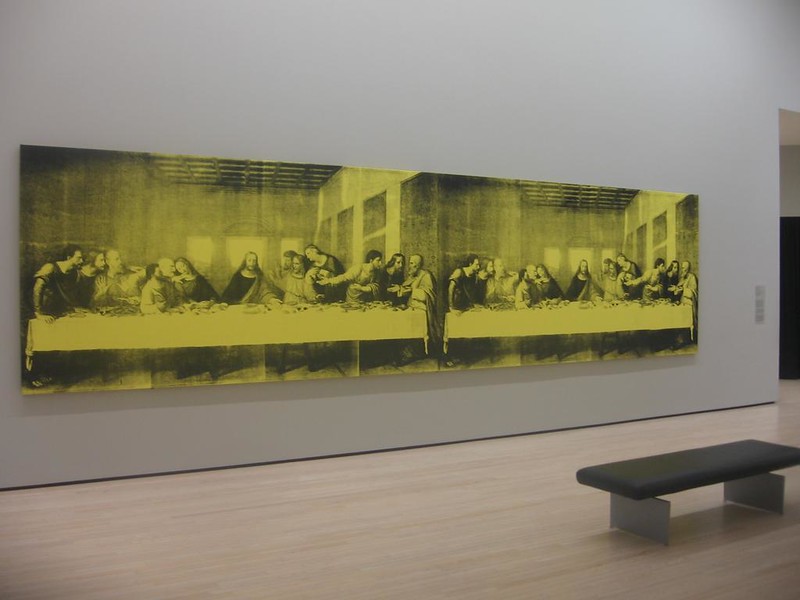
    Andy Warhol, The Last Supper, Photo by A. Currell, from Flickr Creative Commons. The Baltimore Museum of Art is one of many museums looking at deaccessioning, and facing challenges from museum stakeholders. Learn more in this article from Baltimore Magazine.

    Rebecca and Jackie: Sally, Mark, Steven — Why do museums have this rule about deaccessioning? 

    Sally Yerkovich:  Museums have this rule because museum collections are considered to be educational or cultural resources, not financial resources. Collections are not a financial resource. They are a limited resource, and once they are gone, they are gone. If you sell a painting at the core of your interpretive goals, you no longer can fulfill that goal. If you sell that painting and use it for salaries, it won’t last forever; it will only last for as long as it takes you to spend it, and then where will you get the money for salaries?

    Mark Gold: My personal belief is that the rule came about in response to a FASB initiative in the late 1980’s and was developed to avoid transparency [about the value of a museum’s financial holdings] because it might lessen the desire of donors to make donations. Now that there are discussions about equitable compensation and social justice being coequal to collections, the rule is receiving long overdue reexamination.

    These rules are accounting principles, not ethics and not best practices. [It allows museums to not list collections as assets or donated objects as financial donations.] It’s up to boards of trustees, vested with the legal and fiduciary duty to the museum and its mission, to determine what is best for their own institution.

    Steven Lubar: In 1974, responding to bad publicity after the Met had deaccessioned artwork in order to buy better art, museum philosopher Stephen Weil wrote that, “The wealth of a museum tends to become concentrated in its collection. Unless some of that wealth is allowed to flow back into new programs, the museum may end with a first-class collection [and] a second-class staff.” He urged selling off collections that “lie fallow” and using the funds for operating expenses. The vitality that more staff, exhibits, and programs would bring would attract donors. 

    Weil changed his mind on deaccessioning a few years later, and, wary of bad press, the museum community backed off, too. I think Weil’s earlier argument still holds. Museums have to balance their several goals: collections, education, public service. Drawing a red line around collections ties their hands. In a 1991 overview, museum lawyer Marie Malaro stressed the importance of good process – control of collections, periodical review, written procedures – as a guard against hasty decisions, but she encouraged making decisions, including deaccessioning. That still seems good advice. 

    Sally: Glenn Lowry [the Director of MoMA] has sometimes advocated that the money from deaccessioning should be able to go into an endowment to support educational programming. That’s a little bit different than if you use it straight out – presumably you are just using the interest or a certain percentage of the capital, so you are still maintaining the capital to shore up your institution. The Brooklyn Museum is deaccessioning now to put money into an endowment for collections care. 

    Image of the Broolyn Museum. Photo by apollonia666 from Flickr Creative Commons. The Brooklyn Museum deaccessioned 12 artworks in October to fund collections care. Read this Hyperallergic article for more information.

    Rebecca and Jackie: The pandemic has brought to light pay equity issues in the museum field. Many contractors, for instance, have been agitating to be paid a living wage. As a rule, museums generally answer that they are “too broke” to pay higher wages. Could changes to deaccessioning rules possibly help their cause? Or could deaccessions only work as a temporary stop gap measure in this current emergency?

    Steven: Michael O’Hare, a public policy professor at the University of California-Berkeley, calls AAM rules on deaccessioning “an administrative decision elevated by little more than assertion to the level of a professional ethical principle,” and posits that museums should sell collections to fund the things they say are important, like free admission and education. And, presumably, better pay for staff.

    But the collection shouldn’t be thought of as a piggy-bank, to be broken into as needed. One could imagine thinking of it as a parallel endowment; collection objects might be sold to create a new endowment to meet the other goals of the museum. That fits with the way museums use deaccessioning to reshape their collection, a balancing of long term and short term needs. 

    Mark: Actually, and sadly, the pandemic overwhelmed the vigorous debate that was already underway about pay issues. Clearly, opening the door to using the proceeds of deaccessioning for purposes beyond acquisition and direct care presents an opportunity to explore funding for those admirable causes (as well as social justice, access, diversity, etc.) by putting the priority of the collection into perspective.  Many observers, I among them, believe that given AAMD’s April statement, there will be no going back.  Some of my thinking on this can be found in this Comment piece I co-authored for The Art Newspaper.

    Rebecca and Jackie: It’s hard to fully separate deaccessioning from another source of wealth museums do not or cannot spend from: endowment funds. Does the COVID pandemic and its economic impact constitute enough of an emergency that museums should tap into endowments to retain staff?

    Steven: Many universities and large foundations are pulling funds from their endowments, or increasing the payout, to meet the dramatic needs of the moment. Some institutions are borrowing against their endowment instead; interest rates are low, and returns on endowments are high. Endowments can have legal restrictions on spending, but many museums have “quasi-endowment” funds that they treat as endowments, but which they don’t need to keep sacrosanct. Endowments must always be managed to balance present and future needs, and the balance of those needs changes over time. It’s hard to argue that present needs are not extreme. 

    Sally: That is up to individual museums and depends upon the endowment funds. Some are restricted legally, so a museum would need to go to court to get that restriction changed. Others are restricted by the Board of Trustees, so those could be used if the Board felt that the use of the funds should be changed and the institution should be allowed to dip into the principal. Again, it’s a really slippery slope. I’ve worked for institutions that have done that and spent their whole endowment. They then need to raise all of the money they spend every year, and they are much weaker institutions as a result, with skeletal staffs to carry out their mission.

    Mark: It goes to the question of the purpose of endowments as “rainy day funds.”  At the moment, it seems like it’s pouring outside, and the rain is coming through the roof.  There is a philosophical tension about allocating cost and benefit between the present and the future. 

    Sally: One thing that underlies all this is the assumption that all museums should continue to exist. We have a lot of museums. Some of them may need to rethink their missions, and how they operate, and think creatively about mergers or collaborations with other institutions to reduce their costs and become more sustainable. This moment is an opportunity to really think long and hard about what museums are doing and how effective they are and how they can be more effective and sustainable.

    Rebecca and Jackie:  Are there other examples of museum ethics that have changed over time? What are the appropriate moments to rethink ethical guidelines like this one?

    Steven: Ethical guidelines have changed, and they’ll continue to change. Hemingway wrote that going broke happens “Gradually and then suddenly.” Ethical guidelines change that way, too.

    When NAGPRA was proposed, museums protested that it would destroy collections and research programs, that it was unethical. It’s proven to be the exact opposite, and now it’s a central part of museum ethics.

    We are, perhaps, at a moment of great change in attitudes about colonialism and racism, as well as a moment of crisis. Ethics will change to reflect the new world.

    Mark: I think it’s a distraction to call these ethics. They are practices. If they truly were ethics, why were they so quickly abandoned with the pandemic [when the Association of Art Museum Directors made a change to these rules about deaccessioning]? 

    AAMD’s action was an acknowledgement that, due to the pandemic, there was no consequence for museums that behaved in ways they define as unethical.  Either the rules were not really about ethics, or ethics are things we ignore when it’s hard. 

    Magnolia, by John La Farge. Photo by Irina from Flickr Creative Commons. The Berkshire Museum deaccessioned a number of works in 2017-18, in order to save the museum, and was widely condemned. Learn more in this article from the Center for art law.

    Jackie: In these interviews, I was struck by the degree to which Sally, Mark and Steven agree that deaccessioning shouldn’t be entirely off the table, and that deaccessioning could have a role in addressing pay equity issues if done through a thoughtful process of creating specific endowments targeted for those needs. 

    Rebecca: I’m interested in the intent of this rule, and the question of whether this is a financial policy that amounts to lack of transparency about assets that might discourage donations, or an ethical issue ensuring that collections remain the heart of museum work.

    I’ll also note that as these experts spoke about creating endowments to fund areas of work, we never quite got into the question of whether museums might create endowments that do not add to their current work, but only add to current staff pay. This would require museums to prioritize equity and fair pay, and to “sell” this to boards and donors who may not think the same way. Which is to say, Jackie, I think I’ve been convinced that museums could use deaccessioning combined with endowments as a way to restructure salaries and move toward pay equity. 

    Jackie: I’m so excited to hear that, Rebecca! I know there are many museum staffers who will be interested in what these experts have to say. My fellow contractual workers and I often feel that the burden is on us to point to where the funds could come from to pay us a living wage. In the end, though, I think our experts revealed the truth behind the quote (often attributed to Martin Luther King, Jr.):  “Budgets are moral documents.”

    Anyway, this is where it’s great to have a blog format and potential commenters to continue the discussion. I hope others in the field will share their thoughts and ideas for next steps.

    How can storytelling promote change? Interview with Lane Beckes

    Lane Beckes is  Associate Professor of Cognitive and Affective Neuroscience at Bradley University. Lane studies social processes at the intersection of cognition, emotion, and neurobiology. His research interests include social bonding, empathy, emotion, and prosocial behavior. Read a previous interview with Lane in Museum Questions here.

    Lane, over the past few months I have heard, and been moved by, many stories of racism. However, we all know that not everyone is reading the same stories. Since storytelling is one of the roles that museums can and do play, can you talk about how storytelling can promote societal change?

    Stories help us build our models of the world. They help us define how we should and can live. Our culture is built on stories about who we are, how we should live, what we value, what we care about. Because we are so social, humans are very prone to conform to cultural values and beliefs, and these stories we tell ourselves as a culture.

    We have a natural predisposition to believe the stories we are told when we are young, and form a social identity around these stories. As Americans we have stories we tell around George Washington, Thomas Jefferson, the Tea Party– stories that create a national identity that root us within a group.

    Right now we have an interesting and challenging dynamic: because of the way mass media works, we have two social identities that anchor the political landscape of America, two different stories being told.

    Currently we have a lot of stories we like to tell ourselves that reinforce systemic racism. For example, the mythology of the individual: if you don’t succeed at something, it’s your fault. Everyone has a chance in America. These stories allow us to ignore the structural differences that exist for people who come from different demographic or socioeconomic groups. Mythology around individualism and freedom allows us to justify the negative impacts of racism, and the structures of our society, on people of color. John Jost refers to this as system justification (see, https://www.apa.org/science/about/psa/2017/06/system-justification)

    For example, when people talk about police brutality and its impact on black America, someone might ask, “What about black on black crime”? That’s an example of using a story to justify the current situation. It’s a story created by conservatives to put forth a counter narrative to the idea that black people are oppressed.

    Stories like Black on Black crime, or the narrative of the “Welfare Queen”; these are strategies used since the 1970s to divide people on race. Fictional characters like “Welfare Queen” or “Gangster” are stories about mythical people used to represent the Black community and why it is not successful. It puts ownership of racism in the United States on Black people – “It’s just that you haven’t pulled yourselves up by boot straps.”

    What are some ways that museums might use storytelling to lead to positive change?

    It’s difficult to come up with a story as powerful as the “pull yourself up by your bootstraps” myth – that story is engrained in everything. Individualism is a core value in America.

    Empathy is one tool we can use to get people’s attention. When you tell real stories that have an emotional impact they can sometimes break through – especially if they aren’t specifically things that people have been inoculated against. Inoculation in social psychology refers to the idea that giving people weak arguments for a specific position actually makes people less open to future instances of a similar, but stronger argument.

    We have a real challenge right now, because people are exposed to so much partisan coverage of the world that it is very difficult to open them up to other perspectives. All forms of media coalesce around one of two different political subcultures, and these subcultures inoculate people from one subculture against the perspective of the other. So whenever a conservative hears something about Black Lives Matter they have a reflexively negative response.

    Liberals also dismiss many conservative arguments out of hand due to inoculation. For example, many white working-class conservatives argue that it is inappropriate to call them out on their white privilege when they feel they have very little privilege in the first place. This represents a misunderstanding of the term privilege, but liberals often dismiss any arguments that follow because of that misunderstanding. If people slowed down and listened empathetically, what they would realize is that many of those people feel that the world is stacked against them and they perceive liberals as fighting for minorities and demonizing conservatives, particularly rural white people. Many of these people have borne a cost due to globalization’s impact on American industry, seen the demise of rural economies, and experienced a declining quality of life. An empathetic approach may allow for a discussion of the nuances of racial privilege that not only informs the other person, but acknowledges how many of the same systems that oppress minority communities also impact less affluent whites. Being able to connect on a human level can unveil the mythologies of the independent person, the idea that we live in a pure meritocracy. By connecting with the human story, we often are able to challenge our own beliefs and open ourselves to alternative ways of understanding the world, some of which may point the way toward shared interests as opposed to ideological opposition.

    How do we frame stories so that people in a different subculture can hear them?

    It may be impossible to reach some people. But generally people from one subculture are not trying to penetrate the real radicals of the other. Radicals are impervious to any sort of message.

    Successful stories do two things. First, they provoke empathy. For most people, stories that have an empathetic component, in which they can see the humanity of others, are the most powerful. When we share a story that touches us personally, we can see the other person’s perspective better.

    Second, they are factually clear and truthful. These days people will poke holes in anything not well thought through.

    The George Floyd story is a perfect example of both empathy and clarity. The Black Lives Matter movement exploded because this story lead to an awakening in a bunch of white people. The story was so human, and it was so clear that what happened was murder. And the video clearly demonstrated a scene that people could not poke holes in. This goes back to the issue of inoculation: When you think back to historical examples of police violence that did not ignite this fire, those examples allowed people create a counter narrative: it looked like someone was charging the police officer, they were a criminal or a thug, etc etc.

    Because people got a chance to easily empathize with George Floyd, they realized this was an issue they needed to get involved in and care more about.

    Breona Taylor’s story is another example. People can imagine themselves being in her bedroom sleeping, and the police start shooting up her house and she dies. There is no moral ambiguity. Everyone agrees that these things are wrong. Typically if we can get into someone else’s shoes it’s easier to move on something we might have been rigid on before.

    What other kinds of storytelling are you seeing right now?

    Right now the left has adopted the politics of outrage. Liberals traditionally believe in two of what Jonathan Haidt calls “moral foundations’ – fairness, and care/harm; the right embraces these principals to a different extent but also three others – loyalty, purity, and authority.

    These values shift with the political landscape, and one of the things I’ve noticed recently on the left is an increasing value for what looks like purity. For example, the idea that if you represent anything perceived to counter to the well-being of women or people of color, you are a pariah and should be cast out. That becomes problematic for a lot of different reasons. Similarly, people who consider themselves followers of Bernie Sanders would just as soon cast you out if you don’t believe in things like universal single-payer healthcare.

    This emphasis on purity puts people in an awkward position of having to follow rules that are being rapidly created and changed. And it causes a lot of tension within that community.

    What’s interesting about the stories being told on the left right now is that while they are tapping into emotions, the emotion they provoke is really righteous indignation – the sense that people have been wronged, and the impulse to fight back against that. There is a place for that, especially for people who have been traditionally oppressed. But it runs the risk of being divisive even among people who are allies. One example is a story of someone who dressed up in an ethnic costume when they were 20. That may have been insensitive and stupid, but is it right to totally dismiss these people?

    If you are trying to push an ideological agenda, that’s a great way to send a message, because it gets certain people riled up and ready to act. But if you are trying to open people’s minds to other people’s perspectives, this is a frustrating tactic. It’s not being empathetic so much as it’s being really angry, which closes people off. It’s good at rousing up a certain side of an issue, but bad at getting people to see across divisions. It evokes an ideological impulse rather than a humanitarian impulse. Whether such tactics are effective or simply divisive is difficult to say, and only time will tell.

    What ideas do you have for how museums and museum workers might use storytelling to support anti-racist initiatives and other equity-based initiatives?

    The first step is telling the stories not only of our heroes, the mythologies of our heroes, but also telling the stories we shouldn’t be proud of, for example, stories of people who were oppressed by the early United States. Historic sites focusing interpretive efforts on telling the stories of slaves is a good example of this work.

    When we focus on minorities, we tend to focus on individuals who have risen above to create something great. This reinforces individualism which gets in the way of talking about needs and responsibilities as a community. We talk about the great people, but not the ‘normal” people, and how world or social forces or events impact the individual within a system because of the way their community was impacted.

    Museums can tell stories about individuals who clearly faced challenges of systemic racism. Someone who couldn’t get a house in the neighborhood he wanted to live in, for example. Those kinds of stories can also be used to put a spotlight on systemic effects – the way society is structured to limit individuals’ ability to get their needs met or survive.

    One of the best things you can do is to connect these stories to opportunities for action. Let’s say you have an exhibit that focuses on a Black artist, and highlights some challenges she faced throughout her career. Provide something for visitors to do to address racism right there in the exhibit, like write a letter to a local representative, or sign a document committing to doing one or two things in the next period of time. Public commitments of action improve the likelihood that they are going to take action.

    Ultimately, the challenge is to change the system, which involves changing our laws and culture. We won’t solve this overnight. But asking people to be engaged and mindful and active makes a difference long term.