How do we change a museum’s relationship with its building? Interview with Steven Snyder

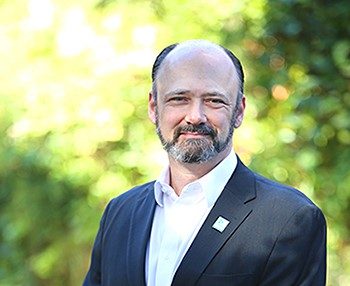
Dr. Steven Snyder is the President & CEO for the Fleet Science Center in San Diego, CA. Since taking on the role in 2013, Steve has redefined the Fleet’s role, taking it from a science center in Balboa Park to a community organization dedicated to helping all San Diegans achieve their place in our shared scientific future.

In a recent webinar you mentioned that you are rethinking the relationship of museums to their buildings.

A while back I did a review of museum mission statements and found many followed a similar format. They would begin with a statement of what activities the organization would undertake (collection/preservation/exhibition/interpretation) followed by a statement along the lines of “for the purpose of connecting art to life”, or “fostering an appreciation for history” or “igniting a passion for science.” There was a very familiar pattern, a description of practice followed by a statement of purpose. This second part, the purpose really was the core of the mission and yet time and time again organizations felt the need to include the how as a means of modifying the why.

I began to wonder what drove this and I think much of it has to do with our organizational identities. Museums are buildings. Inside the building are exhibitions and those exhibitions are made up of collections. We are museums, therefor we are our collections, exhibits and buildings. Our buildings have become dominant in our thinking and the result is that our practice (building, collections and exhibits) has become our purpose. That’s why for all the aspirational aspects of our mission statements we end up focusing on our building, collection and exhibitions. But what would happen if we defined ourselves by our purpose first and used that to define what we do? What might that mean for our organizations if we broadened our identities to address our purpose?

MOMA’s building renovation was just one of many museum building projects in 2019.

What does it look like when we broaden or better address our purpose?

If we start with our purpose front and center the next step is to ask what is the best way to achieve that mission. It may well be exhibits, but because of the investment we have made in our collections and exhibits we don’t always explore much else. Even if those tools work against the mission. For example, if my mission is to engage people in science, keeping science in a special place (our building), with special tools (our exhibits), for special people (those who have the time, money and access) might actually be antithetical to our purpose.

The topics that museums are passionate about are not just conversations for inside our buildings. History, science, art and culture are shaped by the conversations that happen in every community center, park and dinner table, but ironically, because we focus so intently on our buildings, we are not part of those conversations. But if we are willing to expand our thinking of who we are, we certainly could be. We should be asking, what do we need to do to become part of the community conversation? By recognizing that the power and authority for those discussions rests with the peoples who make up our communities (rather than our buildings), we can open up the possibilities for how we become part of that discussion.

At a time where we’re thinking about reinvention, we need to open up our thinking to a broader sense of possibilities.

I would guess it would be rare that a museum’s mission would be best served through exhibits. But what about museums’ historical roles as caretakers of objects?

Let me just say that I love collections and the exhibitions that spring from them. However, if part of the role museums play is collecting and preserving material culture – we collect to maintain for the future, for research and understanding – shouldn’t we ask if we need 17,000 individual collections? Do we need to have a Matisse preserved in every city? Is there a better system for holding and preserving these invaluable items?

I honestly don’t know but I do think we will be well served by taking an unflinching look at how and what we are doing. Our “system” of independent collections emerged over time by chance not by plan. Perhaps it is an optimal solution but what if it is not? If we remain so firmly attached to our buildings and collections as our identities, we will never ask.

What is your mission at the Fleet Science Center, and what do you think is the best way to achieve it?

Our mission is to realize a San Diego where everyone is connected to the power of science. Exhibits are an incredibly powerful way to do that, but we can’t assume that in the two hours we have our visitors we can achieve our mission. That contradicts what we know about education. If someone comes to our building and gets inspired by something and then they go home and there is no way to follow that up, or there are active cultural forces working to keep them away from learning more, then we are spitting into the wind.

What we’ve been working on over the last several years is remaking ourselves into a county-wide organization that happens to have a science center. The mission is the same but now the science center is just one tool. We have been actively building the capacities necessary to connect with people where they live, work and play and to make those connections our primary point of contact.

A Fleet Science Center program

How has that changed the way you do your daily work?

It’s shifting how we deploy the resources we have. As museums we have expertise and cultural resources available to us beyond our collection. We bring people together to explore ideas through exhibits, programs, lectures and forums. None of those things, even our exhibitions, are bound by our space. They are assets to be deployed along with additional resources of our fabrication shops, marketing, PR, etc.

When we began this work we looked around and found over 300 STEM programs in the county from large organizations to mom and pop shops. When we looked at the work they were doing compared to our mission it became clear that if they are successful, we are successful. We are all aligned in purpose. We realized that we do not own our mission, there are many others who are working to the same ends. That means that we are not in competition, we are potential partners. So we implemented a radical collaboration approach. We asked ourselves how we can use our resources at the service of others while advancing our mission. For example, we partnered with a group of graduate students who were scheduling a week of science talks in bars around the county.  As a small organization they were struggling to get attention. For us, writing and distributing a press release is all in a day’s work so it was easy to leverage our resources to support their program. They got the press they needed which strengthened the impact of their program, which served to advance our mission as well.

This is a radical approach to collaboration for museums. It encourages you to do things you wouldn’t have thought to before, but does it lesson the need for resources for the building itself?

No. Our building, like most, is a beast that needs to be fed. That said we have made a strategic commitment to a very community-centered approach. We have budget dedicated to community engagement, to the facilitation of our local STEM ecosystem, to supporting a cohort of scientist volunteers. That means we have had to shift resources away from other areas. For example, we have changed what we spend on bringing in temporary exhibits.

Right now, as we think about cutting the budget, the last things we would cut are what’s core to who we are, which is a county-wide organization.

How is this work changing what you are doing right now, during COVID?

Over the last five years we have been doing a great deal of work in building relationships with neighborhoods across San Diego and understanding their goals and aspirations. Because of this, even with the building closed we were able to continue serving our partners. One neighborhood identified the need to connect with families who did not have reliable online connectivity, so we worked to distribute materials through the school lunch pickup program. Another set of partners were looking for bilingual preschool materials that could be used by parents and kids together. Hearing that teachers were feeling isolated we worked with our Ecosystem partners to hold online teacher meet-ups.  We did not have to pivot to make these things happen, they came as a natural extension of our existing work.

Of course, the closing of our building has had a deep impact. We feel like we are going through the world with one of our arms in a cast. Luckily not only do we have multiple arms, we have learned to be ambidextrous.


How do we address the power dynamics of philanthropy? Interview with Lisa Cowan

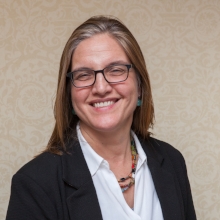
Lisa Cowan is Vice President of the Robert Sterling Clark Foundation; in this capacity she helps with strategy, development and oversight of foundation programs and grantmaking. Lisa has been working with community-based organizations for the last 25 years, first as a community health educator and program director at several youth-serving agencies, then as a Senior Consultant at Community Resource Exchange.

The Robert Sterling Clark Foundation practices “trust-based philanthropy.” What is trust-based philanthropy, and how does it change funder-grantee relations?

There is a power dynamic that happens between a funder and grantee that gets in the way of deploying resources effectively. Generally, the funder holds the power because they control the money and it is important to address this dynamic. Trust-based philanthropy creates a relationship between funder and grantee that is based on trust. It is both a set of values and a set of principals which can be operationalized.

Where does this distrust come from?

I think it is hard for grantees to be honest with their funders about what is going on because they fear losing money. Implicit in our society is a belief that people who have money are smarter than those who don’t; this belief permeates many things, including philanthropy. There is an assumption that the funder knows best. And there are funders with a specific agenda, or who believe they do know best. If either of these beliefs guide your work, then you want to make sure your dollars are spent well, and you don’t know that the person you are giving them to will do that.

Trust- based philanthropy starts from the idea that you really get to know your prospective partners up front – you get to know grantees, learn that they are trustworthy and have shared goals, let them get to know you and what you care about, and then get out of the way and let them spend the money the way they think is best.

What would it look like if everyone used this model? How would that change the non-profit world?

It would clear up a lot of time. A lot of time and energy are spent on what I think of as the kabuki of the funder-grantee relationship: writing LOIs, writing proposals, orchestrated site visits, preparing reports, a lot of bureaucracy. If you could clear this work away it would leave both more time for organizations to do their work and for funders to learn about the kind of work that they are interested in supporting. And when a funder offers multi-year grants, organizations can plan better, because they know what they have to work with. They don’t have the anxiety or administration of trying to get the money in. Many organizations start with zero dollars in the bank each January – that’s just crazy. How would you plan in your personal life if you had no guarantee of what your income would be?

I also think trust-based philanthropy creates a much better job for the funder – you are not approaching the world with suspicion. It changes the relationship such that you can learn much more about the work you care about and how it happens on the ground.

Right now there are a lot of calls for reinvention. What are other ways in which philanthropy should be rethought right now, or should change in the next decade?

My fantasy is that philanthropy focuses a ton of resources on changing the tax code and then we wouldn’t need philanthropy and we could go out of business – that would be real justice.

This is a time for philanthropy to think about exceeding their spending limits – going beyond the 5% annual spending requirement out of foundations.

A shift from charity to solidarity would have a lot different operational implications. We talk about essential workers now as the people who run bodegas and bus drivers. There is an opportunity to change the hierarchy of power, which means that money would flow differently.

Practically, we need to think about payout and processes, and who sits on boards. The people closest to the work are in the best positions to come up with solutions and know how to do it.

We need a deglamorazition of philanthropy: there is less hidden power to it if you don’t have to be the smartest person in the room.

And, just to say: this bullshit about not being able to use endowments to pay staff – I don’t have a deep understanding of the legalities, but we are capable of changing them. Why would we let the lowest-paid staff members go at this moment, in order to hold onto our money for another day? It’s such a small-minded hoarder mentality. We had this conversation with our board, which has been very focused on getting our endowment to $100 million; as one board member said, this is a moment when the foundation cannot be your primary allegiance, your allegiance needs to be the city. For example – what is the point of being a guardian of the Harvard endowment if the city of Cambridge that houses the University is in rubble?

You talk about changing the tax code, but if non-profits were government funded, we have a problem with the sheer number of non-profits, and the growth of this industry.

In next few years I’m really excited to think about structures that could support the work people are doing in the community. There is an organization in Seattle called RVC. They hold a single 501c3, and serve as an umbrella for a number of immigrant-led organizations that are part of that 501c3 – the organizations gave up their own 501c3s, and give a portion of their budget to RVC. RVC then administers a lot of stuff – budget, legal work, human resources. This changes the work of the leader of that organization so that that person can focus more on program and less on administration. It changes who can be a leader, and the relationship between the leader and the board of directors.

They have also been able to instigate change in the city about policies like whether they reimburse expenditures or pay up front, or reimbursement rates per kid for certain programs. They can see across the scale of different programs and types of programs and identify inequities and push back.

This could this happen in New York City. Organizations could collaborate in new ways, maybe not have their own boards of directors. This changes economies of scale and the ability to collaborate.

Right now museums and other cultural non-profits are seeing that we need to rethink our financial model more generally. What should the role of philanthropy be in cultural institutions? Any other thoughts on reinventing the financial model for these non-profits?

Foundations really need to listen to the institutions about what would work for them. In so many instances we say, if you work harder you can make the existing system work, rather than recognizing essential brokenness of the model. Philanthropy is a space in which you should have license to try new things. I wish that philanthropy would be more adventurous in trying new things, listening to ideas from the field, knowing some would work and some would not – but at least then we are making new mistakes.

It looks like the Robert Sterling Clark Foundation does not fund cultural institutions – is that correct?

We fund leadership development programs. Our methodology is about bringing leaders from different institutions together. We would theoretically fund a group of museum directors working toward equity, just not an exhibit. We have gotten a few proposals from museums, but they felt focused on individuals rather than the collective power of museums.

We just started funding The Laundromat Project, which supports artists of color who create artwork in the community. I have a gap in my own understanding of the role of the arts in moving toward equity. Funding The Laundromat Project will push me along that line.

I see how the Brooklyn Museum has become a gathering place for protest. Recently a large rally in support of Black trans lives gathered on the steps of the Brooklyn Museum.  I don’t think museum was involved in the rally, it was just the space in which people gathered. But it shows to how people think of the museum – I don’t think people would gather for a rally like that that on the steps of the Met.

There is a lot I have yet to understand, and at least some of that is about how the big museums present themselves and who they cater to.

The foundation is “committed to helping create a vibrant New York City – one that is strong, healthy, livable and just.” Talk about the role you see cultural institutions, and specifically museums, having (or not having) in this space.

Museums are about understanding who we are as a country, as a people. I think part of what we are seeing, especially now, is that people have such limited contexts through which they see the world. Aren’t museums an exceptional space in which to challenge that?

I think so, especially through storytelling. One challenge evidenced in the Instagram page Change the Museum is that staff is hearing a different set of stories than donors and board members are.

Many board trustees and funders are not looking to be educated because this is a huge challenge to the power they hold. People do not want to let go of power. But we are at a totally unprecedented moment, even in how honest we are about these conversations. Not to seize that moment to talk to board and donors seems like a loss. But I can safely say that because my donors are dead.

Who can take these risks? The Met has a pretty good safety net; maybe your museum doesn’t.


TOP FIVE IDEAS for Online Programs

These ideas come from Julia Lazarus, an experience designer and cultural project producer interested in creative audience engagement, public humanities program development, and strategic cultural planning. She is currently a fellow with the Rhode Island Council for the Humanities. Previously, she served as Assistant Director of Online Learning & Innovation at Brown University’s School of Professional Studies, where her team developed and delivered both fully online and blended courses for high school students, Brown undergraduates, professional adults, and Brown’s global public. Her prior work included museum programming, educational technology, multimedia content production, community journalism, and film. Julia holds an MA in Public Humanities from Brown’s Center for Public Humanities and Cultural Heritage, as well as degrees from Duke University and Wesleyan University.

As you shift to online programs, think of this as an adaptation project, as if you were trying to turn a book into a movie: you wouldn’t expect a one-to-one correspondence.  Do we switch formats? What do we retain? What is transformed? What do we let go? How do we capitalize on the new formats and opportunities? 

Use the digital space for what the digital space does well. Here are five tips to help you do this.

  1. REMEMBER YOUR GOALS

What is the outcome of the program supposed to be? Maybe you are trying to teach people something in an educational program; maybe you are trying to build community amongst your visitors; maybe you are trying to build bridges between your community and your institution. So as you are thinking about adaptation, start with this outcome. 

Then think about what you want people to do in this experience that will demonstrate that outcome, maybe even what artifact they can generate. With that in mind, design an activity to produce that “doing,” that will enable the creation of those artifacts. And finally, identify what content/information they need to know to be able to accomplish the activity. The activities should be in the service of these outcomes.

This can also apply broadly to keeping focused on the mission of your department or institution, which is always wise. Whatever scope your program is addressing, keep the strategic goals in mind, and use backwards design to make sure the activities you are offering are advancing those strategic goals.  If you are making beautiful content that you think somehow replicates what you offer face-to-face, but you don’t know that anyone is using it or getting anything out of it, what’s the point? What are you really trying to accomplish? 

The Backwards Design model


  1. MOVE AWAY FROM THE SCREEN

Just because you are using a computer — or a mobile phone — to deliver an online experience, everything doesn’t have to happen on a computer. Use the screen space to launch the program. Establish the tone and the parameters, and introduce everyone, in this home base. But then ask people to do reading, looking, thinking, researching, and making on their own. Then come back to the computer to share and discuss.

The best online learning involves active creation. When shifting to online learning you need to shift your lesson planning away from what you want people to know and toward what you want people to be able to do. And the digital space is a great tool for all sorts of doing: researching something, finding and sharing an image or a link, accessing an article or video to read or watch, making a video of your own, listening to music or making a recording, connecting with a group of people to discuss something, using a digital tool. Think about what you will be asking people to practice, and what you can invite people to do both on-screen and off-screen. The doing will enable the learning. Look for ways to connect the content to that activity in an interesting way.

  1. GO ASYNCHRONOUS

Don’t just Zoom!    

First of all, it’s exhausting. I think many people are experiencing this first-hand right now, but researchers say it’s hard to process people’s facial expressions, and listen, and you don’t know where exactly to look, all on these small video windows (for more on this, see this and this and this). It’s probably not an ideal choice right now for a museum program which is meant to be energizing, or relaxing, or elevating in some way. Of course, Zoom is fine for some things, but it’s not the be-all and end-all of an online experience. What is actually better for engagement in an online space is an asynchronous experience. Delivering something in an asynchronous format — not in one live session, but rather spread out over time, allowing people to participate whenever works for them — has benefits: (1) you don’t have to bring people in for specific hours, so you can reach more people, whenever their schedules allow them to participate; (2) you can reach people beyond your local area, even in multiple time zones, potentially vastly broadening your audience for a given program; and (3) it lets people dip into the questions again and again, and mull them over a long period of time. One student said, “I carry it with me throughout the week.” It’s extending the thinking time in an interesting way that makes it more meaningful.

In the museum setting, we know that getting people to slow down and look and think has a big benefit. Asynchronous learning expands time and processing in the same way.

Think about pre- and post-visit activities that wrap around a given time-limed experience on site at a museum. Use the same concept. It’s a great model.

The other benefit of developing an asynchronous online experience is that you can make reusable digital content pieces, which is an investment in future content, a program you can offer again and again. 

  1. DON’T WORRY ABOUT LIMITED TOOLS

The tool is not the answer – the answer will come from the kind of engagement you want from people. What do you really want people to be doing? Probably not just sit and watch.

Do you want people to look closely and then demonstrate something? That will determine your tool. How will you ask them to demonstrate? What are the tools at their disposal? Can people draw something, or make something with materials they have at home, and then take a picture with their phones, and share and discuss online? You don’t need a fancy tool with a digital whiteboard. Learning the new tool is not where you want their effort.

That said, it’s important for people to have a home-base to come back to – an organizing space. This can be a google doc or a web page – any space providing a sequence or agenda or outline that people are working through. In a learning management system that would be used in an online course this is usually called the learning module sequence, but you can think of it, at heart, as a structured list of activities. Help people know what home base is.

Home base for an online course
  1. DISCUSSION BOARDS MAY SEEM DULL, BUT THEY ACTUALLY LEVEL THE PLAYING FIELD

Discussion boards, with their long threads of typed comments, can seem visually flat, arduous to wade through, or just boring in comparison to a face-to-face discussions. Online discussion boards do fundamentally rely on a lot of text. However, what people have seen in online classroom learning is that two things happen: (1) Discussion boards level the playing field – everybody posts, not just the loud kid or the brave kid. One good practice is to have people post and then come back a few days later and read everyone’s responses, and also reply to a few other people. So everyone’s voice is heard, and the experience is structured to ensure that people get feedback. (2) Because people are writing, they actually end up making quite articulate comments. They have to take time to think about what they are saying. Instead of offering a comment on the fly, they have the time to  think, edit, even fold in resources – images, links, audio, editorial references. Online discussion boards need good experience design to establish and explain the sequence of steps, and they need facilitation, but when done well, they can generate richness and thoughtfulness as well as equity that is lovely, and not at all a diminished form of discussion.

The final thing to keep in mind is that a facilitator really is critical. Research has shown that the best online learning has three components: “instructor presence” (the feel and actual participation of a person leading the way); content; and social engagement. To be really successful, online learning experiences need all three.


TOP FIVE IDEAS for leveraging digital platforms and thinking

This post is the first in a series of interviews with individuals who have ideas for how museum professionals might leverage this moment to think or work in new ways, or how we might do our work more efficiently and effectively.

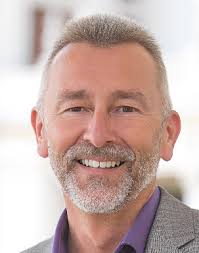
This post is from Nik Honeysett, CEO of BPOC, a San Diego-based, non-profit consultancy that provides technology support and development services, and business and digital strategy for the cultural sector. Previously, he was Head of Administration for the Getty Museum. He is a former board member of the American Alliance of Museums and Museum Computer Network, and Guru, a mobile experience startup supporting the cultural, attraction and sports sectors. He is a frequent speaker on issues of organizational and digital strategy.

My “top 5” for digital strategy is a cross between advice about using digital platforms and leveraging a way of thinking that we might call a “digital mindset.” So before I share my Top 5 tips, here are three big ideas about how museums are and should leverage digital platforms and mindsets. 

BIG IDEAS

The Real Benefit of Digital is Efficiency and Productivity, not Revenue

There is a misconception about what digital is. People think it involves social media and a website, but it is much more and much more fundamental than that. One knee-jerk reaction to the museum closures was to ask how to generate revenue from digital. But generating revenue takes time, and requires scale. So, if you are doing any kind of online engagement you need to scale up, get in front of more people, this will benefit your online and onsite success. Take generating revenue through online donations as an example. Recently an organization in Balboa Park hosted a Facebook Live event and asked for donations. They got 113,000 views over about four hours and made periodic asks; through this effort they generated around $4,000. A certain percentage of people you are in front of will respond with a donation, so to get $40,000, they need ten times as many views. Scale is a very important aspect of digital.

The real benefit and opportunity of switching to digital is not revenue, it is a way of operating: being nimble, innovative, entrepreneurial, opportunistic, and relevant, because if digital is good at anything, it is good at creating efficiency, productivity, and reach – scale. Digital technology is how you can be more efficient and productive with what you have.

By way of example, the South Bank Center, a performing arts organization in London, moved from a traditional desktop productivity environment to GSuite, that is, shared drives, Google Docs, Sheets and other shared productivity tools. Its a collaborative environment that requires teams work together. They benchmarked productivity before and after the transition, qualitatively and quantitatively. They calculated significant increases in their ability to find things, be more efficient and more productive – the time savings where equivalent of 9 extra people in an organization of around 90. 

The challenge here is that by-and-large leadership focuses on real money as opposed to efficiency and capacity building, regarding technology and digital as an expense – “it costs us money”, “can we generate money from it?”, rather than an investment in institutional capability. This expense mindset is reflected in cost-cutting when threatened, rather than looking to accomplish more – if you’re in a hole, don’t keep digging. We need to educate leadership, letting them know that a key economic benefit of digital is the cost savings of efficiency, and the ability to be more productive.

To create better capacity and efficiency in organizations, we use a framework called the Capability Maturity Model. While originally a software development process, it can be applied to organizations as a way of shifting an organization from an ad hoc way of operating to an optimizing environment. Museums often have practices that are inconsistent, with individuals making heroic efforts over long days to achieve results, leading to burn out, underappreciation, and sooner or later they leave. In museums you also have a lack of clarity in roles and responsibilities, as well as unrepeatable processes. The Capability Maturity Model helps organizations address these challenges and become more repeatable, optimizing their environment by looking at four dimensions: people, process, measurement and technology. The capacity-building strategies focus on moving people from untrained to cross-trained, more efficient processes supported by appropriate technology, and collecting data and metrics about performance and using this data to track improvement. Breaking it down into these four dimensions helps to simplify the discussion and the strategy.

Another aspect of digital is innovation, but it requires risk-taking. The capability maturity model mitigates risk because it allows an organization to better understand how its processes work, change them and see the results quickly. Ultimately the goal is to get an organization to a predictive-analytics mode, allowing it to anticipate results before changes are made. This is powerful because museums should take more risks, but risk takers are often filtered out by the hiring process, particularly in large institutions where the HR process avoids risky people. So, when a leader says we need to take more risks, be more innovative, they are usually talking to a group of people filtered for risk taking and innovation.

Museums Need to Rethink their Operating Model

The last few months have created ambiguity and uncertainty. The people who are making it through are the people who are more comfortable with ambiguity and uncertainty. Disruption will be an ongoing challenge, either due to virus flare-ups, or climate change issues that we’ve already seen severely impact museums in susceptible locations. A lot of museums are already planning for a winter closure due to COVID. It’s not just Coronavirus creating uncertainty, there are any number of existential risks coming down the pike, from paying museum staff a living wage, an end to volunteering and changes to, or even elimination of tax exemption. Even several years ago on Museum Advocacy Day, folks on Capitol Hill were talking about reviewing tax exemption because there is so much abuse of it – there was also a view that if you’re an institution for the benefit of a community, the community should fund you. The effect that COVID will have on the national debt will put tax exemption under serious scrutiny, and museums are going to get swept up in this larger analysis. There will be more scrutiny of how you qualify for tax exemption, which will make the qualifying process more difficult. We already have some for-profit museums, and we have new models like Benefit Corporations, which are businesses-with-a-cause, providing a public good while being responsible to shareholders. We may be forced to change our business models.

Even if this doesn’t happen, the pandemic has shown us that we need to urgently diversify our earned revenue streams, and adopt new ways of working, there will be long term consequences and emergent trends we are seeing now, will accelerate. For example, our heightened awareness of hygiene will have an impact on cash transactions. I’ve made one cash transaction in the last 3 months and it was a strange experience, its all going mobile and contactless. The SARS epidemic in 2003, accelerated China’s path to digital payments, COVID-19 is doing the same thing here. To reopen, museums are requiring transactions online before a visit, and there will be no going back. There is a significant benefit to this which is visitor data. On the negative side, a move to contactless and mobile will impact economically challenged communities.

Museums are Businesses

Thinking about museums as a business is really difficult for museum leaders. Museums are mission-driven, but ask a museum employee to recite their mission and they often struggle. Additionally, missions are derived internally and consequently tend to be very internally-focused – “this is what we’re going to do for you”. But missions can be problematic, you can deliver on your mission and be financially in trouble, but you need healthy finances to deliver on your mission.

Mission should be in two parts and much more externally derived – an obligation. A social obligation – what are you doing in return for the privilege of tax exemption? If you are tax exempt, your community is losing tax revenue, so what are you giving back to the community? You also have a financial obligation – you are obligated to run a successful business that allows you to both deliver on your social obligation and support a workforce. “Not-for-profit” is a tax status not a mindset. It doesn’t mean you can’t make money, it means you need to reinvest the money in your organization, at the very least build reserves to smooth out the bad times, something that it appears museums have struggled to do.

We need to figure out how to diversify revenue, particularly earned revenue. Who knows what will happen to the grant-giving world, particularly federal grants. Local and community foundations have focused on emergency services, and there was immediate support for COVID-impacted museums, but this cannot be sustainable. So we need to evolve to produce more diverse earned revenue, not just admissions, it requires we think like a business and make decisions that are more financially sound. A part of this thinking is to regard the cost-savings of technology-enabled efficiency as revenue, either allowing fewer people to do more, or the same people to scale their productivity and reach.

TOP FIVE

With this in mind, here are five concrete ideas related to digital strategy. Remember: Digital strategy is just good strategy.

1. Digital thinking is a pattern in a stream of decisions.

A digital transformation is most often a cultural transformation, following the 80/20 rule: 80% culture, and 20% technology. Digital is an investment, not an expense, an investment in future-proofing your organization. A digital mindset is innovative, nimble, opportunistic, entrepreneurial, and a questioning mindset, constantly thinking about how to improve, become more relevant, productive and efficient. Transforming an organization is baking these approaches into an organization’s culture.

2. Be thoughtful and impactful in your planning

Measure what you do against its impact and its financial sustainability and stop doing anything that is low on impact and low on financial sustainability, or figure out how to move one of those dimensions to high. Its fine to have something that is high impact but not financially sustainable, as long as it is balanced by something that it high on financial sustainability. In an ideal world, everything you do would be high on both dimensions, but that is often not the case. Everything you do in the digital world should be literally remarkable – so that people remark on it and share with their networks – this is how you create scale. For many, the response to the closures has been to just push any content out to the world, we whould be much more thoughtful and impactful with the content we put out there – its a question of quality and branding.

3. Measure success and act on the data

Evolve from anecdotal conclusions, and use data to understand what works and make the change. If you are not engaging audiences, analyze what is more engaging or stop doing it. If your twitter posts only get a few likes and no shares, why are you doing it?

Traditionally we talk about Key Performance Indicators (KPI) – a quantifiable measure used to demonstrate success. KPIs look back, and not forward. We need to switch to a new model and use Objectives and Key Results (OKR), which require you to look forward by settings attainable goals and working towards achieving them. OKRs require you to plan and act in a way that simply reporting your KPIs don’t. OKRs inform your work instead of reporting retrospectively on it.

4. Assume the lowest common denominator of digital literacy

Digital is new to everybody, it is a constant learning process because the tools morph and change, digitally savvy people are just those who are not afraid to just try and experiment with the tools. Often your staff and your audience don’t want to admit what they don’t know. How do you use Zoom on your phone? How do you tag a museum on Facebook? How do create a Google Doc? How do you assign a task to a team member in Slack? To enable digital literacy is to make basic instructions and training always available, establish both formal and informal learning in your institution, and create user groups for complex technology with your peer communities.

5. Be clear about roles and responsibilities and eliminate silos.

A key digital strategy tenet is common understanding. Common understanding of where data and assets reside, how the organization’s processes work, and common understanding of roles and responsibilities. This should be explicit and implicit. Collaborative environments create an implicit expectation for where things are and how processes work, they demand that staff work collaboratively. Staff roles and responsibilities should be explicitly communicated, otherwise people will morph their job into what they want it to be and do the work they want to do. Collaborative environments, project management tools and a common understanding of processes can significantly reduce the need for meetings and email which are two of the biggest productivity drains in an organization.

How do we reinvent museums?

Over the past few months, while struggling with the devastating economic impact of coronavirus on museums, some of the most interesting and useful conversations I have had have been about reinvention. How do we use this moment to identify ways we can be better? How do we emerge from this situation with a clearer vision of what we want to be and do for our communities, and a more effective work environment to help us get there?

In the wake of George Floyd’s murder, our attention was refocused – or doubly focused – on systemic and individual racism. We have had this conversation before, after other brutal murders, and I worry that we will let this moment go without making any real change. We can’t afford to do that.

Obviously coronavirus and systemic racism require different responses from individuals and museums. The former suggests we shut our doors for now; the latter that we become a place of refuge. During coronavirus museums have opened virtual doors to a baffling array of digital resources, both existing and new; in the wake of Floyd’s murder, many of us have paused other activities to focus our energies on anti-racism efforts.

But in other ways, the challenges we are facing today both require and allow for sometime similar: radical reinvention.

Defining Reinvention

What does radical reinvention look like?

First, it requires a clear vision for what we want to be and do for our comunities, and how we need to act and communicate to get there. What is the truly necessary and important work each museum does? As museum directors and development officers worry about funds drying up in the next few years for non-COVID-related causes, we need to think not only about how to ‘pitch’ what we do as important, but how to make sure it truly is. What does “important” look like in the 21st century? Where do we need to redefine and reinvent what we do? Some museums started this work years ago; others have not yet begun. 

Often museums have ideas regarding importance, and we layer this on to the work we already do. For example, some museums are adding art therapy to their repertoir; children’s museums do work around helping parents understand the role of play developmentally in children. But these efforts are generally layered onto our existing model, which places collections and exhibits at the center. What would it look like to start with the impact and importance we want to have in our community, and work backwards from there? How would it change the work we do?

Second, it requires new ways of working, including extraordinary flexibility and the willingness to experiment in our own practice. Museums have suddenly added video editing, digital outreach, and virtual events to staff efforts. We need to become as flexible in our organizational structure and business model  as many museums have become in their programming. For example, we talk about boards being more diverse, but we need to think more deeply about the role of our boards and the requirements of board members. If we truly think of board members as sources for community and professional insight, rather than funding, how does this change who is on our boards, and what we ask of them? We may need to rethink staffing as our museums lose staff and dream about building back up in months or years to come. What positions or roles are really important to do the work we want to do? And while rethinking staff roles, can we rethinkg hierarchy and communication, to make sure that all voices are heard? And of course, along with rethinking boards and staff, we have all learned we need to rethink our revenue models. Among other problems, our current models for contributed income clearly contribute to elitism, and often promote donors who make their money at the expense of others. How can we become leaders in the effort to change this model?

Third, radical reinvention will require us to gather new expertise, likely from outside our field. What can community organizers tell us about institutional support of anti-racism efforts? What can digital experts tell us about communicating without a shared office space or reaching an audience virtually? Who do we need to learn from right now, and how do we do this with open minds?

Finally, radical reinvention allows and calls for radical collaboration. Nearly every museum spends untold hours recreating what other museums already offer. We all have our areas of expertise, and our passions, and our audiences which may differ in a variety of ways. Over the past few months museums have seen unprecedented generosity in resource sharing. Are there more radical forms of co-creation and collaborative programming? Can museums align and collaborate in fundamental ways to save ourselves from duplicating each other’s work? Could five smaller museums share a marketing position, leading to interesting discussions about the role of marketing in the work we do, as well as possible cross-promotion? Could museums engage shared educators to do off-site work, representing mutliple institutions as they work with audiences?

Next Steps

Over the past month I have spoken to an expert in online education and an expert in digital strategy. I will share these posts soon. In the meantime, I am looking for others, primarily from outside our field, who can help museum professionals think in new ways, and expand our toolkit to address critical issues and change the work we do. Who are the people who can help us leverage this moment  in a way that leads to meaningful reinvention? Are there strategic planners who think about reinvention as it applies to systemic racism, or who are thinking about this right now? Are there activists who think about reinvention on an institutional level, in a way that would be helpful to leaders of those institutions? If you are one of these people, or have ideas for those who are, please let me know.


After I wrote this post I read the AAM Virtual Conference presentation by Dr. Johnnetta B. Cole, Secretary Lonnie G. Bunch III, and Lori Fogarty; it is a powerful call to reimagine mueums, and I encourage everyone to read or view it here


What objects or works of art have resonance for you now?

Art and objects teach us about historical moments, give us comfort, and connect us. What might we collect in a virtual exhibit to illuminate and help us through our experiences with the COVID-19 pandemic? I asked a number of people to share an object or work of art that has resonance for them right now. Below is the virtual exhibit collected from their answers.

I’d love to continue to grow this “exhibit.” What objects or works of art have resonance for you? Please share in the comments or email me at rebeccasherz – at – gmail – dot – com.

Zoom Out: Perspectives on the Pandemic

David Bowles, Museum Educator, The J. Paul Getty Museum

How Does Social Distancing Change Our Perceptions of the Natural World?

Roelandt Savery (Flemish, 1576 – 1639) Landscape with the Temptation of Saint Anthony, 1617, Oil on panel 48.7 × 94 cm (19 3/16 × 37 in.), 2008.73 The J. Paul Getty Museum, Los Angeles
This pandemic means that social distancing is our life now, but hermits have self-isolated for centuries in order to achieve different goals. Roelandt Savery painted this nearly 400 years ago. It looks like a landscape at first glance; but look again on the lower left. There is a man in this wilderness. He is Saint Anthony, a man who stories tell us self-isolated in the wilderness in order to grapple with his inner demons without distraction. The artist gives most of the space to the wilderness itself. But if you’re patient, you can find a Anthony huddled in a simple shack, focused on a book, studiously ignoring a dizzying array of monstrous demons. The line between what the hermit sees inside himself and what the hermit sees outside himself is blurred.

Jackie Delamatre, Museum Educator

What happens when your associations with an ordinary object change radically?

Cardboard box

In my house, the cardboard box used to be the ultimate source of new treasures and most importantly, creative inspiration. When one arrived at our door, my daughters would rush toward it and tear it open. After flinging the packing material aside and briefly examining the contents, they would carry the box down with a Seven Dwarfs-style jolly tune and get to work on their latest creation. Over the last year, they built washing machines, laundry hampers, bunk beds, kitchen sinks, refrigerators, beaches, summer camps, desks, and all manner of other things for their dolls. And now? When we most need the inspiration, the cardboard box lands at our door with a thud and sits, forlorn and ignored, until an adult in the household can approach it, prepared to decontaminate. And as soon as it’s been emptied? Out with the recycling. Sure, we could wait the requisite 24 hours for the dreaded germs to die, but by then, the excitement has died too. And just like that, a beloved and humble object is transformed.


Charlotte Herz, High School Student

How do we use our freedom to express anger in a time of isolation? 

Ai Weiwei, Study of Perspective (1993-2005). From Ai Weiwei, Phaidon Contemporary Artist Series.

This piece shows Ai Weiwei expressing his anger at different institutions around the world. Right now, we are all angry. It’s the universal product of being trapped inside for longer and longer periods of time. Some of us are angry at the president – to which I say, fair. Some of us are angry at people still going outside – also fair. Some of us don’t even know what to be angry at, so we fight with our families. Maybe that’s unfair but goddamn siblings are annoying. The miracle of this piece is that Ai Weiwei makes a conscious decision to not be angry at people. People, he says, are able to spark change. Rather, he makes institutions the focus of his rage. At this time we need to do the same. Be angry at our institutions of healthcare, and our prison systems. Be enraged that our rich and powerful government has let millions of people slip through the cracks where they are fully susceptible to disease and can’t afford a cure. Use the democracy we live in and the freedom we are granted to speak up for those who have been forgotten by our institutions. Use the internet, social media, and art to let it be known that we will not stand for things the way they are now. 


John Stagg, Editor, James Madison Papers

How does a pandemic change public behavior?
Catalogue page illustrating spittoons / cuspidors for sale, 1893. From Handlan Company catalogue.

In 19th century American spittoons were ubiquitous—in bars, brothels, railway carriages, the halls of Congress and the courts. Anywhere where large numbers of men congregated (spitting was gendered behavior). As knowledge of how infectious diseases spread in the late 19th and early 20th centuries, especially tuberculosis, the medical profession came out against public spitting, but the pivotal moment was the great flu epidemic after World War I.  Spitting and spittoons fell out of favor, to be replaced by chewing gum and cigarette smoking.


Holly Shulman, Editor, Dolley Madison Digital Edition

Do we all live in a bubble, despite what may be going on around us?

Still from Pixar’s WALL-E

Living in a bubble is a survival tactic; we simply wrap ourselves up and avoid seeing the awful things going on around us to protect our sanity. Negatively, this human condition means we are too rarely prophylactic either in our personal lives or as a nation. Is the US more bubble-wrapped than other nations? Perhaps a critical portion of the population is. On a personal note I am living a comfortable life, doing my own work, enjoying my husband’s company, talking to friends and family by phone, appreciating a pleasant and beautiful neighborhood where people still stroll the streets, while I suppress my anxiety about whatever lies ahead by living in my bubble.


Lynda Kennedy, Vice President, Education & Evaluation, Intrepid Sea, Air & Space Museum

How can history give perspective and inspiration as we live through a pandemic?

Photograph, Black and white; View of the Intrepid from above; SBD Dauntlesses and TBF1M Avengers on deck. 1943–44, American, World War II, photographic paper. Collection of the Intrepid Sea, Air & Space,

By now we’ve all seen numerous references to the flu outbreak of 1918, but another historical time period to offer some perspective, and perhaps inspiration, at this time would be WWII. Considering the former USS Intrepid as the large and storied artifact it is, we can be reminded of what was arguably the last time the majority of our country felt united in its effort and its sacrifice. (Then, as now, it wasn’t everyone!) Thinking of the 3,000-3,500 young men who lived onboard, we can meditate on examples of living in relative isolation for long periods, the voluntary risk undertaken by a few for the good of the many, and the tragedy of lives lost far too soon. What must have seemed overwhelming and endless – the entire world at war – was weathered by a generation, letting us know we too can get through.


Laura B. Roberts, Roberts Consulting

What continues on and what ends?

The pear trees alongside my driveway bloomed in April, right on schedule. It is my perennial sign that spring is really here. I live in a historic duplex on a main street in Cambridge; there is an identical house next door; the four households in the two houses form a micro-neighborhood. When we moved in 30 years ago, there was a row of gloomy evergreens between the two houses. The neighbors on the other side of the trees agreed that they were ugly, so all four of us sat down, consulted plant books, and selected Bradford pear trees, which thrive in urban environments. We replaced the evergreens with three new trees, running between our parallel driveways. For many years, our two families enjoyed not only the trees but dinners and long evenings on our patios all summer, long after the blossoms gave way to leaves. Then my friend B started to fade away, taken by early dementia. Seven years ago she moved to a facility that could care for her safely. Their daughter grew up and moved to New York. Her husband moved an hour away and built a new life. Last Monday, B was taken by the virus. The trees are still in bloom. They and my memories continue to bring me joy, even as our friendship finally ends.


Janine Okmin, Bay Area Discovery Museum

Which of the billions of artifacts from this time will remain, and how will we derive meaning from them?

Listening Post, Ben Rubin and Mark Hansen.  Listening Post at the Whitney (2003), part 1 from Ben Rubin on Vimeo. See Part II of this video here.

I first encountered Listening Post at the Whitney Museum of American Art in 2002, or maybe 2003—as New York was beginning to emerge from the shock of 9/11. An audio and visual installation in a darkened room, Listening Post surrounds viewers with the sound of hundreds of simultaneous snippets of conversations, taken live from internet chats, and represented by scrolling digital texts that are placed around the room. The impact is unsettling — slightly robotic voices representing us as we shared content simultaneously mundane, worrisome, threatening and inspiring. For me, it captured the fear, beauty, and the radically changed world of post 9/11 America. Artist Ben Rubin said of his piece in 2001, “There are an untold number of souls out there just dying to connect, and we want to convey that yearning. I hope people come away from this feeling the scale and immensity of human communication.” As I fear, despair, and hope now, wondering about what of our old world will be forever changed, I can’t help but marvel at the enormity of human (albeit digital) connection I see. What art might be created to capture this moment? How might we aggregate the millions of Zoom heads, TikTok posts, collaborative songs, false news reports, homeschooling memes, sourdough starter recipes, and last phone calls from hospital rooms to create a chilling artistic time capsule for today?

What do you do when you don’t know what to do? Interview with Dean Heffta

Dean Heffta is a consultant who specializes in leadership, strategic vision, and performance training. He is the host of Communication On Point podcast and trains using the Process Communication Model developed in the 1970s, and since used by NASA and Pixar.

Recently I heard Dean speak in a webinar offered by the Peoria Chamber of Commerce, and found his ideas about taking action in a time of uncertainty inspiring. There is a link to the video of this presentation below, and a link to a handout he shared here.

Dean, can you speak about the difference between scary and dangerous, and how understanding this difference can help us in a moment like this one?

This is a moment where we are trying to process a lot of new information, information that we do not have a previous model for. Our brain interprets “new” as scary – something that is threatening to us.

How does familiarity inform sensations when I encounter something new? What is my approach to confronting and processing a threat? When something becomes very familiar, we begin to discount its risk. I might think, “I’ve walked on my roof ten times and nothing has happened.” This can lead to recklessness. Statistically, the risk of dying from a crash while driving to the doctor is probably higher than the risk of dying from COVID. Does that mean I should be naïve and careless and dismiss info as useless? Certainly not!

Right now the news is 95% about the virus. How do we manage the input? The virus is having an impact on my business and my world. What are the things I have control over? I can limit where I go, can increase how often I wash my hands. I can be creating opportunity for the future, honing new skills. Wisdom is looking at the present and saying, what can I do now to set myself up for a better future? Use the sensation of fear as a driver to prepare for the future.

How does planning for the future help us psychologically navigate the unknown?

Planning offers an element of agency – it is something I can do. I am most scared of things I have not had an opportunity to walk through in my mind. When I plan, it allows me to size things up and think about the best and worst things that can happen. My brain can then confront that worst thing. Back in the old days when sailors made a map, they would put a sea monster in the unexplored areas. Our brain is the same way – if we haven’t had a chance to explore something, that place is scary.

Planning allows us to think about the best and worst things that can happen, and then begin thinking about our resources. Whether I’m a CEO or I’m stranded on a desert island I need to take inventory of my resources. What do I have available to me? I can now begin prioritizing. What can I do? Find fresh water. That process gives us agency, focus, and clarity of where to put our energy. Dwight Eisenhower said, “Plans are useless, planning is indispensable.”

The flip side is we become so focused on our plans that when our environment changes we think, now what? Just because the likelihood of executing your plan the way you laid it out is very small doesn’t mean the process isn’t useful, because of the things we uncover by going through that planning process.

In your talk you described humans as natural map-makers. What does this mean?

When we think about maps we think about physical space. But when you see a physical map, that is a manifestation of what we naturally do – we have maps in our mind of relationships with other people, a good friend or a spouse or someone that you trust. I have a map of how to navigate that relationship. When they break that trust, it upends the map. People will use words like, “I feel lost,” because they have to go through the process of mapping out the relationship again.

Whether you are a business owner, a nonprofit manager, or an employee right now you are lost. You don’t know what I can count on, don’t know what the future holds.

I can pull out a map and tell you how to get to Omaha, even though I can’t see Omaha from here. I can get there in the dark as long as I have headlights to see in front of me. We can drive to where our headlights can show us. It’s ok right now to slow down and just focus on moving forward, whatever that means to you. Maybe instead of 18 month plan you set that aside and create an 18 day plan. What do we need to move forward from here?

Along with maps, what other strategies are there for how we can navigate uncertainty?

Here is one piece of advice when it comes to uncertainty: don’t take advice. We are inundated with “you should do this” and “here are 5 things everyone should be doing.” The reality is each person is unique. There are principles we need to understand, and history, that give us foundation and grounding. But each person needs to know themselves and what works for them.

Confidence comes from self-awareness and reflecting. It comes from times in your life you were uncertain and didn’t know the answers, and looking back and saying, “I got through that.” I find we each have more resourcefulness than we give ourselves credit for. All we need to focus on is moving forward and serving others. And when we have a service mindset, we find more meaning, which then feeds our courage. We will do more for others than we will for ourselves.

Give yourself some grace. No one is going to do things perfectly coming out of this. There is no one right way. Just move forward, and understand what you value. Our values emerge most clearly in times of uncertainty. It is experiences like this that show us what we really care about. What can I learn about myself and the people I care about? What can I learn about the things I want to pursue and accomplish? It’s a giant reset opportunity.

Artistic license is the ability to create reality for others. It is part of an artist’s responsibility. It is easy for people to say – “oh, that person is an artist.” As if it were some special thing held aside for somebody else. Art is just solving problems; it can be and must be alive inside every person. I can’t paint like Monet or compose like Beethoven, but the principals of trying new things and creating a new reality apply to all of us. We get to create reality for our lives, for the world around us. Why not create a reality on my terms? Why not be an artist of my own life?

Watch Dean’s presentation here:

How do we become comfortable with uncertainty?

Over the past week, I have heard from friends and former colleagues from around the country and beyond. While these connections are the silver lining in the enormous, dark coronavirus cloud, so much of the conversation is about lost jobs, fear for laid off employees, the sound of ambulances going by, and radical uncertainty.

Personally, I am slightly buffered from the immediate catastrophe museums are experiencing, becuase my museum is part of a unit of government, rather than a private nonprofit. And here in Peoria County at last count we had 10 (tested) cases of COVID-19, and no deaths. Yet. My immediate personal concerns are for part-time employees temporarily laid off, how much the Park District will need to shrink full-time staff as this continues, whether children’s museums are viable in an age of coronavirus, and how to protect my asthmatic teenaged son. I recognize that these concerns are small next to those of someone suddenly faced with unemployment, small children at home all day, or a failing business.

Former colleagues at a meeting at The Noguchi Museum, 2013

My friends, I am thinking about you. Alot.

The Museum Questions blog is a space to ponder the questions that impact museums. Beyond the enormity of “what now?,” what do we need to be thinking about in our field? 

This week a colleague and I made a list of the questions we need to answer to plan for the future. These include:

  • What pattern will the disease follow? When will it be safe to gather in groups of 50 or more without social distancing?
  • What kind of reassurance will people need about how we clean? How can we provide this reassurance?
  • Will we be able to retain the same part time staff we have now? How will we retrain people after months of not doing their job?
  • Will we lose members, and if so, by what percent?
  • What is the timeline for full recovery? And at the end of full recovery will we be able to resume “normal” operations? What permanent changes do we need to make?
  • Will we have lots of new people looking for something to do, leading to new visitors? Or will there be a general unwillingness to go to children’s museums / shared play spaces?

I don’t know how to answer any of these questions. And no one else does, either.

So for me, the pressing question right now is: How do we adjust to uncertainty? And how do we move forward in the face of this uncertainty?

Usually, museums and museum professionals present ourselves as experts with answers. Here is the story of a moment in history. Here is the story of an art movement. Here is how a scientific principal works. We are proud that museums are trusted sources of information. Not sure what’s true or not? Come to us.

As we collaboratively roll out thousands of social media-posts worth of online engagement right now (a task that I believe is both helpful to individuals and families, and demonstrates one of the many values of museums), is there a way to help people understand and become comfortable living through a moment where we don’t have critical answers? We don’t know what percentage of the population has the virus and is asymptomatic; we don’t know what it will take to get rid of this virus, or if we even can; we don’t know how effective social distancing is (although we do know it’s the most effective tool we currently have), or how long it will be until we can safely resume shaking hands and giving hugs and standing shoulder to shoulder on the subway. Along with sharing digital versions of our collections and ideas for engaging children, is there a way to help people (including ourselves) understand: We don’t know. None of us knows.

Here is one model, as a start to answering this question: The ability to live with ambiguity is essential to the creative process. Learning about the creative process was critical to my work as an art educator at the Guggenheim Museum, and an idea we discussed as a team in the Learning Through Art program. Personally, I think of this every time I sit down to write, or work on a new idea – there are long stretches when you don’t know what the outcome will be. Right now I am trying to apply this every day as I sit down at my desk to try and reinvision the future of my museum.

Is it possible to apply the lessons of uncertainty learned from the artistic process to our current radically uncertain world?

Is there a way to share, model, or promote this idea right now?

How do we, as individuals as well as museum professionals, find ways to both navigate uncertainty at this moment in history, and help others to do so?

Join me for Drinking About Museums – Monday, March 30th at 5pm

A week ago (but it feels like months) Thinking About Museums blogger Ed Rodley suggested that a day of virtual drinking with colleagues would be good for our museum-loving souls. I am one of 55 people globally who offered to host virtual cocktails. So please join me at 5pm Central Time tonight, with this Zoom link, for a BYOB drink and a discussion about our current situation.

See all the #DrinkingAboutMuseums events here

Read Ed’s original post proposing this here

And please, share anything you want to make sure is said or asked tonight (or any great cocktail recipes) in the comments to this post, before 5pm tonight.

HopScotch fundraiser at the Peoria PlayHouse Children’s Museum on February 29th. Was that only one month ago?

What do we do now?

This is a week for reaching out; for me, that includes working on a post for Museum Questions, after a very long absence.

This is a week when, while spending time isolated, we learn we are not alone. This short episode of “The Daily” shares how the tone of the internet has changed over the past week – we are noticeably more virtually supportive and communal. And by “we” I mean the vast majority of human beings. I suspect everyone has now seen the video, widely shared on social media, of Italians serenading each other from their apartments.

This is a week when we are simultaneously worried about whether our friends and colleagues who are not working right now will be able to afford groceries and rent, and whether our museums will be around and sufficiently solvent to re-employ them, as well as those of us still working, when this is over.

This is a week when people are reaching out to make sure neighbors they barely know have food and other essentials, even though a trip to the grocery store feels like a daring and dangerous mission.

So what do we do now?

We’re throwing seeds into the wind and seeing what grows, and learning quickly. Here is what we are doing at the Peoria PlayHouse Children’s Museum, and what we are learning; I’d love to hear what you are doing, and what you are learning, in the comments to this post.

Using social media to share activities to do at home

What we are doing: We schedule posts 2-4 times per day sharing activities, found from other sources, that parents can do with kids. You can see these posts on our Facebook feed.

What we are learning: 

A quick look at the PlayHouse Facebook stats tells me that most posts are viewed by 400-600 people, with approximately 8 engagements. This is only about 1/4 of our membership, and 1/10 of our email list or the list of those who like us on Facebook. Starting tomorrow I plan to send weekly emails gathering the activity ideas for the week, since clearly many of our followers are not seeing the social media posts.

Also: Museum educators are ideally suited to creating, collecting, and refining ideas for how individuals and families can keep busy and engaged at home. The PlayHouse is part of the Peoria Park District; often I feel like as a museum professional I have little to contribute to the larger conversations about topics such as recreation revenue, parks maintenance, and local vs travel teams for children. But right now, my skills are in demand!

Creating “Maker Kits” for members to pick up on our porch.

What we are doing: As an experiment, we initially made 20 of these bags, and sent out an e-blast asking people to let us know if they were interested. Here is information about what was in these bags.

What we are learning: Demand for this is high, and people will drive 30 minutes to pick these up. Within 24 hours we had requests for 275 bags. Due to a technology glitch we did not get these emails for 24 hours; despite telling people to wait for an email from us, lots of individuals showed up on our porch the next morning to get Maker Kits. We compiled as fast as possible, and were able to distribute about 100.

This was Friday morning; we sent out a survey after to learn more about how we could be useful. Of the 27 answers we have received, almost all asked for activity ideas; only a few were interested in video resources or links to resources shared elsewhere. Suggestions include activities for teens and for children with special needs; also a weekly e-blast with activity suggestions for the week.

Also, although we are not actively soliciting donations, we received two small donations on Friday and Saturday, which I believe were in response to these kits.

Providing childcare for children of healthcare professionals associated with OSF HealthCare, one of our local hospitals.

What we are doing: This will start on Monday. We are accepting up to 12 children; children will be kept in two discrete groups of 6. Despite that fact that we are a children’s museum, most activities will take place in classrooms (separate for each of the two groups) or outside, and when children do play in the galleries we will try to contain them in a space that we can thoroughly clean after. So far staff is happy for the work, but I worry that staff will get scared and decide they do not want to work.

What we are learning: I can let you know in a few days…

Staff care and communication

While we are closed (which we have been since Monday March 16) we are not able to employ our part time staff during this time. For us, that is most of our staff – there are three of us full time, and the other 15 or so employees are hourly. Fortunately, Illinois has put emergency unemployment relief in place, but I remain unsure exactly what compensation my employees will receive through this source. And while income is essential, employment also provides people with a purpose and a community.

How do we help employees find purpose and maintain community during this time? I am reaching out to staff by email and through our scheduling software. I am reaching out to some individuals, particularly those for whom I think this will be emotionally difficult. I have been discussing some ideas for volunteer projects that staff can sign up for – tasks that can be done at home, are outside of regular work duties, and allow ongoing teamwork and communication.

And on a personal note, I am…

Trying to reach out to at least one person each day who I have not spoken with in a while, taking advantage of this moment to broaden and deepen my network of personal support.

Watching lots of movies with my teenage kids. Current favorite: Crazy, Stupid Love.

Going for walks with friends. We spread out across the street or the park to stay six feet apart. On Saturday I went for three separate walks, with different friend groups.

Making a cardboard house for my daughter’s hamster. Everyone needs a wacky hobby right now. I was inspired by a Tik Tok video that John Oliver shared on Last Week Tonight (see 11 minutes and 41 seconds into this video):

What are you doing to keep sane, help your staff and community, and continue doing the work of your museum in these difficult times? Please share what you are doing, and what you are learning!