Museums and political thought: A follow-up

My two most recent posts have suggested that museums may have techniques at their disposal that help transform thinking, in particular fostering critical thinking and tolerance. Since sharing those posts, I have come across articles and video clips that I think further the argument, and may even help museums train staff.

Demonstrations of how to facilitate and foster critical thinking.

In November I wrote a post entitled, What responsibility do museums have for shaping the public’s relationship with facts? In this post I suggested that museums can and should foster critical thinking skills through object-based conversations, by asking both “what makes you say that” and “how do you know what you know?”

On December 1st, CNN’s Alisyn Camerota interviewed Trump supporters, one of whom claimed that three million “illegals” voted in the election. Camerota asks a series of follow-up questions that challenge this supporter to explain how she knows what she knows. A transcript and partial video is available here. You can also watch the full interview below; for the specific clip referenced,watch from 4’15” to 5’38”.


On a lighter note, Trevor Noah of the Daily Show shares a playful and fictional conversation along the same vein, comparing Trump to a toddler and noting that “logic is the downfall of every toddler.” He starts his imaginary conversation with Trump by asking, “What makes you say that?” (watch from 9’15” – 10’10”):


I wonder if these clips (in particular the CNN clip) might actually be useful in training educators and docents to facilitate rigorous conversations in museums? They demonstrate a few things simultaneously: the need for asking “how do you know what you know?” and the types of follow-up questions one might ask.  If anyone tries this, please do let me know!

The power of listening to foster empathy

In my most recent post, How do museums help to create a better world, I wrote that museum staff should be promoting tolerance, including those “who are happy to promote intolerant viewpoints – even when they don’t see themselves are racist.” As a result of this post I found myself immersed in a conversation on Twitter in which I was told (in bursts of under 140 characters – really not my favorite mode of conversation), “There’s no changing a fascist’s mind. That’s not how this works.” “There’s no ‘gotta hear both sides’ when you’re talking about extinction.” “And not lost on me is you’re asking those who are being actively hated on to perform this changing of minds.”

So the question is: can talking respectfully with people with whom you disagree help change their minds? I really think it might be the only thing that does.

First, more on a study that I have already cited, as shared in Vox. Researchers from Stanford University and the University of California Berkeley examined the power of conversation to change minds. Canvasers went door to door and asked people to “put themselves in the shoes of trans people.” Many of these canvasers were transgender themselves. This study showed that these 10-minute conversations were effective ways to change attitudes, and that this result endured for at least three months.

This American Life shared a story about this same technique in an April 2016 episode. This episode includes audio of a canvasser talking to a voter about abortion; the voter’s mind is changed by the end of the encounter: she goes from reporting a tolerance level of 0 for abortion to a tolerance level of 10 (the scale is from 0-10).

Similarly, the power of conversation to change minds was demonstrated in a recent New York Times opinion piece. In this article R. Derek Blacknov describes why he left the White Nationalist movement, which he was, as he puts it, “born into”:

Several years ago, I began attending a liberal college where my presence prompted huge controversy. Through many talks with devoted and diverse people there — people who chose to invite me into their dorms and conversations rather than ostracize me — I began to realize the damage I had done. Ever since, I have been trying to make up for it.


The program that This American Life and Vox reported on is run by Leadership Lab in Los Angeles. I wonder if they would work with museums to think about how museums could facilitate short, effective conversations with visitors or stakeholders? And/or help us to train staff to do this work?

How do museums help to create a better world?

Because we live in a culture in which we primarily receive information written and shared by those who think just like us, I have spent the last two weeks immersed in a flood of media that deepens my despair at the world this election has cast us in to. Some day, it will be the job of history museums to sort out how we got here, so that we can prevent this from happening again.

But in the meantime, many museum professionals are grappling with the only way we can address the situation: How do we, and our museums, help to create a better world? How do we protect people, and our democratic ideals, over the next four or more years?
word-wall-democracy
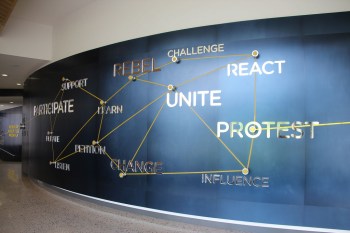
Word wall from Museum of Australian Democracy at Eureka

First, I want to note that this is not traditionally the job of museums. Our job is to collect, protect, and interpret the material culture of the past. Our job is to engage people with these objects in ways that helps them understand the importance of our collections, and make personal connections to these objects so that these collections remain relevant.

That said, it is everybody’s job to create a better world. And right now we want to use all platforms available to us to do so. Are museums an effective platform from which to take a stand, or make change? I don’t know. But here are some thoughts on how we might start trying.


(1) Address bigotry by promoting tolerance

This election has brought hate out into the open, creating an atmosphere in which minorities feel (and are) threatened. In order to address this we need to reach the voters who are happy to promote intolerant viewpoints – even when they don’t see themselves are racist. Read, for example, these interviews with Trump voters from the New York Times.

How do museums change these people’s minds? For years museum professionals have been arguing that museums are particularly effective at engaging people in empathetic responses – see, for example, the recent book Fostering Empathy Through Museums, and Mike Murawski’s posts on empathy in Art Museum Teaching.

How do we reach people who are starting from a place of active intolerance? A recent study shows that it may be possible to change people’s minds by engaging them in frank conversations about a topic – for example, imagining themselves in the shoes of a transgender person. And museums have important objects and spaces that help them start these discussions. But, importantly, first we need to connect with these people.

In museum education we talk about motivation, or advance organizers – where we start a lesson in order for it to make sense to the learners, how we connect new ideas to their existing knowledge and beliefs. We need to find a way to connect with the large number of people who feel threatened by an anti-Trump agenda, in order to change their mind. The article in Vox about this study extends empathy to white rural poor Trump voters by imagining how these voters might feel:

While terms like “racist,” “white privilege,” and “implicit bias” intend to point out systemic biases in America, for white Americans they’re often seen as coded slurs. …Imagine, for example, a white man who lost a factory job due to globalization and saw his sister die from a drug overdose due to the opioid painkiller and heroin epidemic — situations that aren’t uncommon today. He tries to complain about his circumstances. But his concerns are downplayed by a politician or racial justice activist, who instead points out that at least he’s doing better than black and brown folks if you look at broad socioeconomic measures….This is how many white Americans, particularly in working-class and rural areas, view the world today. So when they hear politicians and journalists call them racist or remind them about their privilege, they feel like elites are trying to distract from the serious problems in their lives and grant advantages to other groups of people.

If our goal is to engage people in rethinking bigoted ideas, we will need to make an effort to understand where they are coming from, and move them from point A to point B, rather than just insisting that point B is the correct one.

This is easier to say than to do, and raises more questions than it answers. At the Peoria PlayHouse Children’s Museum we have a program called “Celebrate Peoria,” where we celebrate the diversity of Central Illinois. We celebrate Hindu festivals, Muslim and Jewish holidays, African American culture, Mexican culture. But in the past we have not celebrated Christian holidays. As I wrote in a previous post, when we celebrated celebrated the Muslim holiday of Eid-al-Fitr, a visitor approached the manager on duty that day, and asked her if we would be celebrating Christmas. When she told him that we do not have plans to do so, he let her know that he might be asking for a refund on his membership.

Jo Lakota 11-22-15
Celebrate Peoria at the PlayHouse

Do we have to celebrate Christmas in order to reach these visitors? Will celebrating Orthodox Easter, on our calendar for 2017, be sufficient? How could it possibly make sense to share Christmas traditions with a largely Christian population, in the name of celebrating diversity? But how does it make sense to leave out people who feel disenfranchised, and who we care deeply about reaching through this series?


(2) Help those with resources understand the danger presented by Trump

Recently, Elizabeth Merritt wrote a post called  “Healing the Partisan Divide” in the Center for the Future of Museums blog. Merritt addresses the concern that museums operate in a bubble. She looks at statistics about which political party museum staff belong to, and notes that “data support my general impression, from years of working in and around museums, that our field leans largely liberal & Democratic.”

What this doesn’t take into account are our boards and funders. An article in the Guardian notes, “Of the one in three Americans who earn less than $50,000 a year, a majority voted for Clinton. A majority of those who earn more backed Trump.” I was unable to find statistics for the very rich. But it is clear that while some Trump voters are rural, poor whites, a large contingent of Trump voters are suburban wealthy, many of whom sit on our boards and work closely with museum professionals.

I don’t know if museum staff are prevented from furthering a politically liberal agenda by board members or funders who disagree with that agenda. I suspect that the answer is yes – if not because museum staff are actually prevented from taking action, then because of their fear of losing funding.

But more to Merritt’s point, we do in fact have access to Trump supporters, to both understand them and try to convince them. While both of these interest me, ultimately I want these resourced stakeholders to understand the danger inherent in an authoritarian, bigoted administration. So many people who could speak out against Trump and his key advisers are refusing to do so. Can we – liberal museum staff who have the ear of the very rich, who may themselves live in a bubble – change minds? I think we need to try.

Of course, this feels dangerous because we depend on the support of the wealthy to survive. But it is more dangerous to have an administration staffed with people who suggest that a national registry of Muslims is a good idea, and a man whose recent history is one of promoting racism and sexism masquerading as news:

breitbart


One needs only see Trump’s tweets in response to the Hamilton cast’s speech to Pence to feel that the arts, like the media, will soon be under attack.

There is at least one PlayHouse supporter who I know voted for Trump (because he told me), and who I am contemplating talking to. It will take me a few weeks to find the best way to frame the conversation, and prepare my arguments. My husband suggests reading about Turkey under Erdogan and Hungary under Orban. Maybe museum staff need a primer with information supporting arguments that will connect with the wealthy and powerful.


(3) Promote facts and truth

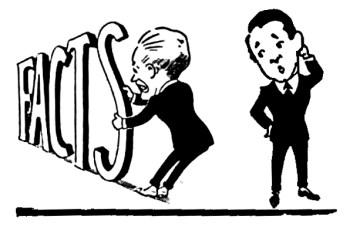
This election was won in large part through lies and fake news. The Trump team showed no consideration for the truth, and a huge number of people accepted everything they were told. As noted in my last post, museums can and should be places where visitors not only learn facts, but work to understand how they know what they know, and the relationship of new information to known. It is not enough to ask, “What do you see that makes you say that?” We must also ask, “How do you know what you know?”

facts


(4) Stand up for what you believe in

The Thursday after the election PlayHouse staff members went for “drinks for our country” to commiserate with each other. I asked staff to think about what they felt we could and should do to stand up for what we believe in, for the things that now feel under attack. The list included:

  • Continue to focus on “Celebrate Peoria,” bringing attention to diverse cultures.
  • Find a way to help the Syrian refugees, and let visitors know that we are doing this – perhaps through a donation box or collecting things needed. A friend of the PlayHouse is looking into existing programs we can participate in.
  • Stand up for the rights of women, and in particular survivors of abuse. I have a meeting in a few weeks with someone from the Center for Prevention of Abuse.
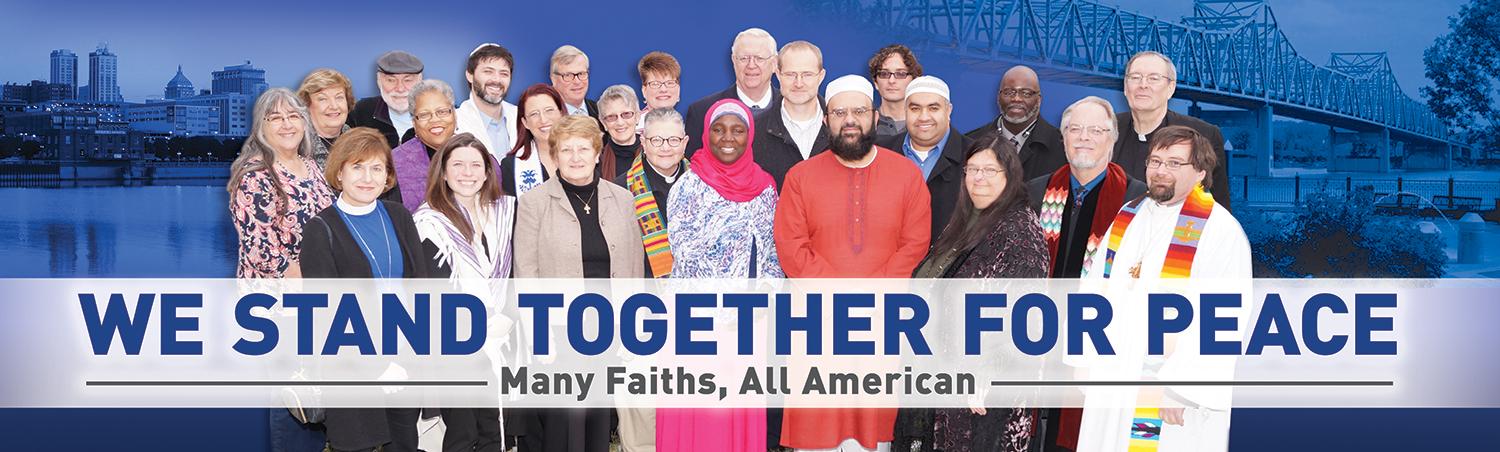
  • Put an “all are welcome here” sign in the window, and make a banner from the billboard, below, created by our local interfaith alliance, to hang on the museum’s porch rail.

interfaith-alliance_14x48_fnl-page-001

It doesn’t seem like enough, but at least it is something. Most importantly, perhaps, is the active engagement of staff in considering and promoting tolerance and social justice.


What else can we do? How can museums play a positive role in today’s environment? How can we support each other in doing so?

What responsibility do museums have for shaping the public’s relationship with facts?

In March I had a conversation with an insightful colleague, Amy Boyle, an educator at the Guggenheim Museum. Amy suggested that open-ended interpretation might be problematic in a climate in which political discourse disregards facts, and candidates and supporters make up their own truths. I’m not sure I’ve captured the challenges and opportunities offered by this idea, but I am convinced that museums have a role to play in helping people better understand facts and weigh opinions accordingly.


Museum educators have long struggled with the tension between teaching facts and curatorial analyses, and opening the door to personal interpretations and meaning-making. Do we lecture, or do we pose questions and follow the visitors’ lead? During this election season, the tension between sharing information and encouraging individuals to create their own interpretations has taken on new importance.

All sorts of lies are being bandied about, and claimed as truth. Just yesterday Donald Trump’s son claimed that a protester was attempting to assassinate his father, despite the fact that an investigation had already shown that this was not the case. These lies are effective propaganda only because people can’t be bothered to look further than their social media feeds for information, and do not take the time to investigate the source of various claims. (For more on this, see this episode of This American Life, and this New York Times op-ed piece.)

facts


A decade ago Cheryl Mezaros argued that the open-ended, visitor-centric interpretive approach in museums can lead to inaccurate interpretations of objects, or what she calls “the ‘whatever’ interpretation.”  Mezaros questions individual interpretation as a goal of museums and museum education.  Do we care when these interpretations are entirely misguided? Shouldn’t museums, and museum educators, communicate the hard-won knowledge and thoughtful interpretations rooted in years of research?

Does current museum education practice contribute to a disregard for facts and expertise? As the relationship between facts, interpretation, and political will grows more complicated, museum staff might want to think carefully about how we foster respect for facts, as well as for informed interpretation and opinion. But what does it look like to cultivate respect for facts, and critical thinking habits that examines how we know what we know?

In a 1996 article, Zahava Doering and Andrew Pekarik propose that all visitors enter the museum with prior knowledge and an individual perspective. They argue that the ideal outcome of a museum visit is an active and engaged struggle between curatorial content and visitor perspective visitor interpretation. They ask:


Would you prefer education to mean that the visitor accepts everything that your museum says and gives it the same weight and emphasis that the museum does? Or would you prefer that visitors become engaged with the presentation, question it, and struggle with it intellectually and emotionally?

Given that each visitor arrives burdened or favored with prior knowledge, Doering and Pekarik suggest that museums should be places in which visitors take in a museum’s ideas, struggle with them, and emerge from that struggle with something more or different than either the museum’s presentation or the visitor’s prior knowledge.

Unfortunately, all too often the viewer dismisses rather than struggling. In a 2007 article in the Journal of Museum Education, Mark Felton and Deanna Kuhn, professors of education who specialize in critical thinking, describe a visitor at the American Museum of Natural History:

On a recent trip to a natural history museum, we witnessed a visitor roll her eyes at a display on evolution and groan to a friend, ‘Oh great, even the Museum of Natural History is caving in to the Religious Right. Now they’re calling evolution a theory‘ Shaking her head dismissively, she passed over the fossil evidence and moved on to another display…. The display she dismissed was designed to highlight for visitors the assertions, bodies of evidence, and arguments that constitute evolutionary theory, leaving them with an enriched understanding of the theory and its basis. But the effort did not succeed with this visitor. Because she was already certain that her knowledge was correct, she saw no purpose in asking herself, “How do I know?


Felton and Kuhn proceed to suggest how museums might teach better critical thinking skills:

[M]useum educators must engage visitors in ways that will promote the active evaluation of prior knowledge, prompting them to consider not only what they already know, but also how they know it, which brings us to the heart of critical thinking. By getting visitors to contemplate the question “How do I know?” museum educators are more likely to lead them to examine their understanding, revise their misconceptions, and build new knowledge on a stronger and more elaborate base of prior knowledge….

Putting together these two ideas – Doering and Pekarik’s perspective on visitors’ prior knowledge, and how this impacts perception of an exhibit, and Felton and Kuhn’s understanding of critical thinking, and what it takes to really think critically – might help museum educators plan for helping visitors think about how we know something is a fact, the difference between a fact and an interpretation, and what knowledge we need to assess or interpret a situation.

In a recent episode of This American Life, Ira Glass shares a recorded conversation with his Uncle Lenny. Lenny makes a series of claims about Obama that are demonstrably false – “He’s played more rounds of golf than any president in history”; he never wrote a single article for the Harvard Law Review, “no one in his graduating class from law school can remember ever having seen him there.” Ira Glass easily fact-checks each of these claims, proving them wrong. Uncle Lenny was clearly not asking, “How do I know what I know?”

boorstin-quote


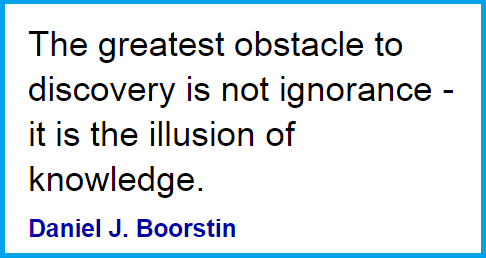
It is human nature to look for information that confirms prior biases. But in a democracy with little filter on what is circulated and read, part of the job of the citizen is to think carefully about what one reads, and to ask, “How do I know what I know?”

In museum practice, open-ended inquiry can be facilitated in different ways, with different outcomes. All too often we focus on engagement rather than rigor. In a consumer-oriented culture, it is hard to tell someone they are wrong. But we must. Front line staff must be knowledgeable. Anyone engaging in a conversation about an object or exhibit must be able and willing to let someone know when their assumptions or interpretations are wrong, and to challenge them to think about how they know what they know. We must share information and expertise and help people process this to form individual interpretations. In this way, we can contribute to a culture in which the important work of opinion-forming is rooted in the hard work of questioning prior knowledge and thinking carefully when we apply it to something new.


What is Museum Disruption?

This post is the result of a conversation with Ethan Angelica from Museum Hack, who is a Tour Guide & also responsible for VIP Partnerships.

Ethan Angelica, Tour Guide at Museum Hack [HD] from Museum Hack on Vimeo.

My conversations with Ethan from Museum Hack led to a number of questions about how they are considered disruptors of the museum: What is real museum disruption? Where does it come from? When is it meaningful? Are outside organizations currently the best way to disrupt and transform museum practice? In the end, our conversations led to more questions than it did answers. I look forward to hearing the ideas of readers, and hope that this is a conversation that Ethan and Museum Hack, among others, are willing to continue to engage with.


A few months ago, I began a conversation with staff from Museum Hack. For those of you not familiar with Museum Hack, they (in their words) “lead renegade museum tours.” They’ve become a source of both excitement and anger in the museum world.

Conversations with Museum Hack’s Ethan Angelica led to the word “disruption.” What is a disruptor? Is there an entire field of these disruptors happening in our industry right now? If so, is it effective? Good? Bad? This conversation led to numerous conversations and interviews with potential disruptors (some conducted by Ethan), as well as a deeper dive into what we mean by disruption.

What is disruption?

Clayton M. Christensen, the author of “Disrupting Class: How Disruptive Innovation Will Change the Way the World Learns” says that “disruptive innovation…. transforms a product that historically was so expensive and complicated that only a few people with a lot of money and a lot of skill had access to it. Disruptive innovation makes it so much more affordable and accessible that a much larger population have access to it.”

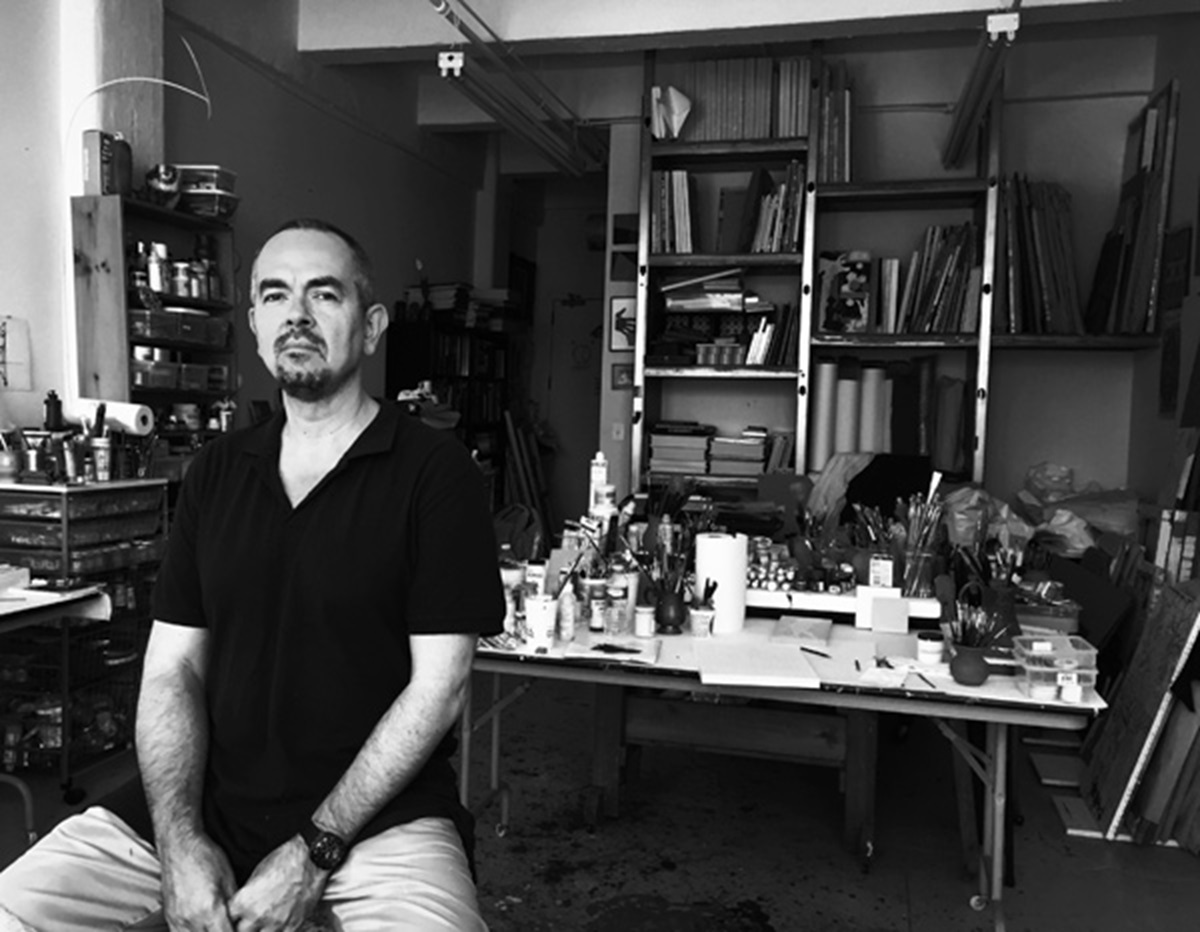
Arguably, museums have been experimenting with disruptive practices for years, through approaches to collections that reject traditional historical or art historical narratives. One prevalent form of disruption is through the inclusion of artists-in-residence. Current Metropolitan Museum of Art Artist-in-Residence Peter Hristoff puts it this way: “a ‘disruptor’ allows for interpretations of works of art that are intuitive, personal, imaginative — that may disregard, deny, contradict or PUSH FURTHER conventional art historical readings, allowing for a more personal reaction to art.”

peter_hristoff
Peter Hristoff

But there is another body of writing that argues that “disruptive innovation” is just a way to justify the exploitation of the work force, a movement that takes us from reasonably-well paid localism to large tech-savvy companies paying minimum wage.

Uber is an excellent example of this: It is undeniably disruptive, but is it creating new opportunities for job flexibility and distributed ownership, or is it displacing secure and steady jobs and replacing them with part-time, low-paid work? (See this article and this article for more on this perspective.)

In a blog post on “Innovation Management” Anthony Ferrier notes that we do not have a shared definition of disruptive innovation, and seems not to distinguish between disruptive innovation and innovation. If we just look at the word “innovation,” Elizabeth Merritt of the Center for the Future of Museums offers both a definition of true innovation and some proposals for innovative museum work.

Merritt says that true innovation must be relevant. She contrasts this to the silly but new – for example, the toilet paper hat. It much catch on – the moon landing was radically new, but did not (or has not yet) led to real change. It must be truly new and different –  Edison’s light bulb, she argues, was not an innovative product, because the first light bulb was invented in 1840. And, finally, it must be significant and important, and not just a tweak. The iPhone 3, Merritt tells us, was innovative; the iPhone 4 was just a tweak.

The one concern I have with this definition of innovation is that it insists that innovation happens in a single moment rather than over time. Innovation may feel this way, but it doesn’t usually happen this way. Science and invention are more collaborative than we give credit for. World-changing events like the light bulb are not generally the product of a single mind or moment. Rather, they are the tipping point in a continuum. They are the moment when the world notices and grabs hold of a change that has been in the works for a while.

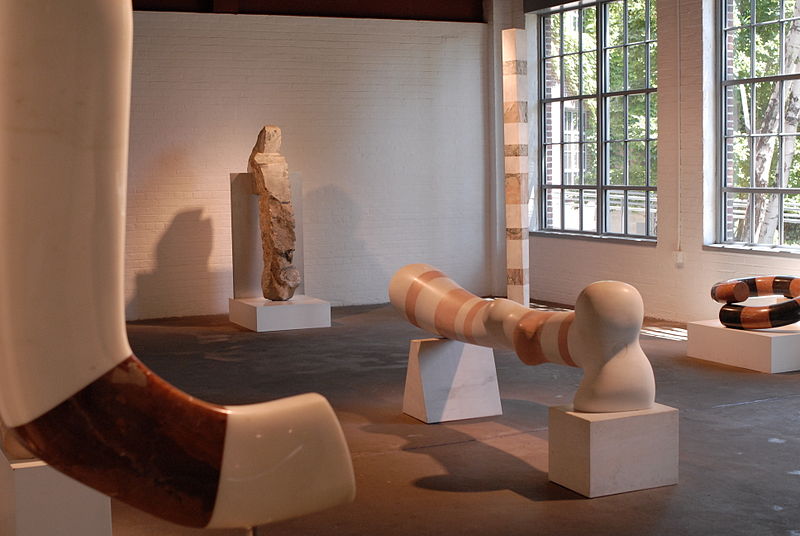
This is even more evident when one looks at Merritt’s catalog of six museum innovations. One of them is MOCA TV, which she says is the first museum TV station. I trust Merritt that this is true. But PS1 had a radio station in the 1990s, and museums have been filming and posting videos on YouTube for a while now. MOCA has, arguably, taken a continuum of innovation and positioned it so that it is popular, and thus widely known. Similarly, Merritt credits the Museum of Old and New Art as innovative because it “banned signage from the building, and instead of exhibit labels it provides interpretation via an app called ‘the O'”. But the Noguchi Museum has long offered a space without physical labels, and myriad museums are offering interpretation via app.

noguchi-museum
The Noguchi Museum

Museum disruptors

So – what is disruption? Perhaps disruption is not a moment of invention, but the moment that a continuum of invention gets noticed.

There is a field of people who consider themselves disruptors. Along with Museum Hack, Bated Breath Theater Company, Chuck Lennox, longtime interpretive trainer with the National Association for Interpretation (NAI), and artist Peter Hristoff spoke of themselves as disruptors approaching museums and audiences from an outside perspective.

Chuck Lennox, longtime interpretive trainer with the National Association for Interpretation (NAI), said:

If done right, the outside perspective can challenge staff and docents to see things differently – get people excited – help to identify internal changemakers and people committed to interpretation and the visitor experience… The outsider does NOT change the culture – that can only happen with buy-in from management and a committed internal sponsor. But they can be the catalyst to get things rolling.

museum-hack-rodin
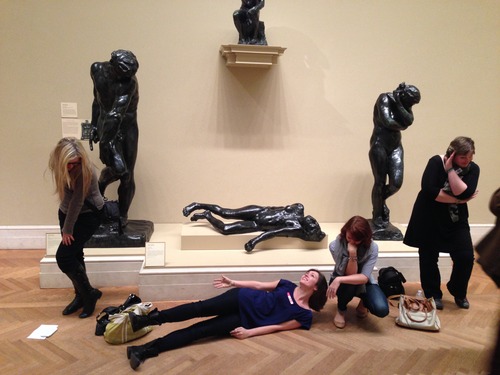
From the Musuem Hack blog, a tour in the Rodin gallery of the Metropolitan Museum of Art.

But, like the inventors who worked on the light bulb before Edison, there are also museum staff who work more quietly toward change. Michael Christiano,  Interim Senior Director of Museum Programs at the Smart Museum in Chicago, believes that change is most effective when it comes not from an outside disruption, but an inside commitment to experimentation:

All museums are different. To presume that you require someone from the outside to come in and experiment in your space to inform you about how to better develop your programs is not accurate across the breadth of institutions…. We as an institution embrace experimentation in institutional practice – we are constantly experimenting with “program” writ large at the museum. That’s in our DNA. We often work in deep partnership with artists, educators, academics and other creative folks to cultivate the change we believe is essential to our shared practices, which can therefore be embedded in the Museum’s core work.

I could imagine in an institution attached to a more conservative way of working it might be easier to activate change if someone else comes in to do it. Sometimes it feels like “only someone who comes from 50 miles away from you can be an expert.” Sometimes intervention from an outside person is useful. But then how do you embed whatever form of change you are introducing? That’s the challenge I have with one-off interventions done by an outside person: what is the density of that type of work that has to happen before it effects change.

A lot of educators and curators are thinking deeply about how our practice as museums needs to shift to stay engaged with the publics we serve. There’s a bit of a sea change in that regard; we are trying to be thoughtful as to how we respond to shifting conditions of our context. This means you need to be willing to adjust how you do your work in a real way.

christiano-dudley
Smart Museum Interpreter in Residence Erika Dudley leading a training based on the article “Don’t be intimidated by museums. They belong to everyone,” from the Guardian.

These are two models of change. In one model change is more likely to come from without. This is particularly true in conservative institutions that for whatever reason (past success, tradition, a conservative mindset, a mistrust of innovative staff) are tied to the status quo.  In the other, change is not a moment, but a way of approaching the world: There are always new challenges, and it is always worth experimenting with how to address them in new ways.

I leave this exploration with two thoughts:

  1. Outside disruptors are not necessarily inventing new approaches, but they are making them visible – to audiences as well as museum staff – in ways that are important.
  2. Many institutions are resistant to change, and this is problematic, and worth examining. How do museums – institutions often committed to preserving and exhibiting what is old – better embrace, and even shape, the new?

What are your thoughts? Who are disruptors in our field, and what is the impact of their work?

What is an “Interpreter in Residence?” Interview with Michael Christiano

Michael Christiano is the Interim Senior Director of Museum Programs at the Smart Museum of Art at the University of Chicago. In this role he develops strategies and programs that reflect on the nature of the Museum’s institutional practice, with a particular focus on education, interpretation, engagement, hospitality, installation strategy, and other key issues.

christiano_headshot
Michael Christiano

When visiting the Smart Museum, I was very impressed by your Interpreter in Residence program. Can you tell us about this program – what it is and how it started?

The Interpreter in Residence is a year-long program through which we engage artists and other creative people with an interest in creating participatory and socially engaged projects in collaboration with our publics at the Smart.

The program grew in out of a 2012 exhibition entitled “Feast: Radical Hospitality in Contemporary Art.” Because this was an exhibition about artists exploring notions of hospitality within their work, we began to question our institutional sense of hospitality, and our relationship with our guests. We wanted to think about sustaining an investigation into our own institutional practice of hospitality, engagement, and interpretation.

In 2013, we created a program with the group, “Hornswaggler Arts,” by two artists, Graham Hogan and Joseph Rynkiewicz. These artists would set up guerilla bars at Chicago art events, sell drinks, keep half the proceeds, use these proceeds to purchase art from that event to support artists and amass a collection of art funded by the bar. We engaged Hornswaggler Arts to do a monthly program at the Smart, during which they would set up their bar, design activities, and serve amazing cocktails. At the close of the year we realized that we had, without setting out to do so, established a residency program.

dsc_1893
Hornswaggler Arts at the Smart Museum – Graham and Joe tending bar.

One of the interesting things about working with Hornswaggler Arts was the way in which their work informed how we thought about things at the museum, while the museum also informed their work. They helped us to clarify how we think about the role experience plays in our lobby, because all of our programming happens in our lobby. It became clear that programming could charge the lobby with an energy that people would carry with them as they walked into the galleries. It changed how people entered the gallery space.

Hornswaggler Arts also engaged a variety of artists and thinkers for these events. It became clear that part of what a residency could do was to create space for artists to engage artists. It was a way of expanding our network.

What is the format of your Interpreter in Residence Program?

We start with the questions we are grappling with. For us it’s important as an institution to think about what questions we are engaging in, so we can engage someone else to play with them in a public way. We identify and work with artists and others interested in similar questions to the ones we are interested in.  In order to be a genuine investigation we had to all be interested in the same questions, and potential for us all to learn from the partnership. We can then embed new ideas into our practice – the results of the residency enter our core work.

It’s an Interpreter in Residence program because we want to think about the intersection of creative practice and pedagogy. We don’t think about interpretation strictly as didactics. We think more holistically about the form of experience we are creating for our visitors, within which they will experience the art.

We’ve had Matt Austin, 500 Clown, and, most recently, Erika Dudley in residence through this program.

Tell me more about your most recent collaboration, with Erika Dudley.

We engaged Erika because we were interested in transforming our docent program into a platform for campus and civic engagement. Historically, the docent program consisted of University of Chicago students who facilitated a multi-visit program we used to offer. That program ended, so we had university students who now had the time and capacity to do something different.

While thinking about this, I was also talking to Erika, a community organizer who works in the Civic Knowledge Department of the University of Chicago. Erika manages the Odyssey Project program, which provides free university coursework in the humanities to adults living at or below poverty level. She was working with project alumni to find arts- and humanities-based jobs in which they could leverage their new expertise. Three years ago we created a program in which the Smart Museum would hire program alumni as paid docents, trained to facilitate tours alongside of the University of Chicago students.

This past year I wanted to think more intentionally about how we train our docents. How do we train and empower them not just to facilitate tours, but to design experiences more autonomously, responding to both the museum collection and the interests of their peer networks. We want to see our docents as a cohort of individuals with different life experiences, and to think about how we might leverage this to work with different audiences.

Through the Interpreter in Residence program, Erika is thinking about how a museum can be more reflective of the needs and interests of its community. Together we are recasting our docent training to embed both inquiry-based pedagogy and community organizing tactics. We are thinking not just about who was a docent, but about what a docent is.

dsc_2592
Erika Dudley (third from right, with clasped hands) hosting a Welcome Table event during her residency.

Now docents still lead tours, and those tours feel similar to how they’ve always felt. But the docent core has a different sense of agency within the institution. Ideas flow from the docent core to the museum, not just the other way around. Docents are bringing groups into the museum that we have never historically engaged with. For instance, one of our docents works with a youth center that provides experiences for youth recently released from juvenile detention. She was able to see the connections that could be made between the museum and the youth center, connections that had significant value, and through her management could be sustained. We trust our docents to build and sustain relationships.

What’s next?

We are thinking right now about belonging. Two years ago, the Smart Museum decided to reinstall our permanent collection entirely once a year. A portion of the collection is reinstalled under a curatorial thematic that allows us to put work together we wouldn’t normally see together. This year’s theme is belonging.

Over the course of the summer we turned one of our central galleries into a kind of residency and workshop space, through which we engaged four core partners to work with us to investigate belonging. This program was called In Anticipation of Belonging. The partners were: The Teen Arts Council from the Arts + Public Life Initiative; the Odyssey Institute scholars;  an artist’s group called Stockyard Institute doing critical and radical pedagogy work; and Red Line Service, led by two artists who work with adult Chicagoans experiencing housing transition. Each group conducted a two-week residency in the space, responding to the collection and engaging with questions: What does it mean to belong? How does the Smart Museum become a site of belonging?

tac-builds
The Teen Arts Council learning how to construct temporary structures as inspiration for designing sites of belonging with guest artist Faheem Majeed. Image courtesy Marya Spont-Lemus.

This program created powerful experiences, but it was clear that there was more work to do. Now we are talking to each of our partners about ways that we can sustain our engagement with them as an Interpreter in Residence collective, who will design programs with us to continue to investigate the question of how a cultural institution can become a site of belonging.


How do you get the word out?

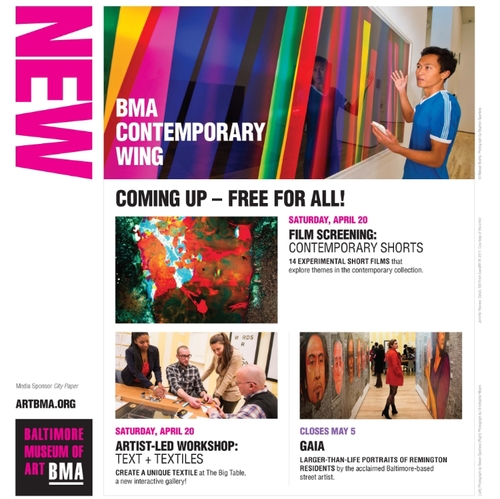
This week, I am thinking about marketing museum programs. Museums generally have a variety of programs to market, often to a range of audiences. And our success varies:  At the PlayHouse we have some workshops that are full, and others we have to cancel due to low registration. When I worked at The Noguchi Museum, we had some lectures that were standing-room-only, but other events that were under-attended. I have seen this at almost every museum I have visited or been associated with: I once took my kids to a great animation workshop at the Museum of the Moving Image and there were only two other families participating; I have watched a film at the Guggenheim where I was one of only two or three people in the audience. And of course, both of those museums have active audiences, and often sell out their programs.

bma-workshops
An advertisement for programs at the Baltimore Museum of Art, from Style Magazine, found at http://erincech.com/productmarketing-1-3-1/

I met this week with Richole Ogburn, a senior account manager with the Kansas City-based advertising agency Muller Bressler Brown. I wanted to gather her thoughts on how museums can think about marketing holistically, rather than focusing on the individual components of a strong ad, or using facebook regularly, or generating quarterly program brochures – all, of course, necessary components of marketing. Inspired by thinking about fundraising campaigns, I wanted to learn more about what a marketing campaign might look like. Here are some of the things she shared with me:

  1. Marketing doesn’t need to be based in a large advertising budget. Participating in community events is one of the most effective forms of marketing to new audiences, because it shows involvement in the community while promoting the museum, and is a great way to reach people who have not yet visited.
  2. Facebook is a great way to get the word out there, but it works best if:
    • You have an event page (rather than just a post) for any program or event, so that people can add things to their calendar, get reminders, and invite others.
    • People have ways to engage – links back to the website, questions to answer.
  3. For each program, it is worth thinking about the particular audience for that program, and how best to reach them. Each specific marketing campaign may involve research into ways to best reach this audience.

I suspect that marketing departments in large museums actively plan and execute strong campaigns for most new exhibits. Exhibits (rather than programs) are our primary attraction, are planned for years in advance, and can potentially attract visitors in the tens of thousands (more for some museums), and revenue to match.

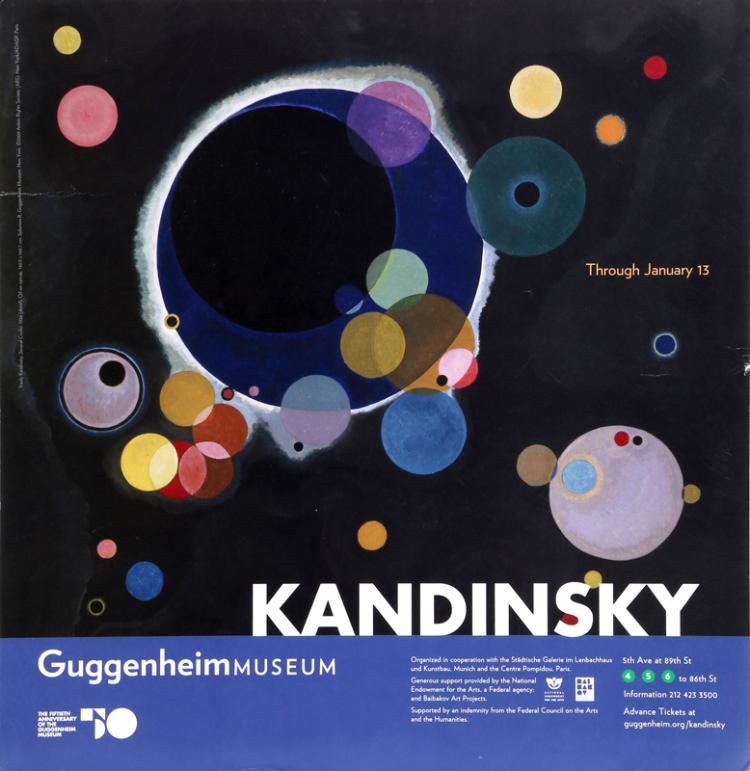
kandinsky-ad
A subway ad for the Guggenheim’s Kandinsky exhibition (2009)

But programs are trickier. Many museum programs are, essentially, “one-offs” – we expect at least some people to attend because the topic interests them, even though they are not part of a larger series. For example, museums hold education workshops for families or older children that are a few hours on a single afternoon, rather than part of a subscription or series. Or offer a lecture by the author of a new book related to the collection. Or feature a discussion or afternoon-long class led by an artist-in-residence. And to compound the issue, museums tend to have varied interests and broad audiences. Our programs do not all address the same interests, or the same age groups.

I think this marketing challenge may be an unusual one, faced primarily by museums and libraries. Most organizations either offer the same workshop experience regularly – for example, paint your own pottery places – or extended classes – for example, parent and child music classes, or after school classes. I don’t think (but let me know if this is wrong!) that there are many other businesses out there that regularly produce one-off lectures and programs.

How can museums market these programs as effectively as they market exhibits? Do all programs need to fall within a larger series, and offer similar content within that series, in order to market them effectively? Would we be better served to offer fewer programs, but expend more resources on marketing these programs?

I left my meeting with Richole realizing that every time we plan a new program – a family workshop to make superhero capes, or a panel presentation with the local symphony  about cultivating talent and interest in children – we need a marketing plan, and significant resources (in particular, staff time) to dedicate to getting the word out. And that this is nearly impossible within the current structure of most museums I have worked in or with.

It is problematic that museum staff expend so much energy, and often money, on programs without also having the resources to ensure that potential audiences know about these programs. Should we stop planning programs for which we do not have a marketing plan in place?

I would be curious to hear from museums that dedicate this attention to marketing programs. Or from museums, particularly those in smaller markets, that have found ways to effectively market individual programs or workshops. How do you do it? How do you get the word out?

How can a children’s museum impact parenting?

This guest post is adapted from a conversation with Kristin Vannatta, Operations Manager at the Peoria PlayHouse Children’s Museum. A few weeks ago Kristin told me, “Working at the PlayHouse has changed the ways I play with my son.” I asked her to tell me more, and the below is an edited version of her answer.

This post was originally written for parents, not museum staff, and is cross-published on the Peoria Macaroni Kids website. But as a museum professional, I was fascinated at what Kristin had to say about how working at the PlayHouse has changed her approach to playing with her son. There are two reasons that this felt worth sharing on the Museum Questions blog. First, Kristin is an experienced museum professional, having worked for many years at the Frank Lloyd Wright Trust. So her response to the PlayHouse illuminates something specific to what children’s museums have to offer. Second, I know we are all always looking for stories about the impact our work can have, and this is a good one!

IMG_2468


Growing up, I was the youngest of three children, so I wasn’t around younger kids much – I just followed in the footsteps of older kids, and went with the flow. At the PlayHouse I am learning more about the kinds of projects you can do with younger kids, and how your choices can impact their development.

I love thinking about “open-ended play” – it’s not something I was familiar with. I was much more familiar with activities where you tell kids “make something that looks like this.” But the PlayHouse philosophy is that we offer instructions that are open enough that visitors can make lots of choices – we want to be surprised by what they come up with. That’s what we mean by open-ended play.

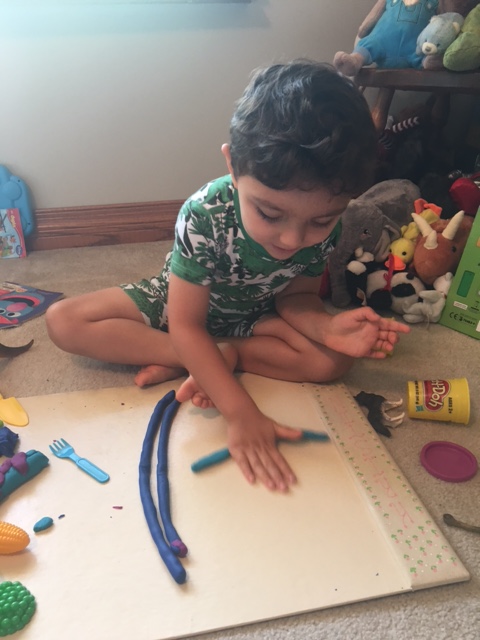
I encourage more exploration with materials now. Simple things especially. I love giving my son, George, a chunk of play dough and seeing what he does with it.

IMG_2765


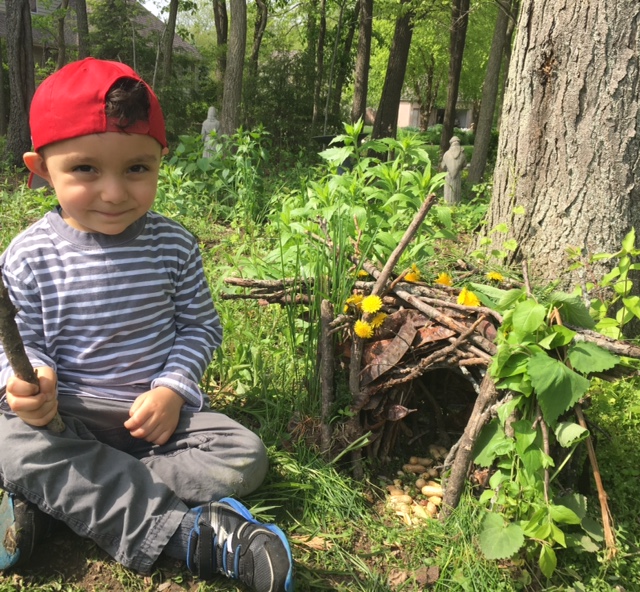
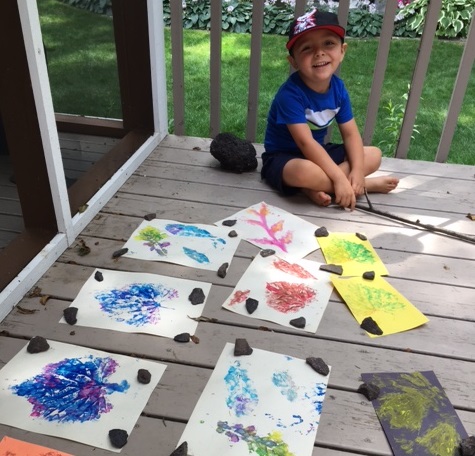
George loves sticks and rocks more than any toy. I’m trying to come up with ways he can use sticks and rocks other than as weapons. So, inspired by a PlayHouse workshop, we built a house out of sticks in our yard. We call it our bird house, but we want to make it comfortable for all animals (maybe this is inspired by the PlayHouse’s commitment to welcoming all children and families!). So we have adapted our birdhouse over the past few months. In the summer we added wildflowers around it, which actually started to grow. More recently we added evergreen branches. We put out bird food, and even some of our table scraps. We love checking on our bird house. Last weekend we did some reinforcing, with more sticks and pods and grasses.

IMG_2761

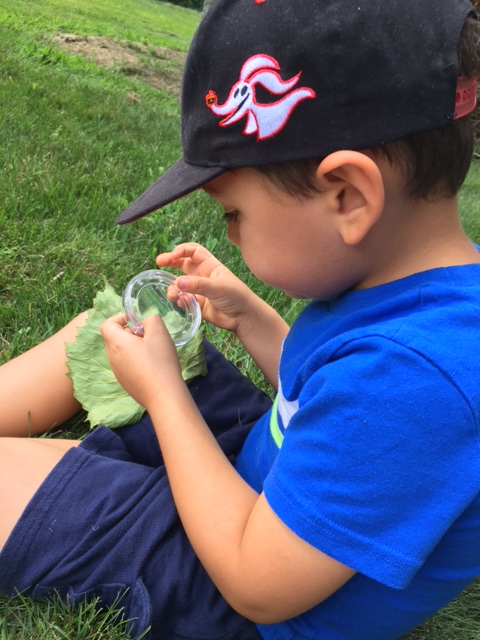
We also go around the yard and use the sticks to dig in the dirt and look at bugs. I bought a magnifier from the PlayHouse store, which we use to look at bugs. Last weekend we used it to looked at leaves, too, and then we made imprints by painting the leaves and then pressing it on the paper. George got to choose the leaves he wanted to use, and the colors he wanted to use, and what leaves to put together on one sheet of paper. And we looked on line to learn more about the veins of leaves. We also experimented by using the branches from pine leaves to make different markings paint. It looked terrible – it just looked like splotches! George didn’t mind, though: He did not have pre-conceived idea of what it would look like, so it looked good to him. Afterwards we talked about which were our favorites, and why.

IMG_2755

IMG_2756


Now, when I’m thinking about gifts to buy George, I think about what will offer him the opportunity to think creatively. For his birthday I found blocks with pictures that kids can use for storytelling. I liked the toy because it involved using blocks, while teaching him ways to create stories that are a little bit deeper. It turns out that there are complicated directions to these story blocks, so we have found our own simpler ways to play with them. We look at the pictures for ideas for characters for our stories.

Here are four things I’ve learned at the PlayHouse:

  1. Creativity is important. To help kids be creative give them lots of choices, and don’t worry about what the end-product will look like.
  2. Even things that seem closed-ended can be open-ended. Be open yourself – you don’t always have to follow the rules. Make up your own rules for a game.
  3. Allow kids to do things that you think are a little bit scary. Like using real carpentry tools to build things, or experiment with different gardening tools.
  4. Find new ways to use really basic materials. Like sticks.

What if our school programs didn’t align with curriculum standards?

This guest post is by Claudia Ocello, President & CEO of Museum Partners Consulting, LLC. Claudia has over 25 years’ experience in museums working on exhibitions, education programs, accessibility and evaluation projects. In 2008, Claudia was honored with the Award for Excellence in Practice from the Education Committee of the American Alliance of Museums (2008) and the New Jersey Association of Museums’ John Cotton Dana Award (2013).

claudia


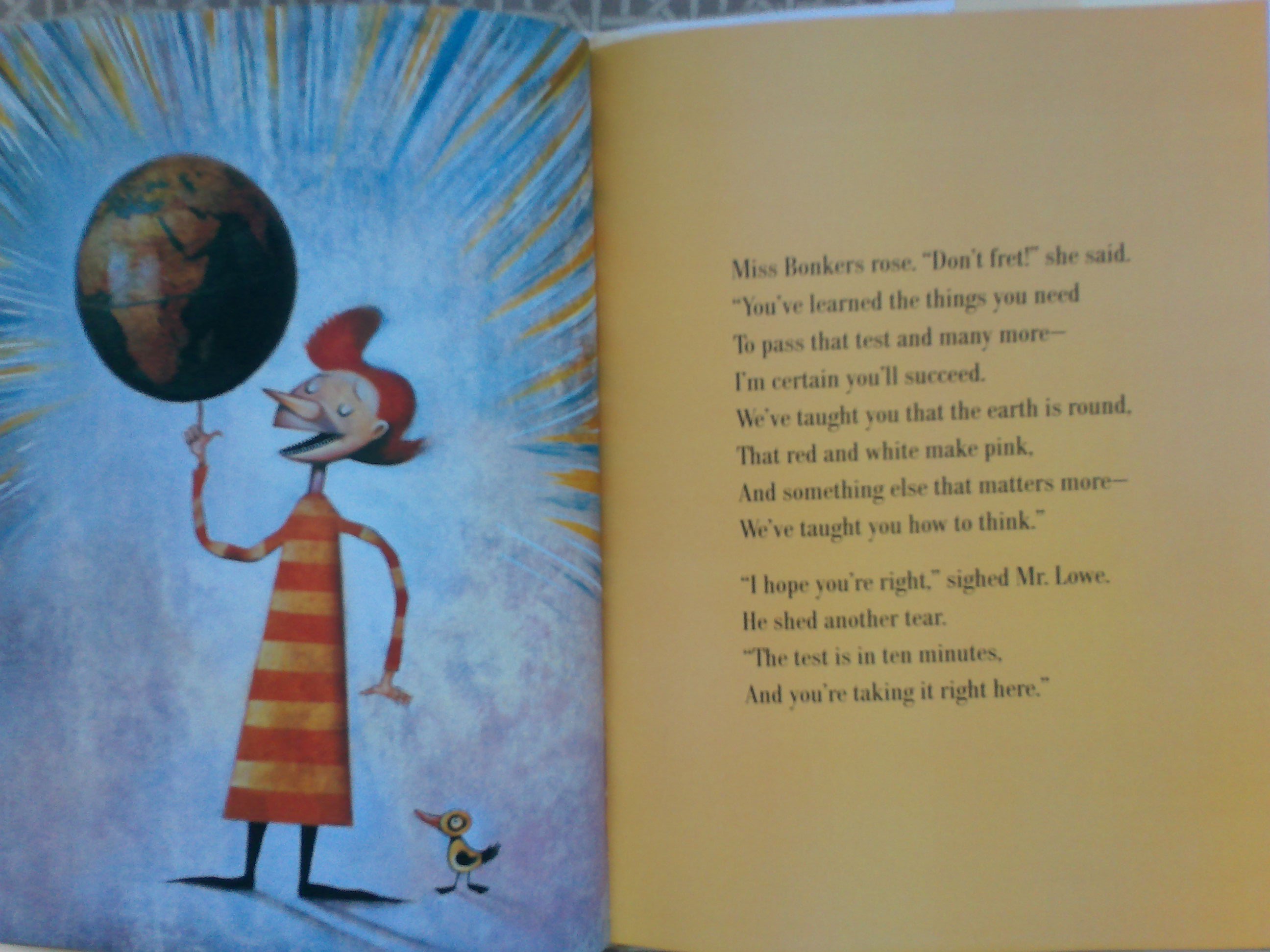
I recently found my copy of the Dr, Seuss book Hooray for Diffendoofer Day, which was a gift from someone at a school district I worked with.  When she gave me the book she said, “This is what your museum does for our kids.” It was a great compliment, because the book touts the remarkable education at Diffendoofer School, where the kids are:

learning lots of things

Not taught at other schools.

Our teachers are remarkable,

they make up their own rules.

The students at Diffendoofer School ace their standardized tests because they have gained so much knowledge and skills that don’t come from book learning.

The book reminded me of question that has been nagging at me for weeks: What if our museum programs didn’t align with curriculum standards?  

hooray for diffendoofer day
A page from “Hooray for Diffendoofer Day!” Photo by Claudia Ocello.

My thinking about curriculum standards is evolving

In May I spoke at the Association of Children’s Museums conference about working with a museum to revise their education programs to align with curriculum standards, and how successful that change was for the museum. And a recent project for my consulting business included watching videos of a museum’s education programs and creating a chart of standards alignment for the museum’s website.  But this work has led me to think more about how content standards influence museum school programs, and to wonder if we should be thinking differently.

Arguably, current content standards are better for museums than previous versions. For example, the Common Core English Language Arts standards‘ emphasis on “informational text” is great for archives and exploring primary source documents. These standards also include speaking and listening skills, which works well for museums that encourage students to share responses to art or artifacts in the form of a presentation, skit, or artwork.  Next Generation Science Standards emphasize being able to do something (create a model, use evidence, evaluate evidence, etc.) over factual knowledge (i.e. naming parts of a flower). There are many museums who have embraced and developed well-received programs that connect museums and schools along the curriculum standards (see this issue of the Journal of Museum Education for some great examples).

Education is changing

There’s so much going on in the field of education: dissatisfaction with the current educational system; protests over standardized testing; alternative forms of credentialing; a rise in homeschooling; and more. Museums have responded to these trends, but most still keep one eye on curriculum standards in developing and advertising their school programs.

We tout museums as being different from schools.  We teach using unique methods and unique objects in unique settings. Yet we still market our school programs through alignment with school standards.  What are we really promoting, then – more of the same?

When I was a classroom teacher there were no curriculum standards to follow (yes, it was that long ago), and standardized tests were really just benchmarks. We were never instructed to “teach to the tests.”  We took field trips because they matched with subject matter – for example we took our kids to see original Egyptian artifacts when we were studying ancient Egypt.  It was more about the experience, and seeing authentic artifacts, than addressing certain standards for learning.  When the standards came along, museums began claiming that teachers could “meet” curriculum standards with a museum visit. We needed – and some would argue, still need – to ensure schools see value in a museum visit. But with the changing educational landscape, why are we still touting how much we are in line with the aspects of formal education we don’t necessarily like?

What could museum’s school programs look like?

Curriculum standards are easy pegs to hang our hats on. They help us justify our services and create a reason for museums to offer programs for schools.  Standards-aligned programs reinforce what is going on in schools already.  But if schools and teachers are already teaching to, and meeting, curriculum standards, what do they need museums for?

What if instead of following the school system’s lead, we took on the role of school reformers?  For example, what if instead of aligning with the Common Core, we taught children to be innovators, rooting programs in skill sets such as Tony Wagner’s list of skills innovators need? Or our programs fostered characteristics such as flexibility and open-mindedness? What if we aligned museums with educational thought-leaders such as KnowledgeWorks instead of with existing public school policy?

I am not suggesting we should completely abandon curriculum connections in favor of developmentally-appropriate concepts and practices, but I am suggesting that we use the latter to frame our current work and move beyond it.  If the sixth graders in your district study ancient civilizations, and that’s part of your collections, use the objects as a jumping off point for your program (there’s the content). Now imagine moving beyond teaching the content of culture, civilization and art, finding ways to cultivate metacognition, curiosity, and associative thinking. What could that look like?

Some museums are already engaged in this work.  The Columbus Museum of Art has been focusing their education programs on how to think like an artist. (See also Journal Of Museum Education, Vol 39, No 2 July 2014 which is dedicated to exploring Columbus Museum of Art’s process in rethinking/refocusing their programming.) and the Peoria PlayHouse Children’s Museum promotes a program called Explore/Challenge/Become which promotes curiosity and experimentation. Neither of these museums mention curriculum standards in marketing materials, with few complaints from teachers or administrators, and many booked programs. Accokeek Foundation’s Eco-Explorers: Colonial Time Warp programs “supplement” social studies and environmental education and encourage decision-making skills and physical activity. While they had a few complaints from teachers and some issues with staff when they introduced this new format and emphasis, the program won EdCom’s Innovation in Museum Education award in 2016 from the American Alliance of Museums. I’d love to know about other museums that are straying from standards-aligned school programs and what the response is from audiences and staff (please comment below!).

We are starting to move in the right direction

One of the focus areas for the American Alliance of Museum’s 2016-2020 strategic plan is P-12 Education. As part of this plan, AAM is pledging to better integrate museums into the K-12 landscape. I am already encouraged by the creativity I have seen in the responses to the Center for the Future of Museums’ Education Future Fiction Challenge, and the creation of a Ford Bell Fellowship to address museums and education.  I would love to see museum educators have a role in shaping education at the policy level. Imagine if the next Education Secretary had a museum background!

If your museum is interested in rethinking your school programs to move away from basing them on curriculum standards, I encourage you to experiment. Maybe you are event considering about how to entirely reinvent the school program format. Share how your museum is straying from standards-aligned school programs, the outcomes of your experiment, and your questions and thoughts.

I’m certain we can have an impact on the learning ecosystem as it evolves over the next century.  Then we’ll declare a holiday as they did (sort of) in the Dr. Seuss book:

You all deserve a bow.

I thus declare a holiday –

It starts exactly now.

Because you’ve done so splendidly

In every sort of way

This day shall be forever known

As Diffendoofer Day Museums Changed Schools Day.”*

*From Seuss, Prelutsky, and Smith’s Hooray for Diffendoofer Day, with a bit of artistic license by the author.

References

Journal of Museum Education. (2014).  Intentionality and the 21st Century Museum. Vol 39 No 2: Museum Education Roundtable.

Journal of Museum Education. (2015).  Common Goals, Common Core: Museums and Schools Work Together. Vol 40 No 3: Museum Education Roundtable.

Seuss, D., Prelutsky, J., & Smith, L. (1998). Hooray for Diffendoofer Day. New York: Alfred A. Knopf.

Wagner, T. (2012). Creating Innovators: The Making of Young People Who Will Change the World. New York: Scribner.

Wagner, T., & Dintersmith, T. (2015). Most Likely to Succeed: Preparing Our Kids for the Innovation Era. New York: Scribner.


Special thanks to Nathan Richie for helping me think through and better articulate these issues.


What are your best maker-based activities?

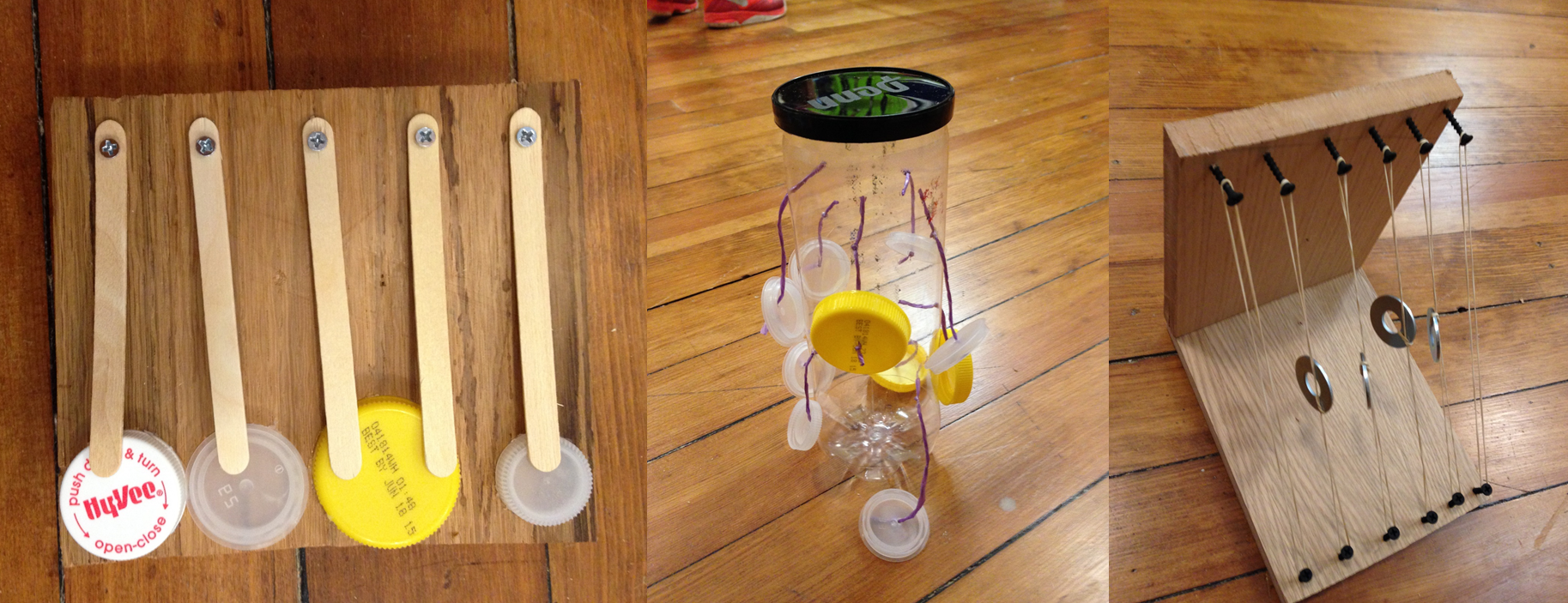
Like many children’s museums, the Peoria PlayHouse Children’s Museum has a “maker” exhibit, where children can use tools (hammers, saws, drills, glue guns, etc) to make things. As I watch the Peoria PlayHouse Children’s Museum educators develop prompts and activities for this area, I wonder if we are re-inventing the wheel. So many museums are doing this exact same thing: designing open-ended activities that engage children and families in the act of making. Because of this, I am wondering, What is the best open-ended, maker-based activity you have conducted with children and/or families? 

real tools - make sound
Three different visitor solutions to the prompt, “Make something that makes a sound,” in the PlayHouse Real Tools maker area.

I am not a proponent of asking educators to take and teach someone else’s lesson plan, without reflection or transformation. Indeed, I think one of the great problems with 21st century K-12 education is that teachers are often asked to do exactly that. The passion of the educator is key to the success of any lesson. On a recent visit to the Children’s Museum of Pittsburgh I asked a MakeShop teaching artist which MakeShop activities he thinks are strongest. He answered, wisely, that the strongest lessons are those that excite the staff teaching them, and that these lessons, and this excitement, is personal and varied. Similarly, when I worked with teaching artists at the Guggenheim, one of our core tenets was that each year’s project was planned in collaboration between teaching artist and partner teachers. We never would have asked a teaching artist to implement someone else’s lesson plan.

IMG_2662
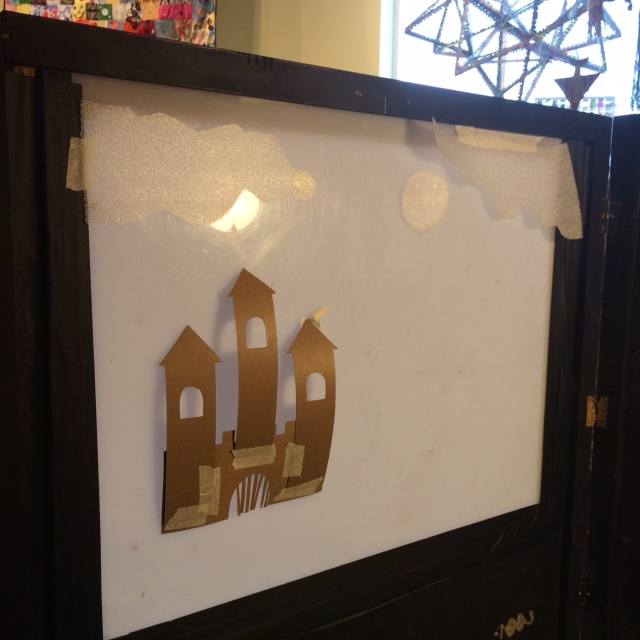
Back of the shadow puppet theater in the MakeShop at the Children’s Museum of Pittsburgh.

Instead, the purpose of collecting and sharing lessons is to create a starting place. An inspiration bank. Educators in large museums – at least, in large museums that care about and excel in museum education – have vibrant communities of people with similar jobs and concerns to inspire them. How can museums collectively use existing lesson ideas in this same way – not copying them, but hearing, adapting, refining, and resharing them? How can we as a field create go-to spaces for this type of sharing?

Some of this sharing of lessons exists already. The Exploratorium has a blog which shares fantastic projects. The Children’s Museum of the Arts publishes a “catalog” each year with information on their exhibits and instructions for related art projects (If this is available online, I cannot find it). I am sure other museums share lessons – these online resources are one of the things I hope to uncover and share.

With this in mind, I am asking: What is the best open-ended, maker-based activity you have conducted or experienced for children and/or families, in a drop-in environment? 

Please share your ideas using this survey. Please share this survey with colleagues who might also have ideas to share.

I will share all these ideas with readers in another post. Ideally, I’d love to collect video that could be used as a staff training tool, as well – but one step at a time.

How can museums contribute to dialogue about social justice when we are exemplars of segregation?

At the PlayHouse last weekend we celebrated Eid-al-Fitr — the Muslim holiday marking the end of Ramadan — as part of our Celebrate Peoria series. One visitor approached the manager on duty that day, and asked her if we would be celebrating Christmas. When she told him that we do not have plans to do so, he let her know that he might be asking for a refund on his membership.

eid al fitr both
Eid-al-Fitr at the PlayHouse. Left: A visitor gets henna on her hand. Right: Two visitors try on traditional Muslim clothing.

Within our wonderfully diverse country, we live shockingly segregated lives. According to a recent article in The Atlantic, 75% of Whites have entirely White social networks. In Peoria, there are very few, if any, public spaces where one mingles with a population that mirrors the diversity of the city. When I lived in Brooklyn, while the playground was integrated, for a long time our local school (like many New York City schools) was not. Recently my facebook feed featured links to articles on how to talk to your child about race and how to educate yourself about race. We wouldn’t need these articles if we occupied social spaces in which meaningful cross-racial dialogue were common.

I visited Milwaukee recently, and went to both the Milwaukee Art Museum and to a beach located just north of it. The museum was fantastic (kudos on the amazing building, the phenomenal educational spaces and materials, and the wonderful and well-curated permanent collection galleries), but the visitors I saw were almost all White, and I suspect skewed toward the economically privileged end of the spectrum. The beach, on the other hand, was beautifully diverse. Not only were people of all colors present; there were people in all sorts of family groups and clothing choices, signalling differences in cultural background and economic means.

milwaukee beach all
Two images from the Milwaukee beach

How can museums contribute to creating broad social understanding, and meaningful dialogue on social issues, when we are exemplars of segregation?

Museums historically serve wealthy, white audiences. In a country that is 63% white, museums serve an audience that is 88% white (see this 2010 report from Reach Advisors). We are historically, and continue, in large part, to be elitist institutions, run by Boards comprised of the 1%.

For those of us who want museums to be spaces of social justice, the most important first step is to attract and welcome an audience that represents the diversity of the United States. When we foster dialogue with others just like us, we leave satisfied but unchanged. When we address social justice issues with our current audiences, we are primarily reaching White liberal educated audiences. We are rarely reaching the people who would leave a museum because it celebrates Eid-al-Fitr and not Christmas, or hearing other perspectives in the dialogue we promote.

When someone walks into the Peoria PlayHouse Children’s Museum, I want them to see a group that represents the full diversity of Peoria – to see a crowd more like the Milwaukee beach than the Milwaukee Art Museum.

Is this possible? I’m not entirely sure it is, but it is important to try. And while I think many museums envision and work towards a truly diverse visitorship, it may be that children’s museums may have a particularly important role to play, because our target audience is still malleable – they are the potential social justice advocates, and potential bigots, of the future.

Here are a few thoughts on how to create happily integrated museums, a list of ideas I hope readers will add to:

(1) Offer free or reduced price admission for at least some visitors. Welcoming only visitors who can pay full admission, or only offering free admission on selected days, means that most of the time we drastically limit who we let in the door. Diversity means economic diversity as well as racial diversity. We need mechanisms in place that allow everyone to enter at a price they can easily afford.

One of the things I admired about the Milwaukee Art Museum is that their membership sign very clearly listed its access membership program, allowing low-income families to purchase $20 annual memberships. I did wonder if it would have been useful to list something similar on the admissions sign – an access admission ticket that allows new visitors to enter free or for $1, before deciding to spend $20 on a membership.

Milwaukee Art Museum admissions
Membership sign at Milwaukee Art Museum

(2) Prepare to orient new audiences. Museums have myriad unspoken codes of behavior. When visitors do not know the rules, they are uncomfortable, and act in ways that are uncomfortable for other visitors. At the PlayHouse we have found that offering free admission (whether for low-income families or for military families) leads to more visitors who “misbehave.”

When we are able to determine that visitors are new to children’s museums (often a tricky call for the front-line staff) the best approach is to gather the group and explain the museum rules in a welcoming way. In this way, instead of telling visitors that how their behavior is incorrect, we can orient visitors by clarifying the code of behavior needed to successfully navigate a new space, while preventing behavior that alienates other visitors. This is surprisingly effective, stopping behavior such as splashing other visitors at the water table and throwing things down from our mezzanine.

(3) Explicitly invite minorities to be part of the museum. “Shared authority” is a popular phrase these days. And museums are sharing authority in many effective ways. At the PlayHouse, through our Celebrate Peoria series, we invite cultural partners to create programming sharing their heritage and traditions with visitors. Partners include the Islamic Center of Peoria, the Jewish Federation of Peoria, and the Hindu Temple of Central Illinois.

I do think these events are useful in diversifying the museum beyond these events: Once people are welcomed, they may come back. At our Eid-al-Fitr event, a number of members of the local Muslim community purchased museum memberships. But this approach has its limits. First, it is problematic to celebrate a culture only once a year. Second, there are groups we want to recognize and invite in to the museum that don’t fit neatly into this programmatic structure. We celebrate Kwanzaa and have talked about celebrating Juneteenth, but how many Black families in Peoria really celebrate either of these? And we want to explicitly welcome families with two moms or two dads into the PlayHouse, but celebrating LGBT families doesn’t fit neatly into the Celebrate Peoria model, either.

As a side note, we are currently planning a half-day, facilitated retreat for Celebrate Peoria lead partners, and selected other community members, during which participants can really get to know each other, including asking all of their questions of each other. We hope that this retreat will help us form a committee that is knowledgeable about the diversity in our city, and help us find ways to deepen our Celebrate Peoria initiative.

(4) Get the word out. Advertising in the same newspapers and magazines you read, purchasing billboards in the parts of town you frequent, and posting on facebook are effective to tell people just like you about the work you are doing. But they are not very effective at reaching other groups.

At the PlayHouse we have an “Explorer Pass” program that invites low-income families to visit for free, and to purchase $10 annual memberships. While people do use these memberships, I suspect the vast majority of eligible families do not know about them. We are still figuring out how to let low-income families who have never heard of our museum, or who feel it is inaccessible to them, know about this program.

(5) Involve the entire museum. Many of the calls for social-justice-related programming, and meaningful dialogue in museums spaces, come from the Education Department. But the entire museum needs to be involved in order for these initiatives to work. Curators must think about how objects, exhibits, and text can contribute to (or detract from) this goal. Marketing departments are essential to getting the word out about any program. Visitor Services staff must be fully invested in welcoming new visitors. If this initiative is not embraced from the Board level down, it will not be effective.

***

I hope that a few years from now, at least visitors like our Christmas advocate will have changed their tune. That the biases of their world will become apparent to them through introducing them to the people who live all around them, and who they rarely, if ever, meet.

Recently the wife of the Imam at the Islamic Center of Peoria had a terrible experience: she was driving down the street and a man in a car next to her started yelling racist things at her. I want this man, and his children, to visit the PlayHouse and learn about Muslim culture, and Hindu culture, and Jewish culture; to meet and talk to African Americans and gay parents; and to understand that we live in a world beautifully populated by people from different backgrounds who all make up this city.

We have a long way to go.