How do you celebrate the program and not the check?

I often think about how goals are, or should be, powerful guides in museum work, in particular in program design and refinement. But lately I have been thinking differently about goals, and about how the wrong goals can corrupt the work we do. In particular, I am thinking about this in the context of jobs where it is easy to see one’s goal as raising money.

As Director of the Peoria PlayHouse Children’s Museum, my goals include engaging audiences with the museum, and supporting open-ended play, innovation, and an appreciation of diversity. But my day-to-day job as a director is not to create mission-focused programs (that is the job of other staff members); instead, it is to raise money to support this vision. And I am noticing how easy it is to get lost in the smallness of this task.

If you were to visit me in my office on any given day, you might find me talking to funders or potential funders, writing thank you notes for donations, working on grant proposals, combing through data to better understand the sources of the museum’s earned income, or working with a committee to plan a fundraising event. Of course there are other things I do that are not related to fundraising, but I would guess that close to 70% of my energy is directed to fundraising or friend-raising, all with the ultimate goal of making sure the museum is financially viable.

I enjoy it more than I thought I would, in particular meeting and talking with new people, getting people excited about the PlayHouse, and hearing different ideas and opinions. But I have learned that during these conversations it is important to keep your goal in mind, and that goal is usually, ultimately, a request for money.

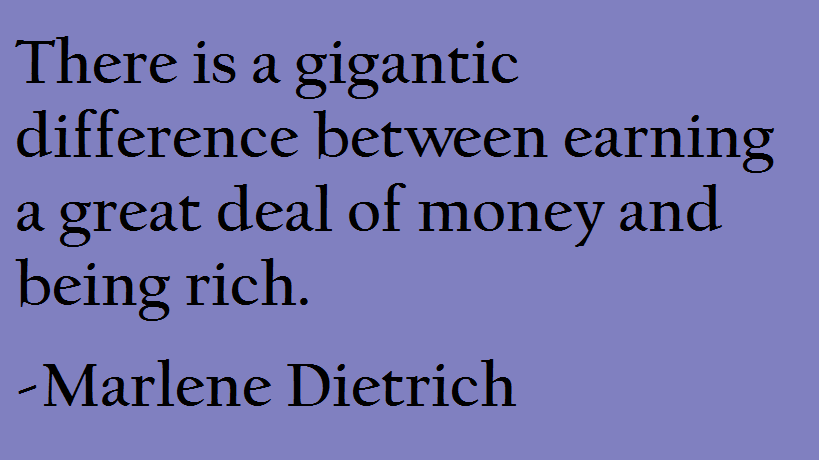
And when the money does come in, and someone hands you a large check, it is hard not to celebrate. But the reason for celebration is not – or should not be – the money. It is the opportunities this money affords for the museum to continue or grow programs. And while intellectually I know this, and I remain passionately committed to a larger vision, it is a constant struggle to remember that the money is the tool and not the goal, and that I have not done a good job unless that money is well spent. It is, frankly, hard not to do a little jig when someone hands you a check for $10,000.

I am worried about how this effects one’s priorities. What happens to my ability to care about quality and mission when day-to-day success depends on dollars? How do I keep my focus on the quality of the visitor experience instead of the number of visitors through the door?

I am writing this post because I find it difficult to keep that focus, which offers me a whole new perspective on the soul-sucking corporatization of so many large museums, and the ways in which museums appear to celebrate large donations over fantastic programs and important exhibitions. I understand this viscerally now.

How you understand your job, and what you feel rewarded for, determine focus, energy, and action. If I understand my job, and my goals, to be only about fundraising, then I spend less time meeting with educators to make sure we offer vibrant programs that exemplify our mission, or walking around the galleries talking to visitors. But it is these things that remind me of why we exist, and the ways in which we are valuable to our community. If a museum does not offer something of true value, than why bother to keep it open at all?

quote dietrich

Museum directors are not the only museum staff members who focus on money. Development and finance staff do as well. In fact, anyone in a high enough position in an organization will be asked to think about money in some way. In these positions, how do you remember always that the money is NOT the goal? That without offering something of meaning to visitors, your doors might as well close? How do you celebrate the program and not the check?


How do you create a team with a shared vision? Interview with Amy Hayes

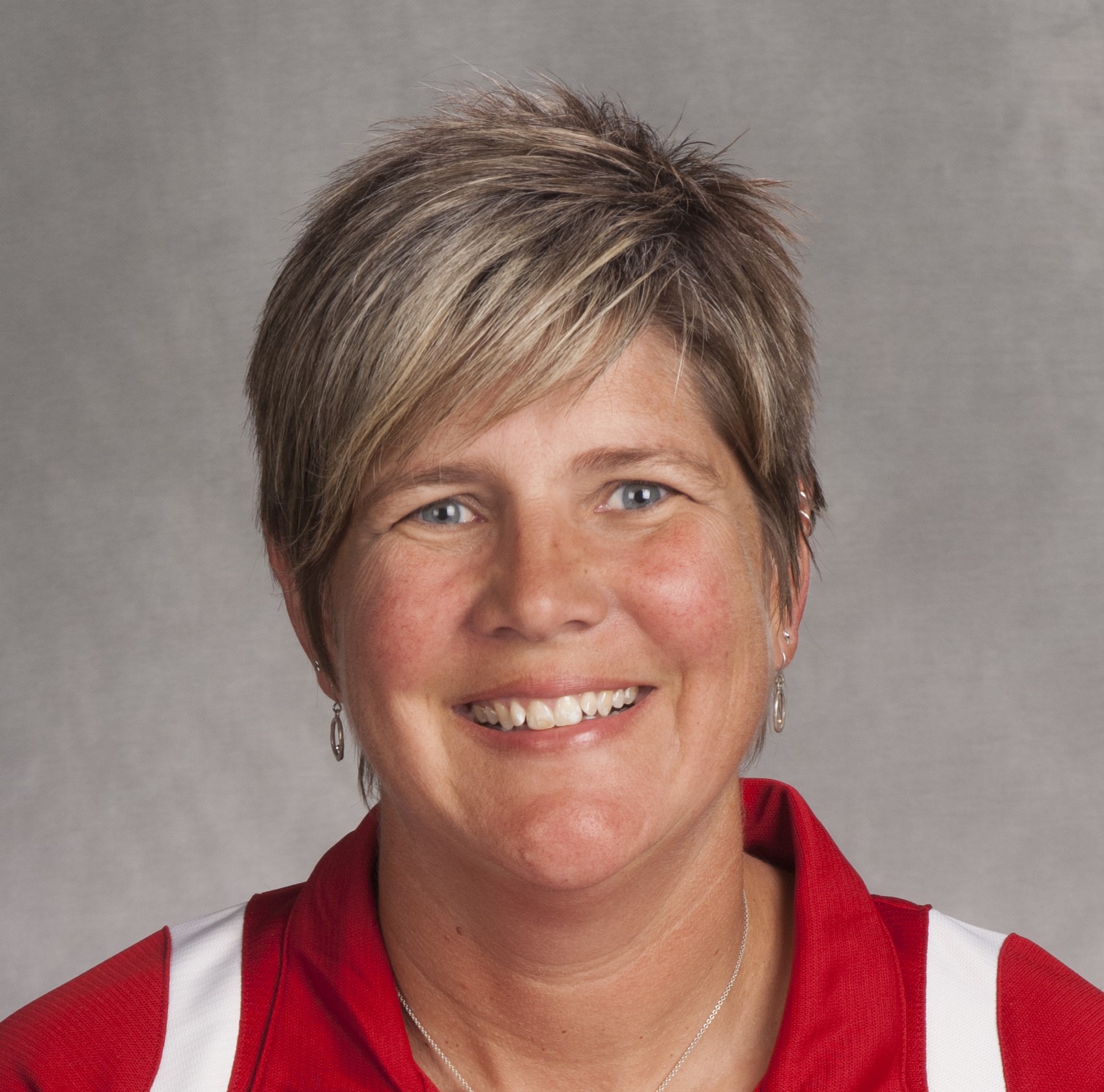
Amy Hayes is the women’s softball coach at Bradley University, where she has lead her team to two championships in the last seven years. Her student-athletes have been recognized for every Bradley Athletic Department Award – 11 honorees in the last 7 years.

I have been thinking lately about how a museum director or department head can create and communicate a shared vision. I know that this is something that as a coach you think about a lot. How do you create and communicate a shared vision with your team?

The number one thing when assembling a team is that you have to get people to be selfless. Start with a greater vision, a shared idea that everyone wants to invest in. For us it is that we play for something bigger than ourselves. The desires of individuals should never rival or overtake what is best for the team.  Once you get team members thinking that way and understanding their roles and taking pride in their work they buy in a little more. You need to do things on a daily basis to get them to remember this mindset. One of the biggest things for the Bradley softball team is involvement in community service, which creates a sense of gratitude and is a very impactful way to keep individuals grounded and heading in the right direction.

It’s an everyday thing to make sure players focus on the right things – that they are not worried about results or successes, but instead what they need to do that day to get better for the team. That one’s contributions, albeit important, are insignificant without a “team first” attitude.

How do you make sure each team member shares this larger vision?

We don’t have a ton of meetings, because a team that talks a lot never gets things done, but we do talk about what players think will make this team successful, how they envision the team’s success, and how the ways they carry out that vision impact team success. This is done through a lot of one-on-one conversations, pulling people aside and talking about their importance to the team and taking pride in their role. Our goal is to be very clear on roles and to help them understand the importance of upholding their role for our overall success.

How involved are you as the coach with each member of the team? Do coaches delegate team member management? If you have a team of 30 or 40 people, do you have a relationship with each of them, and if so, how?

I have to have a relationship with each person individually. The number one thing about creating a group culture is that people don’t care about how much you know until they know how much you care. I need to have a relationship with every single one of my players as well as all my assistant coaches, staff and administrators. I need them to know they mean more to me than just worker bees or ball players — they need to know I care.

How would this work in a business with a large staff?

I recently watched a show on PBS about LEGO. The way they do things there is almost cultish – in a good way, if there is such a thing. There’s so much sharing, and celebrating of each department’s successes. In a large business you can’t sit down and have one-on-one meetings with everyone, but you can certainly know what’s going on in each department and celebrate that throughout the company. Send out a newsletter, have a monthly talk that mentions each department and what they are doing, post monthly birthdays.  It is important to find ways to make people feel valued.

In a museum context – or at least, in my museum context – there is a clear vision, but it is not the only vision possible. So while in sports I imagine the ultimate goal is about winning the game, in museums the goal may be different in each institution. Also, you gave me a book to read – Jeff Janssen’s The Team Captain’s Culture Manual – that suggests that team core values are about how you want players to act, but in museums core values often highlight what we want for our community (see, for example, this blog post from Jeanne Vergeront). So, for example, at my museum two of our core values are equity – the PlayHouse is for everyone – and the idea that we are catalysts – we inspire learning beyond and between visits. The relationships of a sports team and a museum to vision and values seem very different.

Your core values are not that different from ours, in a college sports environment. We, too, are trying to define our community, but it is not just about wins and losses — at least not for championship teams.  My goal is to help young women grow and become impactful, better people who want to make a difference in their world.  Our first goal is to continue to improve ourselves physically and mentally – giving all we can to the team in order to garner success for our program, our department, university and community. There has to be a lot of trust amongst the team so that people feel free to be the best they can be without holding back for fear of scrutiny or judgement.  I try to instill a sense of pride in not only what we are striving for, but how that fits in to the athletic department and university’s vision. At the end of the day if I’m able to do that our team will be more successful on the ballfield and in life.

People have to buy into the vision; they need to be part of it. Ask them what success would look like. Allow them to help create the vision – the trick is to do this without losing your vision. The more you can put your vision in front of your staff without it coming directly from you, the more it will have an impact. We often have speakers come in. When students go home for break they have to read a book about someone who has been impactful, and we share that.

This year we have a team meeting every week. I started those meetings with my seniors and a representative from each class, but then I realized that this is something we needed to do as a team. So we meet weekly and discuss what we can do on a daily basis to uphold our team culture. This takes time: time away from their schedule, my schedule, their physical workout. But it’s worth it; these meetings have more of an impact than 50 extra swings in a batting cage.

What tips do you have for museums working on creating a team with a shared vision?

First, vision needs to be inclusive. Everyone needs to be aware of it, everyone needs to know its importance, and everyone needs to be given clear expectations: “I need you to lower the amount of homeruns you give up this year.” However it’s the next step- the most important- that is usually left out and it’s what cripples teams.  It’s the “how”. How are we going to lower the homeruns? Often we tell people our expectation but forget to show them the path to get there.

Second, the vision has to be clear and repetitive. The team members need to want to live it, to breathe it, to be as excited as you are about it. It’s a process to learn what drives potential team members, and to figure out who will share your vision. I don’t just look for good ball players – I look for people who are coachable, self-motivated, driven, who love what they do and take pride in it.

It’s also essential to strive for significance rather than success. Your motives should be to be selfless, not selfish. We live in a world where it’s about success and instant gratification, but it should be more about living a life of significance. Bring joy instead of taking it away. How can you impact a moment, a day, and a life?

It really is just about building relationships. Getting people to buy in rather than just telling them what they should care about. Sometimes the cost of creating a team with a shared vision is that I have to tell someone it’s not going to work out here anymore. I don’t think we should be scared to do that. We need to cherish our vision and take care of it, and make sure we have people who will do that. Sometimes there’s a great deal of addition by subtraction.

The Janssen book talks about different roles team members can have. It’s the same in business. Who is creative? Who is social? Identify people’s strengths and from there find ways for them to be impactful and celebrate the vision. There are different ways that people can contribute and all should be cultivated and appreciated.

AmeriCorps Fellowship: Peoria PlayHouse Children’s Museum


How can a museum truly be “for everyone”? What do strong community partnerships look like, and how far can they be expanded to support museums, community partners, and the people we serve?

Think through these questions as the Community Outreach Coordinator at the Peoria PlayHouse Children’s Museum! And please share this information with strong candidates you know who might be interested. We encourage interested applicants to submit their applications no later than February 5, 2016.

This is a 900-hour AmeriCorps Fellowship, beginning on March 7th and anticipated to last 5-8 months, depending upon the number of hours worked per week. There is a $5500 living allowance, along with a $2,822 education award which can be used for tuition, student loans, and school-related supplies after the completion of the Fellowship. Here is the full position description:

Americorps Fellow: Community Outreach Coordinator

The Community Outreach Coordinator is responsible for two programs: Celebrate Peoria and the PlayHouse Explorer Program:

Celebrate Peoria

Celebrate Peoria is a monthly series dedicated to discovering and celebrating the diversity of Peoria and Central Illinois. Each month, the PlayHouse examines one of the many cultures that make up the dynamic fabric of our community.

The Community Outreach Fellow plans and implements these events, including:

  • Identifying different cultures and traditions represented in Peoria, and creating a calendar of events related to these traditions for Fall 2016 and all of 2017.
  • Identifying representatives of these cultures who are interested in partnering with or supporting the PlayHouse in developing programs related to these traditions. Coordinating meetings with these representatives, both before the event to plan, and after the event to reflect and assess, and to consider future collaborations and programs.
  • Marketing the event, including preparing flyers, promoting the event through social media, and editing press releases.
  • Creating program materials, including exhibit signage and other educational materials.
  • Develop training for PlayHouse staff and volunteers about cultural traditions andCelebrate Peoria events and goals.
  • Recruit and manage volunteers for these events.
  • Evaluate events and make suggestions for future programs.

PlayHouse Explorer Program

The PlayHouse Explorer Program allows low-income families to visit free of charge, to become members for $10 per family per year, and to attend programs at reduced prices. This program is coordinated in partnership with community partners: local service providers who promote the program to families throughout the area.

The Community Outreach Fellow ensures that the Explorer Program runs smoothly, and evaluates program success, including:

  • Meet with community partners to promote the program and gather feedback.
  • Arrange walk-throughs and group visits for interested partners and their clients.
  • Process registration forms.
  • Evaluate the 2016 program, make changes for 2017 as needed, and implement these changes.
  • Inform community partners and pass holders of special events and activities.

In addition to these primary areas of focus, the Community Outreach Coordinator:

  • Represents and promotes the PlayHouse at local events, including East Bluff Build It Up meetings and Early Childhood Forum.
  • Attends PlayHouse staff meeting and trainings.
  • Collaborates with education staff and other staff to contribute expertise and ideas to other areas of programming and operations.
  • Reports all visitor comments, complaints, and trends to Operations Manager.

QUALIFICATIONS:          

 The ideal candidate will have a college degree, and demonstrated interest in working in museums and/or conducting cultural outreach work. He or she will have experience working in an office setting, and will be familiar with the Microsoft Office suite (Word, Excel, Outlook).

The candidate should also possess excellent oral and written communication skills, and be comfortable working with people from a wide variety of backgrounds and ages. He or she should be creative, with a strong interest in developing original programming that introduces new community members to the PlayHouse, and existing PlayHouse community members to the diverse traditions represented in the region.

The candidate should be able to work on multiple projects simultaneously, and be self-directed and able to move projects forward with little oversight. He or she should be able to work in a busy and sometimes distracting environment. He or she must be able to represent the PlayHouse professionally and positively.

Candidates must be available to work days, weekends, and some evenings and holidays. We can only consider candidates who are 18 or older and are able to pass a DCFS background check.

COMPENSATION:

AmeriCorps fellows are paid a “living allowance”—a small stipend to help with essentials like bills and groceries—during their service term.  The PlayHouse Community Outreach Coordinator will receive $5500 for 900 hours of service. In addition to the living allowance, AmeriCorps members who complete their service terms are given an education award of $2822, which can be used for tuition, student loans, and school-related supplies.

PlayHouse staff can assist the AmeriCorps fellow in looking for affordable housing (rentals can be found in the area for approximately $300 per month and up), and the Fellow can arrange his or her schedule to work additional part-time hours at another job if needed.

To apply for this position, please send a cover letter and resume to: Peoria PlayHouse Children’s Museum, 2218 N Prospect Road, Peoria, IL 61603. Applications will be considered on a rolling basis until the position is filled; however, we strongly encourage potential candidates to submit their application by February 5, 2016. We anticipate beginning to interview candidates in early February.

IMG_1769
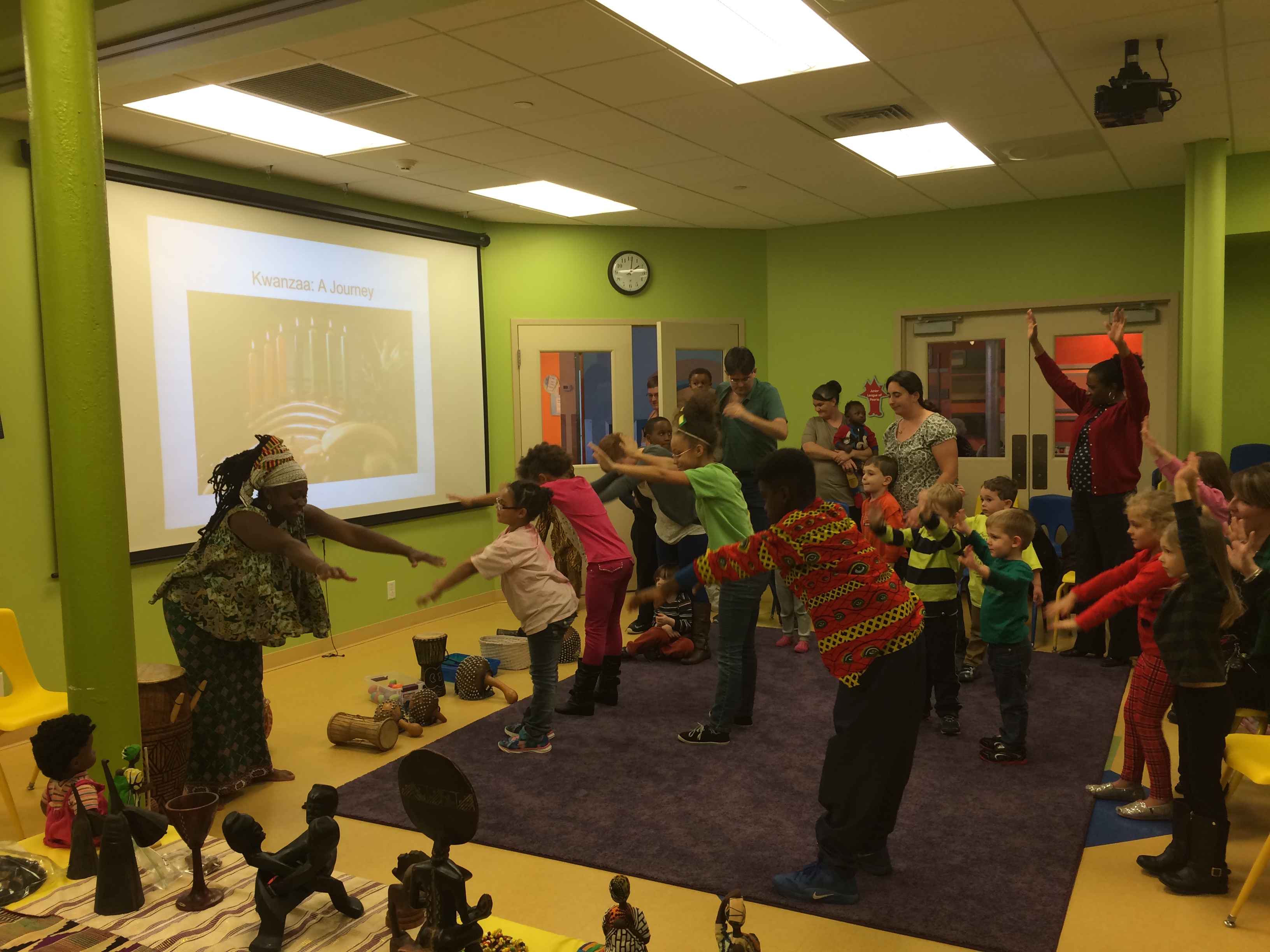
Learning African dance at Celebrate Peoria: Kwanzaa in December

IMG_1932
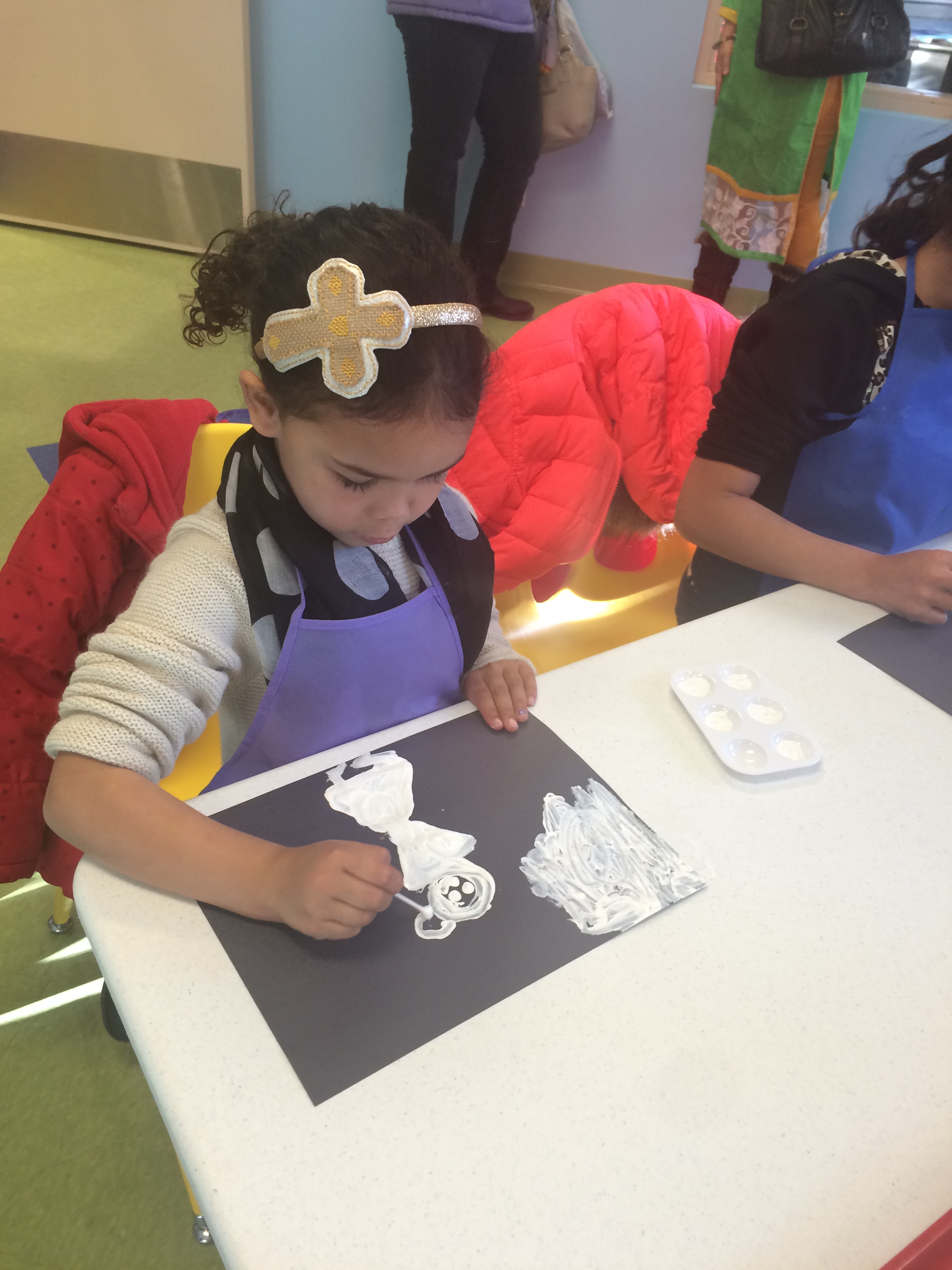
Making Warli paintings at Celebrate Peoria: Makar Sankranti in January

20160110_143340
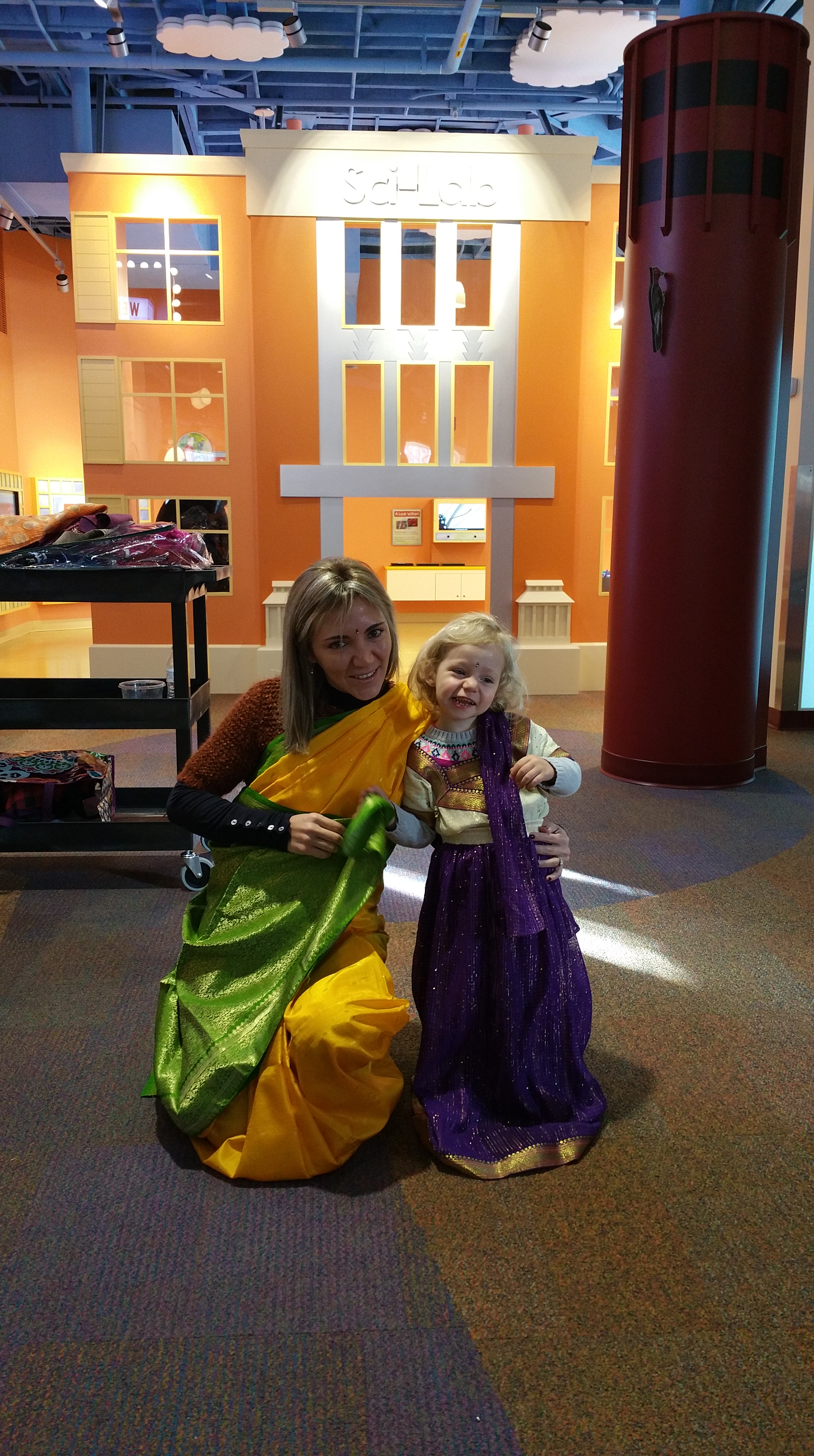
Trying on saris at Celebrate Peoria: Makar Sankranti

Jo Lakota 11-22-15
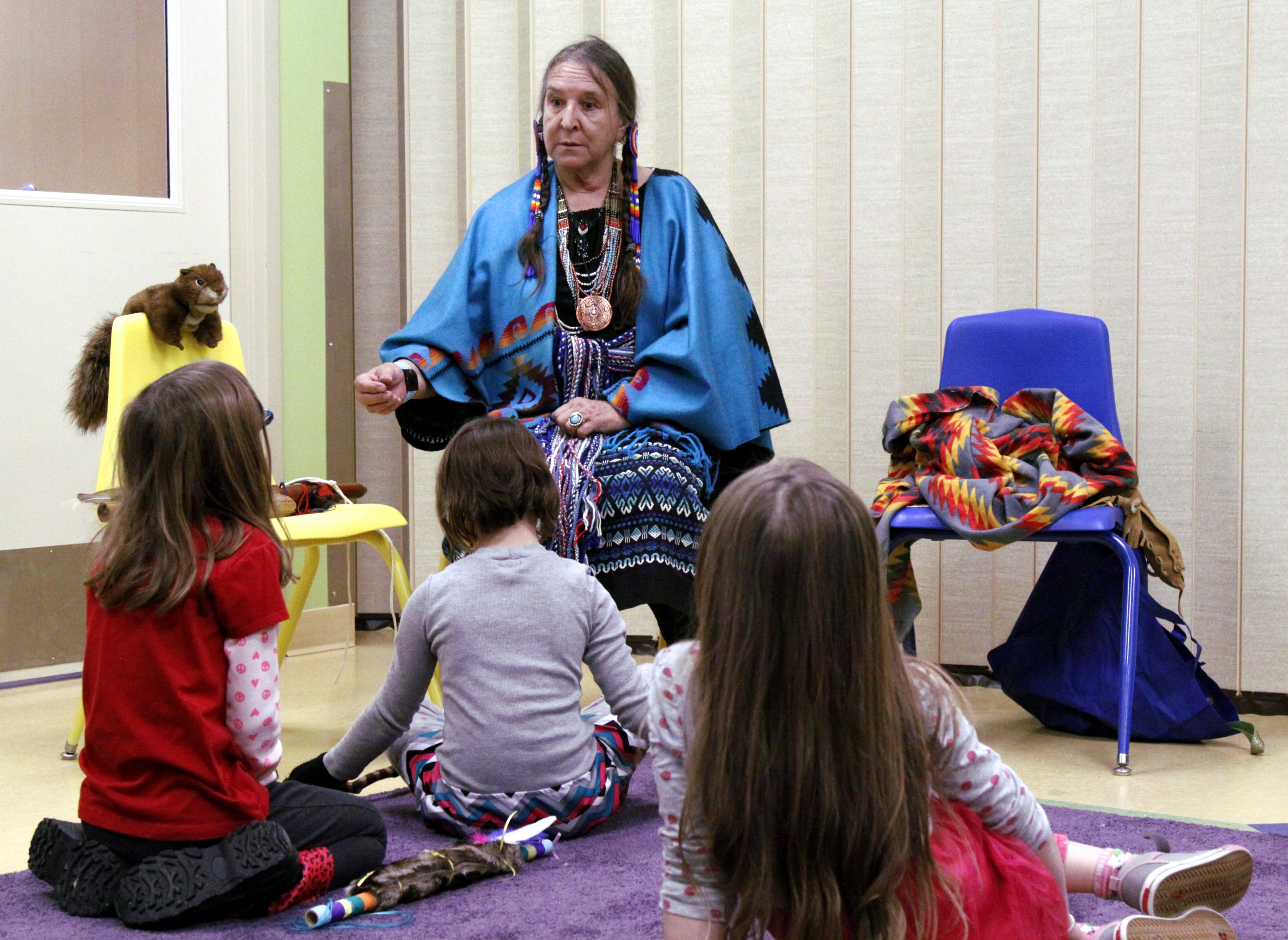
Listening to traditional Native American stories at the first Celebrate Peoria event, in November 2015.


What is a “good” science demonstration?

Recently I saw a video of a science demonstration in a children’s museum, and found myself wondering if the children were learning anything. What is the purpose of science demonstrations in museums? And what makes them effective at achieving whatever purpose we assign to them? To address this question I experimented with a first for this blog: A group conversation with not one but THREE experts.

Paul Taylor is the Manager of Traveling Science Shows and Community Outreach at the Franklin Institute. He performs hundreds of shows each year, many of them at local schools.

WSF 2013 001

Holly Kerby is Faculty Emeritus at Madison College, and the Executive Director of Fusion Science Theater. She has done a great deal of research into the impact of science demonstrations in museum and school settings.

holly kerby

Marcos Stafne is the Executive Director of the Montshire Museum of Science. His experience with science demonstrations includes 5 years at the Orlando Science Center and 8 years at the New York Hall of Science.

Marcos Stafne 2.Low.Res

Why offer science demonstrations in science or children’s museums?

Paul: That’s the point of a science museum – to show a science phenomenon as clearly as possible. Demonstrations actually show the incredible things we don’t normally get to see – what I call science phenomena.

Holly: We also need to think about what impact we have on visitors. Demonstrations impress them – they experience a visceral reaction, an emotional connection. And we are all hoping that they all learn something, too.

Marcos: Demonstrations also help to spark curiosity about things that might be present in the galleries. For example, if we’re demonstrating with a van de Graaff generator in a gallery dedicated to electricity exhibits, the demonstration gets visitors excited about static electricity or seeing direct current.  Kids get excited to learn, which leads them into further exploration of the exhibits.

Paul: But really the main goal of a demonstration is getting kids excited about science.

Holly: Getting kids interested, sparking curiosity, all that is really good, but under certain circumstances it’s valuable to learn concepts – as long as that doesn’t kill their excitement. In informal science, the excitement has to be there in order for them to learn.

Marcos: If we’re looking at it from a school-based perspective, demonstrations provide a common experience for the school group and teacher.  Good demonstrations often have good lessons that go along with them, to use back in the classroom. It’s one of the benefits or having science demos—but not the primary one.

Foo 8
Paul Taylor teaching

Holly, you wrote in an email to me, while you believe in the power of demonstrations to engage visitors, “there is scant evidence that traditional demonstrations teach the concept that they are demonstrating.  By traditional, I’m talking about demonstrations in the form of Introduce, Demonstrate, and Explain (IDE).  People assume that they do– in fact they go to great lengths to cite learning theory.  They also say that they may not teach a concept at the time of the demo, but that they promote future learning.  But there is no evidence for that either.  What evidence we have comes from classroom studies and that data shows that IDE demonstrations DO NOT result in increased understanding of the concept.

Marcos: I think we need to differentiate between traditional academic science demonstrations, and demonstrations that can happen in a museum. Best practice for science demonstrations in a museum involve inquiry. Instead of “Introduce, Demonstrate, Explain,” we see “Introduce, Inquiry, Demonstrate, Inquiry, Explain, further Inquiry.” There are usually questions happening, and the inquiry is vital to a successful engagement.

Holly: There are questions in the IDE format. Often demonstrators ask you to predict what will happen; this is a good practice. But even though in the classroom teachers ask lots of questions, and lead discussions for students, it’s very hard to show that students actually understood the concept.

Marcos: I want to clarify the notion of “concept.” If we are learning about eyes, and we want visitors to know and label eleven parts of the eye just from participating in a Cow’s Eye Dissection (a popular demo at many museums), you would be hard-pressed to test 12 year olds and have them know all eleven parts after a demo. But that’s not always the primary goal. We’re looking at how do we get everyone – kids, adults – engaged in the act of science through observation and the scientific method. This goal is not to get an A on a test on the eye, but let them practice the language of science while in an extraordinary environment. That’s where museums can help – by helping visitors develop the language of science.

You have listed a number of reasons to conduct science demonstrations. I am wondering, under what conditions are demonstrations effective? Let’s go through some ideas. First, when do demonstrations get visitors excited about science, or spark curiosity?

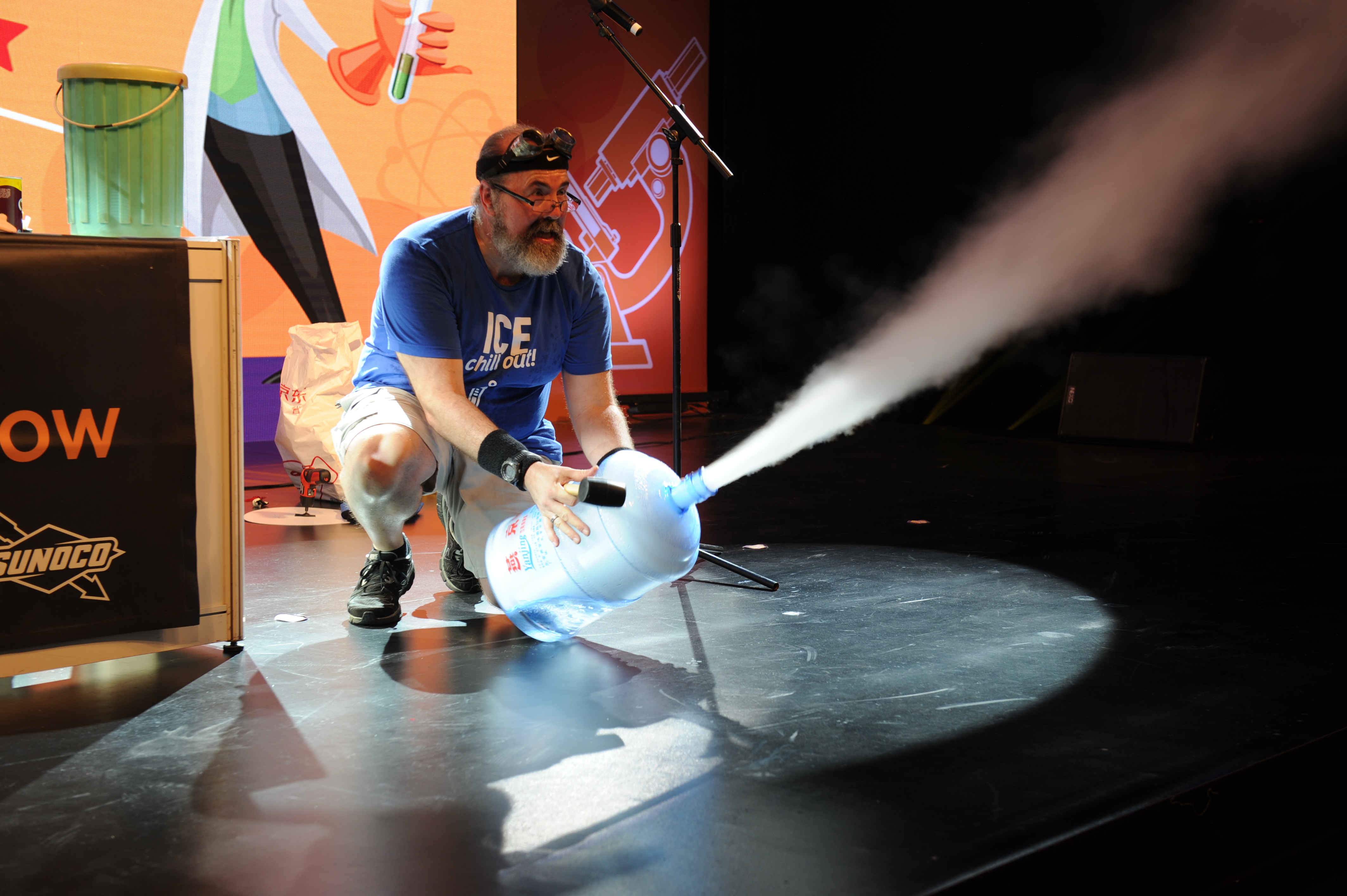
Paul: When there is what we call a discrepant event. You expect one thing, and something different happens. These create lasting memories. For example, you have two racquet balls, and you place one in liquid nitrogen. The first ball bounces, but the one in the nitrogen shatters. That’s a discrepant event.

Marcos: It’s a lot about the energy and enthusiasm of the presenter, and setting the stage for a quality experience. Good demo areas are ones with clear sight lines, and visual clarity on the table so that children can focus.

Holly: We started talking about curiosity, but the quality of the presentation is important for all of our goals. You need a performer that invites the children and families into it. Some people are more inviting than others.

Paul: Open ended questions. Yes and no questions tend to stop open-ended inquiry. Open ended questions help people dig deeper.

Marcos: Descriptive questions. Asking people to verbalize their observations. Asking, “What do you notice?” Asking kids to share what they are seeing and processing. If someone says something important scientifically, ask that what makes them say that. It’s too easy for many science instructors to identify what’s correct without asking visitors why they came to a conclusion about a concept. Asking “what made you say that” helps to unpack what a kid is thinking—but it requires active listening.

Holly: If you ask “what do you think is going to happen,” it invites all sorts of responses – especially if you welcome all sorts of responses, and ask visitors why they think that. It is important that people predict.

Science_in_a_box08_3452sm
Holly and a fellow performer

When do science demonstrations effectively teach the “language of science”?

Holly: In Fusion Science Theater we have a show protocol that teaches language. For example, we say something like, “In science, what we do is make observations. We’re going to ask you “what do you see?” Then we invite visitors to make observations. We also model making observations.

We also say, “If you don’t know what’s going to happen, that’s ok. Scientists do experiments to figure things out – they don’t know what’s going to happen.”

Marcos: Authentic language is important. So is the attitude and presence of the facilitator. When the demonstrator/educator values visitor responses that help kids practice the language of science because it helps them feel positive about science.

Paul: We use these words, talk about why we’re using them, and incorporate them into demonstrations. We teach people how a scientist thinks, and why, because it helps us understand the world around them.

When do science demonstrations effectively make a connection to a museum exhibit?

Marcos: When I facilitated demonstrations at the Orlando Science Center we would say something at the end of the program about adjacent exhibits. Physically walking the group from the demonstration to the exhibit also helped. Not all demonstrators are given time to do that. They might have equipment or chemicals they need to watch or clean up.

Paul: Here at the Franklin Institute we have smaller science demonstrations on a cart, which we often use right outside or nearby an exhibit, so it’s easy to reference things in that exhibit.

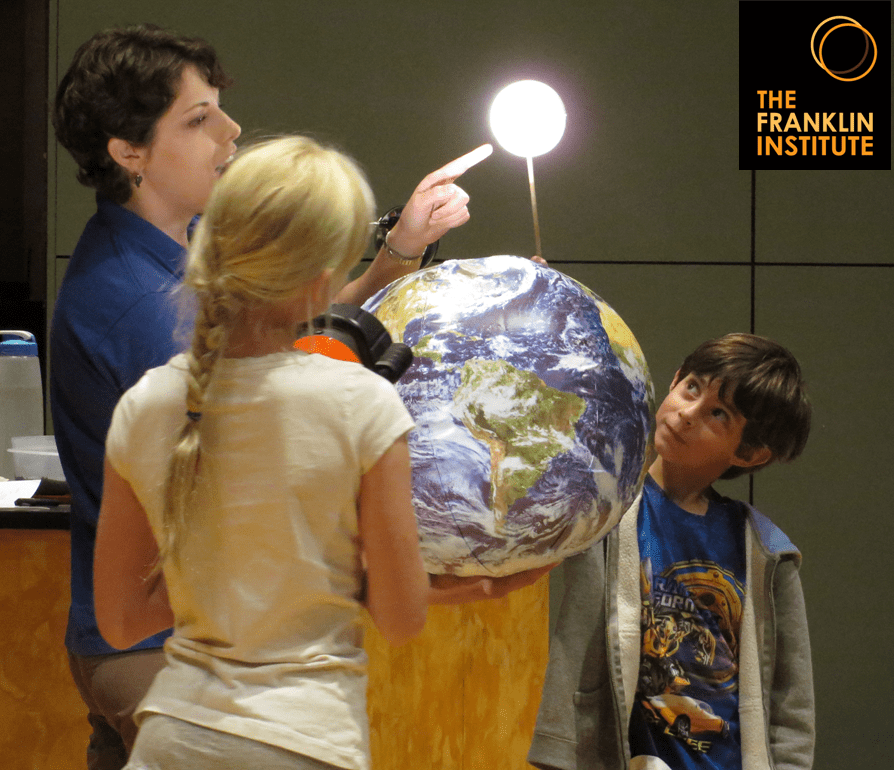
An astronomy demonstration
An astronomy demonstration at The Franklin Institute in Philadelphia

Do people remember or reference the nearby exhibit?

Paul: I don’t think so. But some positive transaction has happened, and it accumulates into a love for science.

Marcos: You have to at least try to make that connection. Asking whether or not it happens – that’s a hard thing to judge because of a visitor’s agenda. Visitors may have come to the demonstration right before their lunchtime, or at the end of the day, or at the beginning of their visit. That’s the difficulty of free choice learning environments.

Assigning two educators/ facilitators to a demonstration also can be helpful. At OSC in the 90’s, we often had an usher for the demo – someone who helped get the crowd excited, watched materials, and handled logistics—not the person doing the demo. This let the facilitator actively engage with exhibits and visitors after the demonstration was over. A second educator is not always a budget reality, but it’s a good best practice.

When do science demonstrations effectively teach scientific concepts?

Holly: It really takes concerted teaching to make that happen. The other thing it really takes – and I think this is true for all of the things when we talk about effectiveness – is an evaluation, so we know if we achieved the effect we wanted. If we’re going to say things are best practices – we don’t really know unless we take the time to evaluate them. I was a classroom teacher, and I assumed what I did led to increased understanding, and then I found out it didn’t. We can be fooled a lot of time. You need to have some sort of way to evaluate whether you were successful.

Marcos: When you frame a demonstration well there is a story, a rhythm to it, an inciting incident or a discrepant event, a climax, and dénouement— drama that makes the information stickier. There needs to be an arc, a story.

Holly: Learning isn’t just a matter of having someone tell you the answer, it’s a matter of trying to figure it out for yourself. You have an expectation; it wasn’t what you thought; you have to figure it out yourself. A story line helps people – it motivates them to figure things out for themselves, to figure out the end of the story.

Marcos: Great storytelling is also about clarity. What are the ingredients you put in there? What’s the big idea? When I first started facilitating demonstrations or science shows, I’d be handed too many individual, disparate, demos to accomplish in 30 minutes…all  about chemistry…but they don’t necessarily relate to each other. But then I grew as an educator, I would, slow down, provide more opportuinites with deeper inquiry around three or four demonstrations that framed once concept through a narrative. For example, a big idea might be, “butterflies have symmetry.” We might look at symmetry four different ways, but there’s just the one concept, the one big picture. With electricity – the big picture for me was observing the visible differences how direct and alternating current act. You may need to do 5 or 6 different demonstrations (and because it’s electricity, it needs to be handled by a skilled/trained facilitator for safety), to have visitors start to understand the difference.

Holly: There is data that if you concentrate on one thing, and you are very focused on it, you are much more likely to have people understand that one thing. We are worried that people will be bored so we trot out all these demos. It’s highly entertaining, but it muddies the waters in terms of teaching. Sometimes simpler demonstrations help to teach better than the complicated one.

Is there anything else you would like to add?

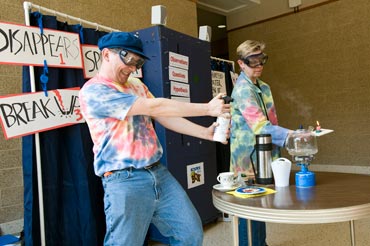
Holly: What never came up in our conversation was safety.  Demonstrators and anyone “helping with a demonstration” – meaning anyone within splatter, flame, and spill distance –  need to be wearing goggles and protective gear when doing anything remotely hazardous.  The TV clip you directed us to before we began our conversation had the young volunteer working with a chemical that is a strong oxidizer, with his goggles on his forehead.  Had it splashed in his eyes he would have suffered permanent eye damage. He also should have been wearing gloves.It is our obligation as demonstrators to comply with basic safety procedures to protect ourselves, our visitors, and to be good examples.

Resources:

Want to learn more?

Here are some articles shared by Holly:

Demonstrations do not lead to increased understanding of the concept demonstrated:
Crouch, C.H., Fagen, A.P., Callan, J.P. and Mazur, E. (2004). Classroom Demonstrations: Learning Tools Or Entertainment? American Journal of Physics. 72(6), June 2014.

Demonstrations do not correct misconceptions:
Shepardson, D. P., Moje, E. B. and Kennard-McClelland, A. M. (1994), The impact of a science demonstration on children’s understandings of air pressure, Journal of Research in Science Teaching, 31(3), March 1994

Students don’t agree with presenter about observations:
Roth, W., McRobbie, C.J., Lucas, K.B. and Boutonné, S.  Why may students fail to learn from demonstrations? A social practice perspective on learning in physics. Journal of Research in Science Teaching, 35(5), May 1997.

Fusion Science Theater:
Kerby, H. W., Cantor, J., Weiland, M., Babiarz, C. and Kerby, A. W. Fusion Science Theater Presents The Amazing Chemical Circus: A New Model of Outreach That Uses Theater To Engage Children in Learning. Journal of Chemical Education  87 (10), August 2010.

And some resources provided by Marcos:

2007 ASTC Dimensions Issue: Performing Science: The Once and Future Science Show
http://www.astc.org/DimensionsPDFS/2007/MarApr.pdf

Cow’s Eye Dissection Digital Learning Experience from the Exploratorium

What are your Museum Questions?

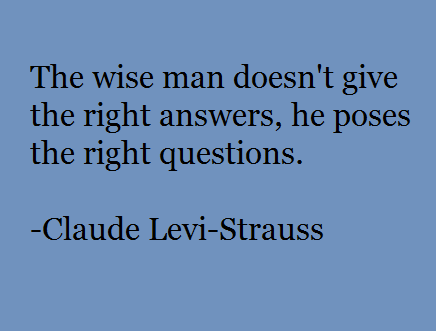
As the end of 2015 approaches, I am wondering: What compelling questions need to be explored in 2016? Please share your ideas, either in the comments section, via social media, or by email. (See the About page for how to reach me by email or on twitter.)

levi-strauss quote


Here are a few things I am thinking about as the new year rolls around:

Leadership

My post about whether museums should celebrate the holidays has led me to think about how, as the leader of a museum, a department, or a group, one can ensure that staff shares a larger vision. I am looking forward to interviewing a local athletic coach about this question, and am looking for other ways to think about it as well. If a museum strives to challenge the status quo, or create new ways of thinking, how do we hire and train and inspire staff so that they share this vision?

Exhibit costs and value

A recent article in the New York Times noted how expensive it will be to create an exhibit around the confederate flag that once flew over the South Carolina State Capitol. This made me wonder about the expense of creating contemporary exhibits. Clearly one could display a flag, and create signage and programming around it, for less than $5.3 million. What does it mean to responsibly and professionally display important objects? At what point do costs related to creating or visiting museums become so high that museums cease to be the spaces in which we preserve shared history?

Evaluation

While discussing research and evaluation with PlayHouse Museum research partners at Bradley University, I have become very aware that the evaluation conducted by most museum education departments is scientifically useless. We do not have good strategies in place for understanding the impact of programs on individuals, or quantifying this information in any scientifically meaningful way. In an environment that calls for data, when is evaluation worth doing? What does good museum evaluation look like? Is there any way that museums – in particular those without staff dedicated to research and evaluation –  can conduct valid evaluation themselves?

Your Turn

I would like to hear what questions YOU have. I work in a small museum, in a small city with few museums, which can be a little isolating. What are you wondering about? What compelling questions do you have? What aspects of our work would you like to see questioned or explored in the coming year?


Should Museums Celebrate the Holiday Season?

A few weeks ago, I walked into the Peoria PlayHouse Children’s Museum to find floor staff creating a clever string of “lights” made of construction paper and cardboard tubes. They wanted to hang it from our tree – a big, fake oak tree that sits just inside our lobby, and is one of the first things visitors see when they walk in. To the dismay of the staff, I vetoed the lights.

The Peoria PlayHouse is part of a larger organization, the Peoria Park District. We have a replica of a T-Rex head currently displayed at the Park District’s Admininstrative Building, with a sign that says, “I’m going to the PlayHouse!” Here is what the T-Rex looks like this week, after the Administrative Building staff was done decorating:

T-rex1.jpg

It is not in the PlayHouse, but paired with its PlayHouse sign, it does send a message that our museum is ready for Christmas.

At the PlayHouse, we recently launched a series entitled Celebrate Peoria, with monthly programs highlighting the diversity of cultures represented here. We have celebrated Sukkot and Kwanzaa, and are preparing to celebrate Makar Sankranti, Lunar New Year, and St. Patrick’s Day. Which begs the question: Is it ok to celebrate Kwanzaa but not Christmas? Is it ok to celebrate Christmas but not Kwanzaa? Why one, and not the other?

The Holiday Season

This post was originally titled, “Should Museums Decorate for Christmas?” But when I posed this question to colleagues on Facebook the overwhelming response was that we should avoid Christmas decorations, but wreaths and blue and white lights are “neutral.” I understand this argument, but I find it problematic. The phrase “holiday season” implies that this is a time when a variety of holidays are being celebrated. But no other religion I can think of has a major holiday that consistently falls in December.  (Hannukah is a very, very minor holiday, and Diwali this year fell in early November; in 2016 it is in late October.) So when we celebrate the “holiday season,” it is really the Christmas season we are celebrating.

But there are good intentions behind labeling December the “holiday season.” It is meant to be inclusive. The phrase “holiday season” theoretically says, “We each have our own equally important traditions, and let’s welcome them all and still celebrate together.” In the United States, it allows a diverse population to experience a shared moment of coming together. Moreover, the Americanized “holiday season” celebrates not the birth of Jesus but the secular gathering of families. For many, it is less about any religious sentiment than it is about a season of appreciation and sharing. This attitude is prevalent enough that it poses a different sort of problem for religious Christians who want to reclaim their holiday as a religious event.

So for a moment (just a moment, I promise – you can skip down to the next section if you like) I am putting aside my opinion that the “holiday season” is an inauthentic and problematic construct to consider museums’ roles during the holiday season. Because there are a few reasons that museums might want to celebrate the holiday season.

First, museums may want to contribute to the feel-good nature of the month. The holidays are perceived as a happy time, as expressed by decorations, the generosity of gifts and donations, and wishes of “happy holidays.” By hanging wreaths or other decorations, museums integrate themselves into their communities.

Second, museums stand to gain some of the enormous amounts of money spent at this time of year. Holiday programs or spectacular decorations bring people in through the doors, and thus generate income. And museums have gotten very creative with this. As Marcos Stafne, Executive Director of the Montshire Museum of Science, notes, earned income is important for many children’s museums:
Some children’s museums create large holiday events for their towns/cities­–and they can be huge attendance drivers. Because earned revenue is an important component to many children’s museum’s operating budgets, they have to think about how to be competitive with other events and spaces that draw families away from the museum­–including malls.


A third reason that museums might embrace the holiday season is as an opportunity to teach about other cultures. Cris Scorza, Director of Education at the Museum of Contemporary Art San Diego, wrote:

Children’s Museums are great places to introduce people to the diverse celebrations. In my time as Manager of Cultural Programs at the Brooklyn Children’s Museum, I learned a lot about traditions such as Diwali, and Sukkot, which made me appreciate those communities even more. At a time when we hear hate sentiments against one religion we should embrace everyone’s traditions. Museums serve as safe spaces where culture can be preserved.

There is certainly a culture in museums of embracing the holiday season, often using it to bring in visitors, generate revenue, and teach. But what do we lose in doing this?

800px-XmasTreeExhibitChicagoMuseumOfScienceIndustry
The Christmas Around the World exhibit in the rotunda at the Museum of Science and Industry in Chicago, Illinois, USA, 2006.

Perpetuating Cultural Hegemony

The irony of using the “holiday season” to teach about other cultures is that the holiday season insidiously perpetuates the hegemony of Christianity in the United States. When people go around saying “Merry Christmas,” we recognize that they are operating in a Christian framework, which we may or may not feel part of. When people go around saying “Happy Holidays,” we are lulled into thinking that we are coming together in an accepting, multicultural context. But, as noted earlier, there is no holiday season, there is only Christmas.

Were this issue, this post, this concern, only about the holiday season, it might be of secondary importance. But the larger issue – the assumptions and attitudes held by the majority, and how they impact our perception and treatment of “others,” is or should be an issue of importance to all of us right now. Assumptions about the “holiday season” reflect a wider set of things we take for granted, which we presuppose everyone does or should agree with but are really cultural constructs.

Anthropologist Mark Nathan Cohen, at SUNY Plattsburgh, has written about this in the book Culture of Intolerance:

All people around the world are members of cultures, by which I mean not just art and dance, but “grammar rules”… that set up the mostly unspoken (and often unconscious) limits to their behavior. For example, culture defines the values people hold, their goals and motivations, the permitted means to achieving those goals….

All of these things must be provided by every culture. They are needs that must be met in any culture to keep that culture and society intact…. But often… the ways people fulfill these needs are unspoken or even unconscious…. Because these behaviors are unconscious they are the hardest parts of a culture to analyze or change.


Over the course of the past year we have amassed growing evidence that many of the assumptions held by people living in the United States are dangerous to the health and well-being of others. Where do some police officers get the idea that it’s acceptable to use violence on African Americans? What are the assumptions that we, and those around us, make about Muslim immigrants? How do the immediate responses to crimes vary according to the ethnicity of the perpetrator – who do we call crazy, who violent, who a terrorist? What cultural assumptions are at the root of these attitudes and responses come from?

John Stewart captured some of the ways that unquestioned cultural assumptions surround and shape us in this clip about the mass shooting in a South Carolina church in June:


The space in which I most often think about this issue is K-12 education. We hold myriad cultural assumptions about what success looks like, the importance of academic ambition, what constitutes appropriate behavior, how people should speak, in both language and tone. The result is a set of un-examined, or at least under-examined, assumptions about the function and purpose of school. Right now, the purpose of K-12 education appears to be to equalize through homogenization, while moving all children toward college.

Parenting is another area plagued by cultural assumptions. On the “Park Slope Parents” listserv in Brooklyn one would sometimes see posts from a parent telling another parent that their nanny was mistreating their child by yelling at him or her. In children’s museums we often assume that parents should be engaged with their children, rather than simply available nearby, and parents are judged accordingly.

How do we recognize our own assumptions, and question them, and help others to question them?

Museums and the “Holidays”

So – should museums celebrate the holiday season?

Museums always have multiple conflicting goals. But I would argue that more important than contributing to a warm and fuzzy feeling, more important than generating income, and more important than teaching selected information about other cultures is challenging cultural assumptions that grow more and more problematic. Who but museums will help people examine the normative assumptions we hold? To build on Jon Stewart’s example, museums are the ideal choice to draw attention to streets named after Confederate officers, and examine the history and repercussions of this often-ignored history. Museums can examine education, the history of testing, the many jobs people can have and the path to these jobs. And museums are ideally situated to remind people that the United States is a country made of many cultures, most of which do not have December holidays.

Earlier I asked the questions: Is it ok to celebrate Kwanzaa but not Christmas? Is it ok to celebrate Christmas but not Kwanzaa? Why one, and not the other? The answer, I think, is because celebrating Christmas is a narrowing act, while celebrating Kwanzaa broadens. Celebrating Christmas, or the “holiday season” reinforces norms we may want to question. Celebrating Kwanzaa, or Sukkot, or Makar Sankranti teaches most visitors that there are active cultural traditions different from their own, while supporting the observers of these traditions by making them feel welcomed and celebrated.


Post script – In the interest of full disclosure, I do want to note that, at the PlayHouse, while I reject decorations, we did send out a Happy Holidays card. Writing this post made me rethink that, but too late. 


What do Stories do? Act II: This American Life’s “Put a Bow on It”

In two recent posts I explored the role of storytelling in museums, and particularly in museum exhibitions. In Should Exhibits Tell Stories I questioned whether storytelling provokes the response museums hope for from visitors. A few weeks later, in What do Stories do?, I interviewed cognitive psychologist Lane Beckes, who discussed the psychological impact of storytelling and its relationship to learning.

A week after I posted the interview with Lane, This American Life aired “Put a Bow on It,” which explores some of the same things. As Ira Glass describes the episode:

So today’s program is about situations where the facts are not enough by themselves. You need to still figure out what story best goes with those facts.

But who does this work? When does storytelling become marketing? When does it provide needed context or framing? When is it intrusive?

For those interested in storytelling, I recommend listening to the full podcast. For those without the time or patience to listen, here are quotes from the first two acts of the episode, with their context.

In the first story, the fast food chain Hardee’s is developing new foods, and it turns out that the name of the food – its story – is as important as the taste. The story’s producer, Zoe Chace, and Brad Haley, Hardee’s Chief Marketing Officer, discuss a sandwich with mashed potatoes, gravy, onion straws, cheese, and chicken:

Zoe: What they’re looking for is the story they’re going to tell to explain why the weirdness makes sense. And it’s got to be a pretty good story– simple, punchy. Half ironic wouldn’t hurt. That is just as hard as coming up with the sandwich…. And sometimes they get stuck, like when they put pulled pork on a burger– not the most appetizing picture the way I just described it. And Brad says it didn’t test well.

Brad: And we kept trying different names. We had called it the pulled pork burger or the southern burger. And finally, I think Bruce had the idea of calling it the Memphis Barbecue Burger. And we tried that and it worked incredibly well.

A name – a story – made something unappetizing suddenly appetizing. Story as marketing tool – something used to promote a product, rather than to understand it.

How do the titles of exhibits change how they are received? What makes a good exhibit title? Or a program name? 

In the second act of “Put a Bow on It,” the musician and writer Ahamefule Oluo is trying to understand Sam Oluo, the father he never knew. As part of this effort, he gathers his family together. When his mother and stepbrother tell stories about his father his sister gets upset, and says:

Maybe this is why I’m not good at these sorts of conversations in groups because I feel like everybody tries to make their personal reality everyone else’s reality.

This is a story about the need to create one’s own story.

What information do exhibits need to provide? How can stories support visitors’ exploration of a topic, and when do they stop visitors from creating their own analysis or meaning-making? 

Listen to “Put a Bow on It,” and let me know what you think.


What happens when parents join their kids in play, exploration and museum conversation?

This week’s post is by Amanda Nobis, a junior at Bradley University, and the first Research Intern at the Peoria PlayHouse Children’s Museum.

Psychology_Amanda_Nobis_20150717_13

This summer I had the opportunity to help form a collaborative relationship between the Bradley University Psychology Department and the Peoria Playhouse Children’s Museum. I was invited to join the staff of the Peoria Playhouse as a Research Intern, to conduct an evaluation of the exhibits and to track patron behavior. As a junior psychology major, this was the first project I was able to have near complete autonomy over from beginning to end. This experience was invaluable in a myriad of different ways, from the professional to the personal and from the practical to the experiential. Here, I will share my work and our findings.

How We Did It

The design of the study was simple. First I created research tools: data collection sheets which captured how long children spent engaging different exhibit components. (While I observed individual children, no names were recorded during these observations.) These surveys also classified exhibit interactions as collaborative with an adult, collaborative with a peer, or solo. I also classified the behavior of the adult with the child as collaborative, observant, distracted, or absent.

In order to collect data using this tool, I tried to be as inconspicuous as possible. Usually, random selection is a vital aspect of an experimental study, but the nature of this project made it impractical. Therefore, I convenience-sampled children based on who the next child was that came into the exhibit when I wasn’t already observing someone. I sat in my chair with a stopwatch and my data collection sheets and recorded the length of time spent playing. My fellow interns dubbed me the “professional creeper.”

What We Found

The ultimate goal of this project was to determine how patrons were using the different exhibits. After a month of data collection, I compiled the information and found the average amount of time spent at each exhibit. In addition to these general numbers, I also found which parts of each exhibit were the most popular. I presented this information to the PlayHouse leadership for them to use as guidance for updates and improvements.

I was especially excited to find a significant interaction between two variables. In psychology, we use the term “significant” to describe whether or not there is a less than 5% likelihood that an effect occurred due to chance. Based on the data that I collected in the PlayHouse Sand Porch exhibit, it appears that when a parent or adult interacts collaboratively, the child will spend more time in the exhibit, as compared with children whose adults do not engage collaboratively. The data showed a similar trend in the other target exhibits, though due to small sample sizes the effects there did not reach statistical significance.

What does this mean? The scientific literature has demonstrated how important parent engagement and collaboration is for child development, and I believe that this effect was a demonstration of that need. Parents are children’s first teachers and they are the ones who begin to shape who a child will grow to be. One important way they fulfill this role is through participating in their child’s experiences. From a museum’s point of view, parent participation leads to more time spent in each exhibit, or longer holding time. Longer holding time, in turn, reflects deeper engagement for the child and is a good indicator of exhibit effectiveness.


Rebecca’s comments:

Only five months in to our existence as a museum, Amanda’s work, and that of her professor, Derek Montgomery, has been influential for the PlayHouse in three ways:

  • First, they identified curiosity as the area of research that aligns with the PlayHouse goals and mission, while offering the research team an area in which they can do important research and contribute to the fields of psychology and museum education. Their literature review has been extremely helpful in understanding what is known, and where we might fill gaps in knowledge, as well as in challenging PlayHouse staff to think carefully about the relationship between what we do and curiosity.
  • Second, potential PlayHouse supporters love hearing that we are doing this research, and we have high hopes that Bradley and the PlayHouse can collaboratively bring in funding that supports both research and programs.
  • Third, aside from the research findings, having someone observing visitors and how they use exhibits has led to new ideas about what we might add or change to improve the visitor experience.

Moving forward, our collaboration with the Bradley University Cognitive Psychology Department includes research interns each year and during the summer, as well as professional development for PlayHouse staff by cognitive psychology staff (for example, in January Professor Montgomery will share with staff research on guided facilitation in museums).

What role do museums play in a small city? Interview with Patrick Urich

Patrick Urich is the City Manager of Peoria, Illinois. As City Manager, he is responsible for overseeing the day-to-day activities of the City of Peoria, including the budget and all city departments and employees.

pat urich

What role do museums play in Peoria?

Museums provide cultural vitality to a community of our size. They provide an experience that is both local and global. They offer some of the experiences that you might find in larger communities.

Museums help to provide an experience for people so that when they come to visit our community, or are moving into this region, they feel like there is a sense of vitality and sense of place and sense of vibrancy. This experience also includes a strong set of neighborhoods with distinct characteristics. A central city that gives you a sense of where you are. Amenities that attract people from a recreational standpoint, so that they are able to ride a bike on a trail, run along the riverfront, walk or play in open spaces. Museums add that spice that is part of what makes a city unique.

One of the ideas put forth in the book Cities, Museums and Soft Power is that museums can challenge the status quo, including the status quo embraced by the city. Thoughts on this?

Museums can certainly play a role in challenging the status quo. In fact, there is no better place than a museum to do that in a small community.

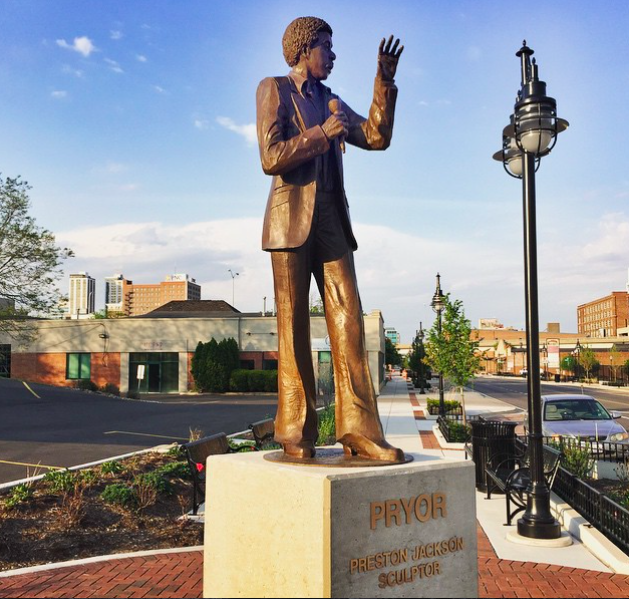
For example, in Peoria, we have a complicated history with Richard Pryor, who is from Peoria, and a similarly complicated history with Peorian Betty Friedan. Museums can help us to rethink these histories, which are not just about these people but about the social structure and inequalities that surrounded them. If museums do more to talk about local experiences and local history in a way that may make people feel uncomfortable, that’s a good thing.

Statue of Richard Pryor by local artist Preston Jackson, unveiled in May 2015

In her interview for this blog, Ngaire Blankenberg claimed that “the big issues of our time, such as migration, climate change, and inequality, happen in cities.” What are these issues in Peoria?

I just came back from a conference of city managers in Seattle, where a city manager from California said: The federal government has the money, state governments have the problems, and cities have the solutions. We are dealing with big, timely issues at the city level – infrastructure and development, environmental issues, income inequality and how we live with one another in a relatively densely populated area. Even though we are a small community of 116,000 people we have all the issues of larger cities, just playing out on a smaller scale. Suburbanization in the north; the challenges of trying to create a vibrant central core; the challenges of delivering education; crime; inequality and economic opportunity.

Museums have to look at where they can challenge the status quo, and where they can push, but also where they can partner. There are opportunities for museums to raise awareness of those issues, and the challenges that they hold for everyone. That helps us to move and change as a community.

But aren’t cities invested in some aspects of the status quo?

Not as much as museums. As Ngaire said in her interview, museums are run by what we might call “the elites” – they are financially supported by a small, wealthy segment of the population. How comfortable are museums – or how comfortable should they be – knowing they are being run by the elites, who are the people who would be most threatened by that challenge to the status quo?

Excellent point. So assuming museums can get past this (admittedly a big assumption for some museums), how might they play a role in these issues?

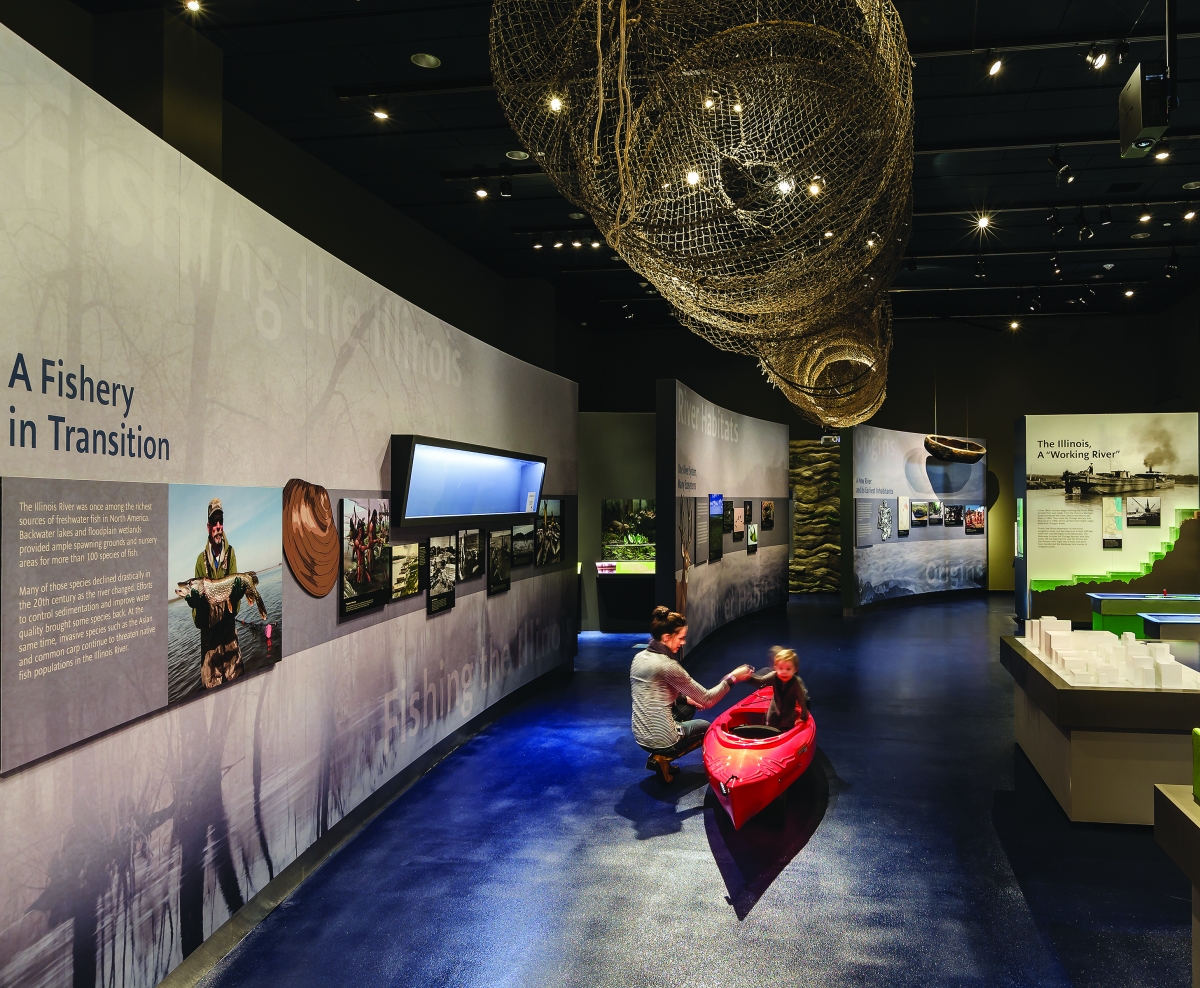
The easiest one to take as an example is the environmental issue. In Peoria we are facing an issue of Combined Sewer Overflow, and a mandate from the EPA to fix this problem over the next 20 years. It is important to the city to not have storm sewers combined with sanitary sewers, but also there is an impact on the Illinois River and all the communities downstream from us. How do we educate the public on why we have to do this? The Peoria Riverfront Museum has an exhibit dedicated to the Illinois River Experience. There are opportunities to partner to teach people about the environment and clean water.

Where it gets dicier are issues such as income inequality, racial inequality, and educational inequality in a community of our size. How can we work together to have a discussion about those issues? Sometimes if we can use the lens of history to look back, it can help to inform the approach going forward. Museums can help us talk about the past, and how the past has an impact on the events of today.

The Illinois River Experience exhibition at the Peoria Riverfront Museum

You mentioned the Peoria Riverfront Museum (PRM). So let’s look at all of the ways that you are saying this museum might support the city: Serving school groups; contributing to the vitality of the community through unique offerings; helping educate the public about contemporary issues facing Peoria, from the environment to the various forms of inequality present in almost any community. I also know that PRM, having received tax dollars to move downtown a few years ago, faces pressure to bring large numbers of people through their doors, and thus to the “urban core.”

Aren’t these competing priorities? The museum can get – and I assume has gotten – many more visitors through their doors with exhibits like Ripley’s Believe it or Not or animatronic dinosaurs, than it would for a discussion about Combined Sewer Overflow.

A museum like PRM has the ability to do both. You can still have animatronic dinosaurs and Ripley’s. But because you have an area dedicated to the African American Hall of Fame, and you have the history exhibit The Street, you can use those smaller settings to put a community-focused discussion out there concurrently.

That’s asking a lot. A museum, like any other organization, has limited resources. PRM may have the space to do both, but not necessarily the staff and the budget. Pressure on a museum to bring in numbers can result in tension between these numbers and mission.

Dinosaurs get people in the door, and then there are other things they might see while they are there. Getting people in the door is important to keep the lights on.

Museums have a variety of ways they can raise money, admissions funds being only one of those. In fact, on average, admissions fees account for only 5% of revenue for museums. But there is pressure from the city – I would argue the city’s primary goal for the museum – is to get people in the door.  So my concern is that cities exert an influence on museums to focus on numbers rather than mission. Just imagine if the resources directed at bringing in crowd-pleasers were instead aimed at creating an expensive but compelling and exciting exhibit about Combined Sewer Overflow!

Regarding numbers, one of the things to remember with PRM is that Peoria County (at a time when I was County Administrator) was asked to raise taxes to fund the museum’s move downtown. County officials went to the public, put a referendum on the ballot, and sold the benefits of the museum to the public. The public supported the county sales tax increase to support the museum during the bottom of the Great Recession, and the museum was able to get built downtown. And this tax increase was predicated on admissions numbers that never materialized.

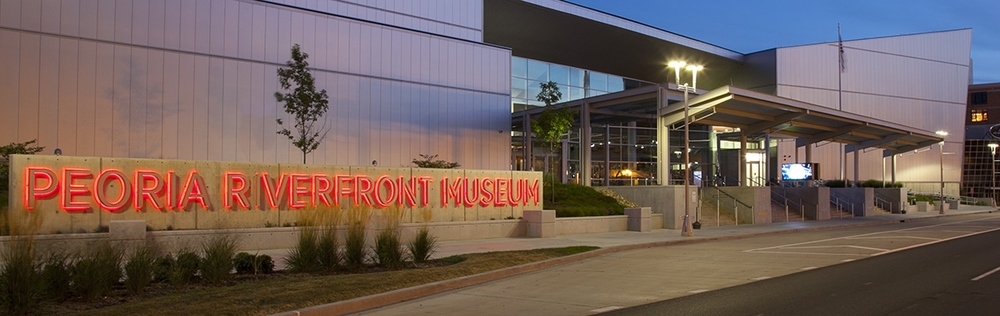
The exterior of the Peoria Riverfront Museum, in downtown Peoria

So you are suggesting that museums need to have an honest dialogue with cities, rather than a lobbying stance? That’s an important point, and a useful perspective on how organizations in need of resources often present themselves…

One final question: What are the difficulties for museums and cities in collaborating? Do we speak the same language, and have the same goals?

Museum professionals and those running the day to day operations of cities are more similar than different. They are all professionals, trained in their fields, running mission-driven businesses, with no profit motive but the need to effectively manage the organization. If we had a joint staff retreat, I am sure that we would find many areas in which we could collaborate, cooperate, and find commonality in what we are trying to accomplish for the community as a whole.

How do museums in small cities gain and wield soft power? Interview with Ngaire Blankenberg

Ngaire Blankenberg is Director, Europe and Principal Consultant at Lord Cultural Resources, where she has worked for the past eight years. Lord Cultural Resources is one of the largest consultancies specializing in museums and urban cultural planning. Ngaire is the co-editor of the book Cities, Museums and Soft Power.

Ngaire Blankenberg headshot

Can you define “Soft Power” for us?

Soft power is a term coined by the political scientist Joseph Nye in the early 1990s to refer to the influence that one country has over another country through inspiring people to want what it wants by using persuasion, agenda setting, and attraction. Its opposite would be military power. We have applied the term to both museums and cities, which by necessity starts to change the definition of “soft power.”

The big issues of our time, such as migration, climate change, and inequality, happen in cities. Throughout the world city governments are tackling these issues at a local level. Our thesis is that cities are now at the epicenter of soft power, and museums have a role to play, in terms of how this soft power is wielded.

Local influence is sensitive to accusations of propaganda or manipulation. To influence at a local level requires a great deal of credibility and moral authority.

If museums influence by virtue of their credibility and moral authority, does that mean that the role of museums is to persuade people to act in a certain way?

I am referring to the work of gaining people’s belief and trust. You can’t influence someone who doesn’t believe you should exist. Museums and cities are only influential if the people they seek to influence believe in them. For example, people of color are very skeptical around museums. In that case museums don’t have moral authority – there is no influence without that trust.

But the work of museums is not about exerting moral authority. Soft power is not a normative influence. Unless people recognize the moral authority of museums, they are not effective. But there is a difference between trying to exert moral authority and being recognized as having moral authority.

How do museums gain this moral authority?

By acting transparently, by engaging with the public, and by reflecting the values of the people they want to engage with. The third less broadly than the first two.

You say that museums gain moral authority in part by engaging with the public. There are a variety of levels of engagement. People might know about museums. They might visit museums. Or they might believe that museums are important to them and to their communities.

Visitor numbers are not an indication of soft power. Soft power is about influence and impact, not attracting people to visit museums, or numbers of visitors to an exhibit. It is about museums’ role in civil society – for example, through partnerships, research dissemination, outreach, the advertising footprint, the diversity of staff.

One does lead to the other, because if you think that something is important and it will add value to your life you will go visit it, all else (admissions fees, geographical accessibility, etc.) being equal.

It is difficult for me to extricate visitorship from influence. Take, for example, the cultural outreach program of my museum, the Peoria PlayHouse. We have an Americorps member starting in this week in the position of Outreach Coordinator. Her job will be, in part, to invite groups to share traditions and cultures that might be unfamiliar to many Peorians through celebrations, demonstrations, and workshops in the museum. But these activities can only influence people if they come to the PlayHouse.

Who are you trying to influence? Working with communities means you are developing a relationship with those communities. That is a really powerful form of soft power, because often museums talk about people but not with people. This is an example of sharing curatorial authority with new people. But whether you are then able to attract broader circles of people, that depends on what comes out of that relationship.

Gail Lord is giving a speech this week at the Hands On! Conference in Amsterdam, about soft power in children’s museums. Even in children’s museums, sharing curatorial authority can be problematic, as can asking people what could or should change. It’s extremely hard for museums to share authority, but we would argue that that is really important to a museum’s ability to have soft power.

Say your children’s museum wants to develop intercultural understanding within your community, and your strategy is to work with local communities to better reflect them. Your first concentric circle of influence is with people you work with. The second concentric circle is visitors. If you want to influence a broader selection of people, you need to figure that out. It’s a game of influence and credibility, not numbers.

Intercultural understanding is a whole book unto itself. But importantly, just because a whole lot of people see your exhibit doesn’t mean you are influencing them.

In your introduction to your book, you suggest that museums are places that present the leading ideas of the times. What is the relationship between museums as idea leaders and museum collections? Does the museum collection matter in the 21st century museum? If not, what makes a museum a museum?

I would say how the collection is framed is the source of power. I can think of tons of amazing exhibits from small museums. For example, The Foundling Museum in London is sited within the Foundling Hospital, founded in the 18th century as an orphanage. This museum is asking questions about how the women in its art collection are depicted or reflected through different historical eras.

The Museum of Copenhagen has taken its collections related to the city, and is trying to use it to connect to issues such as comparing migrants to Copenhagen now to migrants 100 years ago.

The David Livingstone Centre, in Scotland, houses a collection related to the life and times of explorer David Livingstone. As part of the master planning process which they are currently undergoing, they are thinking about how they can reposition the Centre to tell a story more relevant to the audience – about colonialism, Africa, and adventure; about how Livingstone’s curiosity was fostered, and how that skill can help people today.

So many museums have really presented new and amazing ideas just by showing collections in a new light.

The Beany Museum transformed itself and its relationship with its community through a novel project called the “Paper Apothecary,” in which artists worked with school children and community groups to offer “cultural treatments” to make visitors feel happier.

Do you have anything else you would like to share?

I just want to reiterate that it’s really about museums recognizing that they are Civil Society institutions with a role to play in the communities in which they operate – not above or beyond it. And that is true for tiny, medium and huge museums. Somehow we see museums as being outside of context, outside of time and place. And what we are trying to do is show that they are firmly rooted in the place in which they are, and they have a responsibility to recognize that.