What do Stories Do? Interview with Lane Beckes

A few weeks ago I shared a post questioning whether storytelling was an appropriate or useful format for museums exhibitions. This post received a number of comments, including people suggesting that stories evoke emotions, and that emotions are important for learning.

In order to better understand how stories work, I interviewed Lane Beckes, Assistant Professor of Cognitive and Affective Neuroscience at Bradley University. Lane studies social processes at the intersection of cognition, emotion, and neurobiology. His research interests include social bonding, empathy, emotion, and prosocial behavior.

lane cropped

Lane, what can you tell us about how stories work?

I think there are three primary psychological concerns you want to think about when considering what you want your attendees to get out exhibits and in particular the narratives embedded in exhibits. The first is attention. When someone walks in the door of your museum you need that person to first and foremost pay attention to your presentations. The second issue is related to learning – getting information into memory. You need to pay attention to get anything in, and then you need to process it more deeply to get it into memory. And finally you are interested in critical viewing. You argued in your earlier post that you don’t want people to just whole-hog accept a biased or emotionally laden view point, but to be thoughtful about it.

So, first, attention. Stories bring us into the moment, while simultaneously taking us to another place. They make us pay attention to things in a way we wouldn’t otherwise. If I give you a narrative, one of the things that happens is you move into a frame of mind in which you are coordinating between an “on-task network,” meaning that regions of your brain are involved in processing what is in front of you, paying attention to the external world and your relationship to it, and a “default mode network” which is involved in imaginative processing.  Narrative is good for getting your attention to the right place. Otherwise, people are likely to solely be in the “default mode network” seen when people let their brain wander, not paying attention to here and now.

So narrative good for helping us pay attention – that’s one of the positives of narrative.

This leads to one of the potential negatives. If you provide a narrative that has a lot of emotional content, it gets us into the “on-task network” because we start taking the perspective of people in the narrative, but simultaneously we start taking on their emotional and motivational concerns.

That can be good and bad, depending on your ultimate desires. If you want people to have an objective view, that can be bad, because you are using information to create a particular perspective.

The second thing is memory.  Narrative is good for memory in a lot of ways. If I give you a lot of random words, you can try to memorize them by rote, or you can put them into a story. Take the words coffee… hippo… orange…. Putting them into a story about a coffee cup attacking a hippopotamus while he is in search of an orange, you imagine pictures in your head and construct a story. You integrate sensory modalities, and give a structure and a context for that info that makes it much easier to remember. Narrative can really enhance memory. But it does this under the structure that it is given. So the flip side is that it enhances your memory for anything that fits the narrative, but it makes your memory for anything that doesn’t fit the narrative worse.

This happens all the time with stereotypes. A stereotype is like a narrative in important ways, and can be thought of as a story about how someone will act. This changes the way we see innocuous behaviors. If I stereotype someone as aggressive, and they are walking down the street quickly, I might interpret fast as aggressive.

stereotype engravings
Ratelband & J. Bouwer, 1767 -1779. An engraving of the peoples of the world. Top: A European couple, an Asian couple, an African couple and an American couple. Bottom: Englishman, a Dutchman, a German and a Frenchman.


Story determines what we will ignore, and what we will forget. If you give someone the right kind of narrative, you can get them to believe something that didn’t happen. There’s a study done by Elizabeth Loftus, that my post-doctoral advisor Jim Coan worked on as an undergraduate, called the Lost in the Mall Study. The researchers created a narrative that had a lot of true elements, and shared them with subjects. But the narrative also told the subjects about a day when they got lost in the mall – something which never happened. Six of the 24 subjects began to remember this memory as something that really happened. By creating a vivid narrative with enough true elements, people started to believe something that wasn’t true. This is called the false memory effect.

One of the things narratives do is help us construct our memories in certain ways, which effects how we think about information as it comes up. This has a powerful biasing effect. There is substantial literature showing that narrative can create bias.

Narratives can set you up to be motivated to process information in a certain way. So another possible downside of narrative is if you engage somebody emotionally you are biasing them. The fact that we tap into storytelling so easily, and take on perspectives so easily, allows us to take on other people’s motivations, which changes the way we understand something. This relates to what you were saying about stories not engaging people in thinking critically. I think your concerns about that part of narrative are probably right on.

People might be more motivated to think about material when they are in an emotional state, but they will probably be more biased because of it. Motivation and cognition are very hard to tease apart. Some people have a motivation for accuracy, which is the ideal situation for analyzing information as critically as possible, with an unbiased view. But more often people start with an emotionally motivated viewpoint. For example, two people with two different perspectives will understand a speech by Obama in two different ways depending on their political view, hopes, and desires.

If you want to increase motivation for accuracy, then you need to motivate people not to take one side of a story, but to get the whole picture. That is very hard to do.

Before we wrap up, can you revisit narrative and storytelling for a moment?

The natural inclination for storytelling is to provide a first person perspective, or at least a main protagonist and possibly an antagonist. That classical idea of story offers a protagonist as a lens through which you see a story.

One of the things that I always think is interesting is to tell a story from multiple perspectives – to have different narrators telling a story. Multiple protagonists complicate narrative. On some level this might be a good thing – it makes people think a little more deeply about certain things. Like having people watch the Wizard of Oz and Wicked at the same time.

But I don’t know the literature of stories told from multiple perspectives. It may take away the benefits of narrative, because it makes it so much more cognitively demanding, it may be harder to get the information in memory.

Original illustration of Dorothy killing the Wicked Witch, from the Wizard of Oz


Some of the responses to my previous post were about motivation, and the relationship between emotion and motivation. Can you talk about this?

In some way, all of our cognition is infused with motivation. It’s very hard to tease apart people caring about something and learning about it. You have to care to think; otherwise what’s the point? Our brains are designed to make us not think about anything we don’t think matters – they don’t want to do a lot of work if they don’t have to.

As long as you have a motivation to learn you are going to learn. Sometimes motivation is caused by an emotional response to a situation, usually because you are creating a problem to solve. That leads again to more focus, more integration of situation, more cognitive effort.

Emotion can be good in some contexts. At other times, emotion is just distracting. If the emotion is overwhelming you, the best option for you is to decouple yourself from the stimulus that is making you feel emotional – to walk away. That won’t help anybody learn. You have to be careful about how much emotion you are triggering.

Negative emotion actually tends to get people to be critical thinkers. Positive moods make people worse critical thinkers, because they become more open and accepting. Negative moods, alternatively, lead people to nitpick, negative moods promote problem solving.

Emotion has a complicated relationship to learning. Some of the fundamental elements of emotion are necessary for attention – there can be a very small amount of emotion that doesn’t really feel like emotion to the person. It’s not emotion the way we usually think about it.

Interpretation is fundamentally what we would call a cognitive task. Learning and cognition always have emotion and motivation underneath. It’s a question of how much and what kind. That’s where the complexity gets involved. Depending on the outcome you want, the type of learning you are going to get, it might be better to have a high emotional content – to steer someone into deeply experiencing something, where it’s more about seeing one perspective intently. But if you want people to analyze a few different viewpoints and think about contextual elements leading to people having different opinions, than maybe you don’t want high emotional content.

One last example: Let’s take the debate over abortion. Start with the pro-life perspective. If I’m vehemently pro-life I might be very fluent in certain narratives, and have a nuanced understanding of the issue from that viewpoint, and have none of the information that people on the other side of this debate have. I can get very deep with that particular bias. But often other perspectives are left out or contradicted. Thinking in a particular way more deeply can create an inability to think in other ways.

Another example, really the last one, scientists often get more paradigmatic as they age – they become entrenched in a way of thinking about the world. Younger people come along and ask, “why are you thinking that way?” Older and younger scientists can have a hard time communicating because the language and the assumptions the older scientists are using are so specific. Narratives are little versions of that: they create blinders at the same time as they create a deeper understanding.

Can what museums choose to exhibit or promote define the character of their cities?

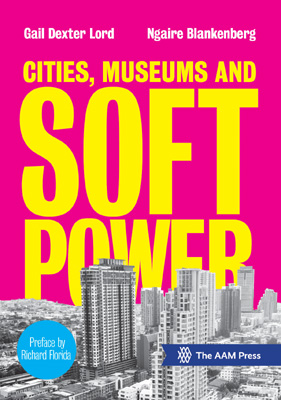
Lately, I have been thinking about the relationship between museums and cities, and how museums support or impact their cities. As part of this exploration, I picked up Gail Lord and Ngaire Blankenberg’s recent book, Cities, Museums, and Soft Power. This book explores questions of cultural capital, and the ways in which museums wield power. The book makes a compelling argument that museums are indeed powerful institutions.

Soft_Power_cover-400

But the museums discussed in Cities, Museums, and Soft Power are large museums in major cities, often gaining power from significant collections and striking architecture. So I am left wondering whether small museums impact cities, and the relationship between small museums and small cities. And I put down the book doubtful that a small museum can have much of an impact, at least in the frameworks presented by Lord and Blankenberg.

Here are four compelling ideas put forth by Cities, Museums, and Soft Power:

  1. Museums serve an ambassadorial function, attracting new residents as well as tourists.
  2. Museums can network with each other and similar cultural institutions to create and share a larger vision for a neighborhood or city.
  3. Museums send powerful messages about the role of citizens, and the relationship between citizens and the elite, through choices such as labor practices, visitor role, and social media use.
  4. Museums help define the character of a place, in part through what they choose to promote: its international ties or its local culture; its elite or the diversity of its residents.

As I tried to organize my ideas, I found that there is too much for one blog post, so this may be just a start of a response to this book. And in this post, I am responding to the final idea in this list, and the question, can what museums choose to exhibit or promote define the character of their cities?

I should add that I want to distinguish the exhibition and collection program from education and outreach, and city from community. I am confident that museums of all sizes can and do impact communities with which they work. But sometimes these programs have little to do with the museum-ness of the museum; they could as easily be offered by another type of organization, and have little to do with collections. And impacting a community (for example, students at a partner school, or English Language Learners in a nearby neighborhood) is different than impacting a city – not less important, just different.

So, back to the idea put forth above, that museums help define the character of a place through what they choose to promote. I want to think about this idea generally, before turning to small museums.

As articulated in Cities, Museums, and Soft Power, this is essentially an argument that museums can play an anti-elitist function by placing value on the local and the non-elite. While I fervently wish that museums were in the business of doing this – of promoting the working class even at the expense of the elite – there are two reasons I think this is unrealistic in our current environment:

  1. Objects exist in a hierarchy of value. Most “world class” museums gain their status by collecting and exhibiting objects equated with power – Dutch Golden Age art, for example. A collection of local art does not confer the same status. The Metropolitan Museum of Art, the Tate, the various Guggenheims around the world are promoted and supported by elite funders because they share the rare and valuable, rather than creating value from the local, or creating connections with local communities.
  2. Museums are run by the elite. The introduction to Cities, Museums and Soft Power notes the rapid growth of the non-profit sector, and argues that non-profit museums support plurality. But power has not changed hands. (I am reminded of all of the Communist government officials who were democratically elected to office in the early 1990s.) In order to create a system in which museums can empower the working class, we (at least in the United States) need to rethink the structure of the non-profit board, and fundraising. Until then, the only way a powerful museum will turn to promoting the local and working class values is if it is in some way advantageous for those elite board members.

While I understand and agree with the argument that museums wield power, I am suspicious of the claim that museums are in a position to support anything but the interests of the elite. But for the sake of argument, let’s imagine that the Museum of Modern Art is playing an anti-elitist function through its recent exhibit of Jacob Lawrence’s Great Migration series, or that through the exhibit People of the Earth and Sky, the Metropolitan Museum of Art challenged not the status quo of the art world’s approach to Native American objects, but of the status of Native Americans themselves.

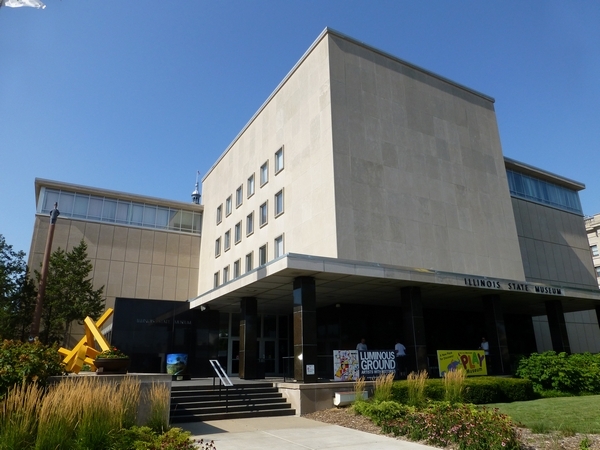
Most museums are not the Met or MoMA. While a small number of museums wield enormous power, the preponderance of museums are comparatively powerless. The Museum of Modern Art can promote an artist by giving him or her (but usually him) a solo exhibition, transforming his reputation and elevating the value of his work. But this is only true with elite museums, in large cities – the types of museums discussed in Cities, Museums and Soft Power. The book notes that “museums directly contribute $21 billion to the US economy each year and support 400,000 jobs.” But this includes a very large number of small museums with collections of negligible importance. Just as Springfield’s Illinois State Museum or Champaign-Urbana’s Spurlock Museum are unlikely to transform an artist’s career through a solo exhibit, it is unlikely that these smaller museums have the power to change the way city residents, or visitors, think about local culture.

Illinois State Museum


With this in mind, can small museums impact the character and values of the cities in which they belong? If so, what are examples of this happening? And what must be in place in order to have this impact?

If museums cannot impact cities in this way, in what way DO small museums impact cities?

I look forward to hearing from readers who fervently disagree that museums are tools of the elite, or that small museums do not have the power needed to impact local values, as well as from readers with new ideas to share.


Should exhibits tell stories?

This is a post I have been trying to write for a long time – over a year. I’m still struggling, so bear with me.

There has been a great deal written over the past few years about museums and storytelling. Storytelling was the theme of the 2013 Annual Alliance of Museums conference. In a 2014 post from the Antenna Lab blog notes that one of the ideas promoted at the 2014 Museum Ideas conference was that “The museum experience is all about storytelling.” One of the keynotes from the 2014 Conference of the Association of Midwest Museums was Mike Konzen from PGAV speaking about “how to select and tell stories through museum exhibits.”

But stories are a particular way to organize the world. They generally demand an emotional, rather than intellectual, response. The British classicist Eric Havelock argued that oral storytelling required both the storyteller and the listeners to identify with the story and its characters: It was only through this identification that stories could be absorbed and remembered. Novels, stories, and even some newspaper articles derive their power from evoking an emotional reaction in the reader. I recently had a conversation with a friend who noted that after reading a novel she could often not remember all of its content, but she lived for a while with the feelings with which it left her.

The problems and advantages of storytelling are, for me, exemplified by the Lincoln Museum in Springfield, Illinois. Here are three very different snapshots of the museum:

1. Storytelling as Kitsch

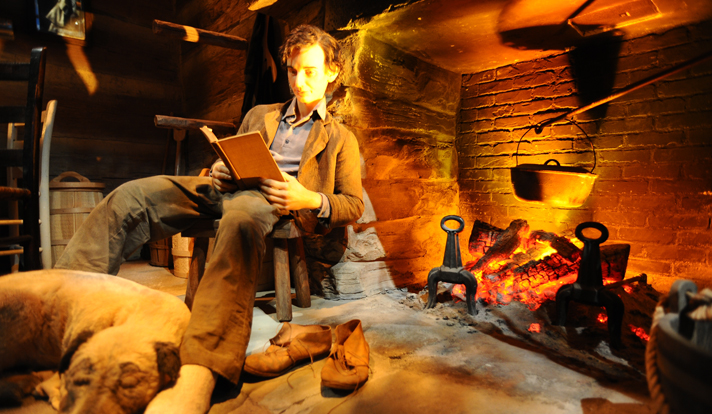
Much of the visitor experience at the Lincoln Museum is walking through rooms with life-sized dioramas, such as these:

Abe-Read-by-Fire
Abraham Lincoln studying law by the fire.
20131212_103953
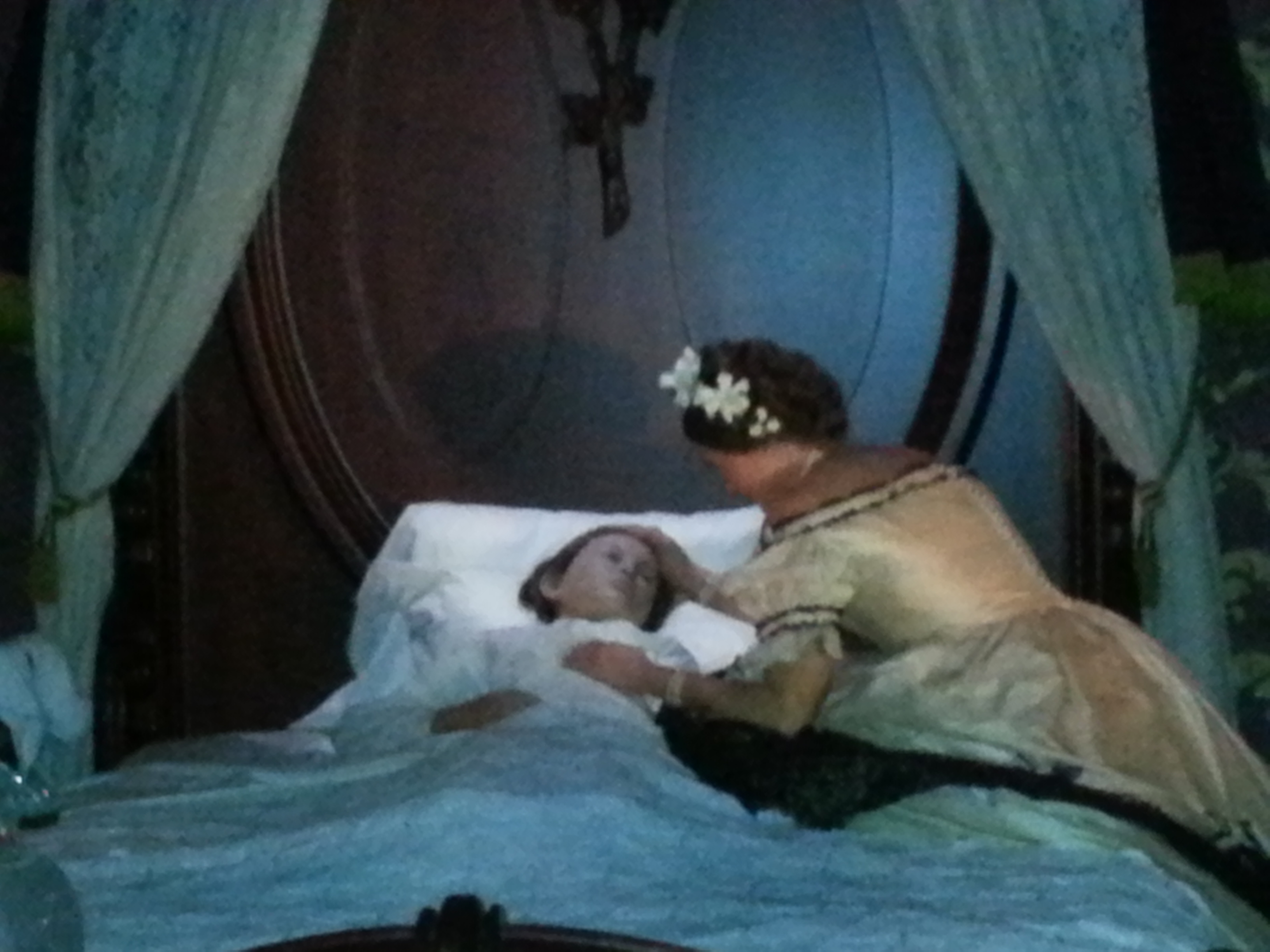
Mary Todd Lincoln with her dying son, on the night of Lincoln’s inauguration.
20131212_103803
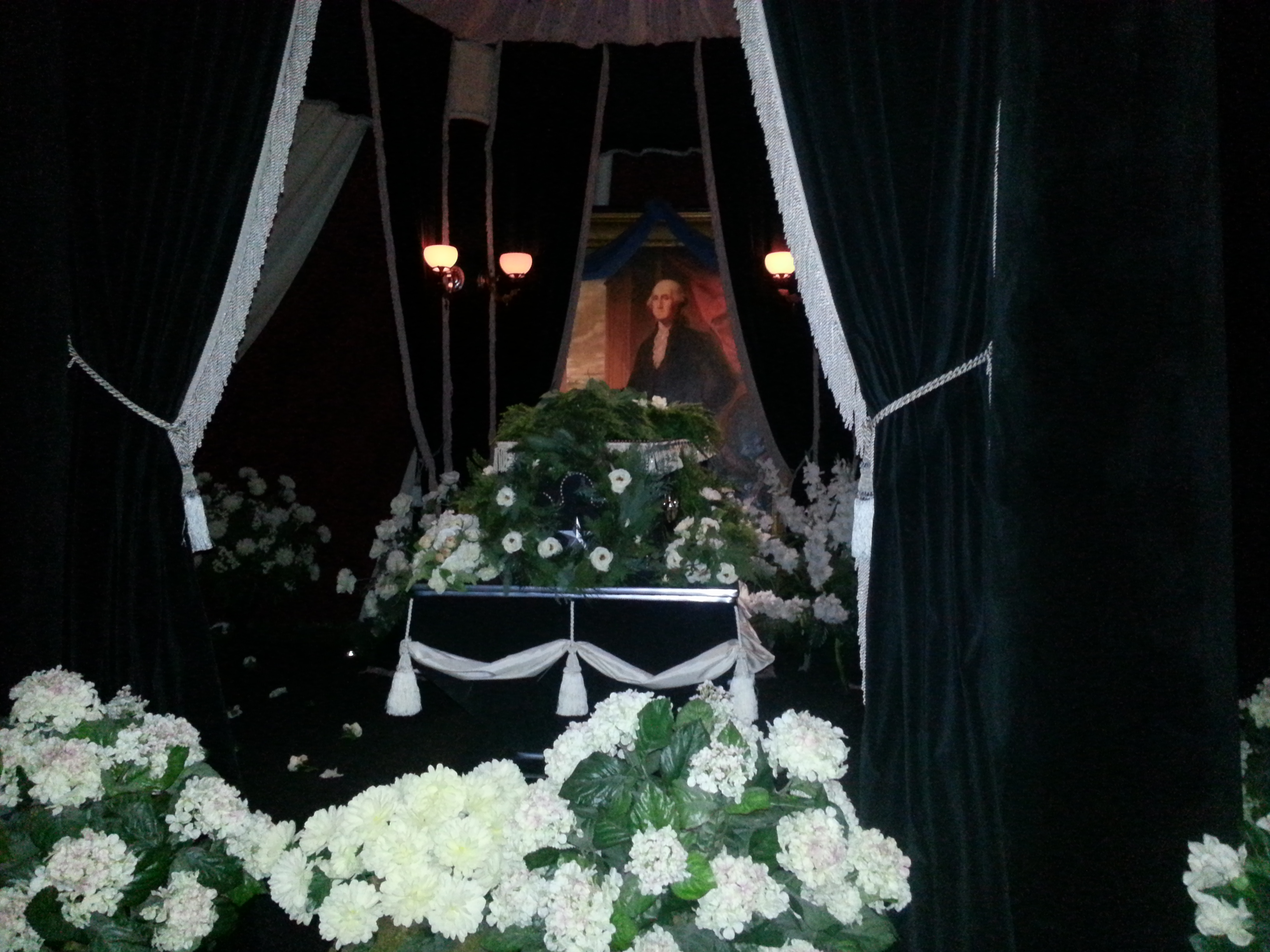
Lincoln’s coffin.

There are wonderful galleries in the Lincoln Museum – for example, rooms of letters from Civil War soldiers, and fascinating political cartoons. But I am dismayed by these dioramas. Instead of helping the visitor understand a historical moment or the complexities of an important historical figure, they work to render Lincoln a two-dimensional heroic figure. These dioramas capture my basic fear about storytelling: At its worst it simplifies rather than complicates, makes history into a soap opera that the visitor can relate to rather than shedding new light, or making one think.

2. Stories Evoke Emotion

This summer, I discussed museums with some of the teens volunteering for the PlayHouse. One said that her most profound museum experience was at the Lincoln Museum, where she saw the diorama of a slave being sold at auction. (I do not have an image of the diorama that I am legally allowed to post, but it can be viewed here.)

For this teen, this was such a powerfully sad experience that she never wanted to return to the Lincoln Museum. We had a long discussion about whether museums should make you feel sad. No, she said – they should just be fun. Yes, said another teen – they should make you learn things, including sad things.

Storytelling is an excellent way to make people feel, but it not always an effective way to make people think or learn. On the one hand, this emotional response was powerful and memorable. On the other hand, it did not lead her to ask new questions, or pursue her own Civil Rights agenda, or read further about slavery, or the Civil War, or Abraham Lincoln. The experience lived in her as its own moment, set apart, memorable but not generative.

3. The Anti-Storytelling Moment

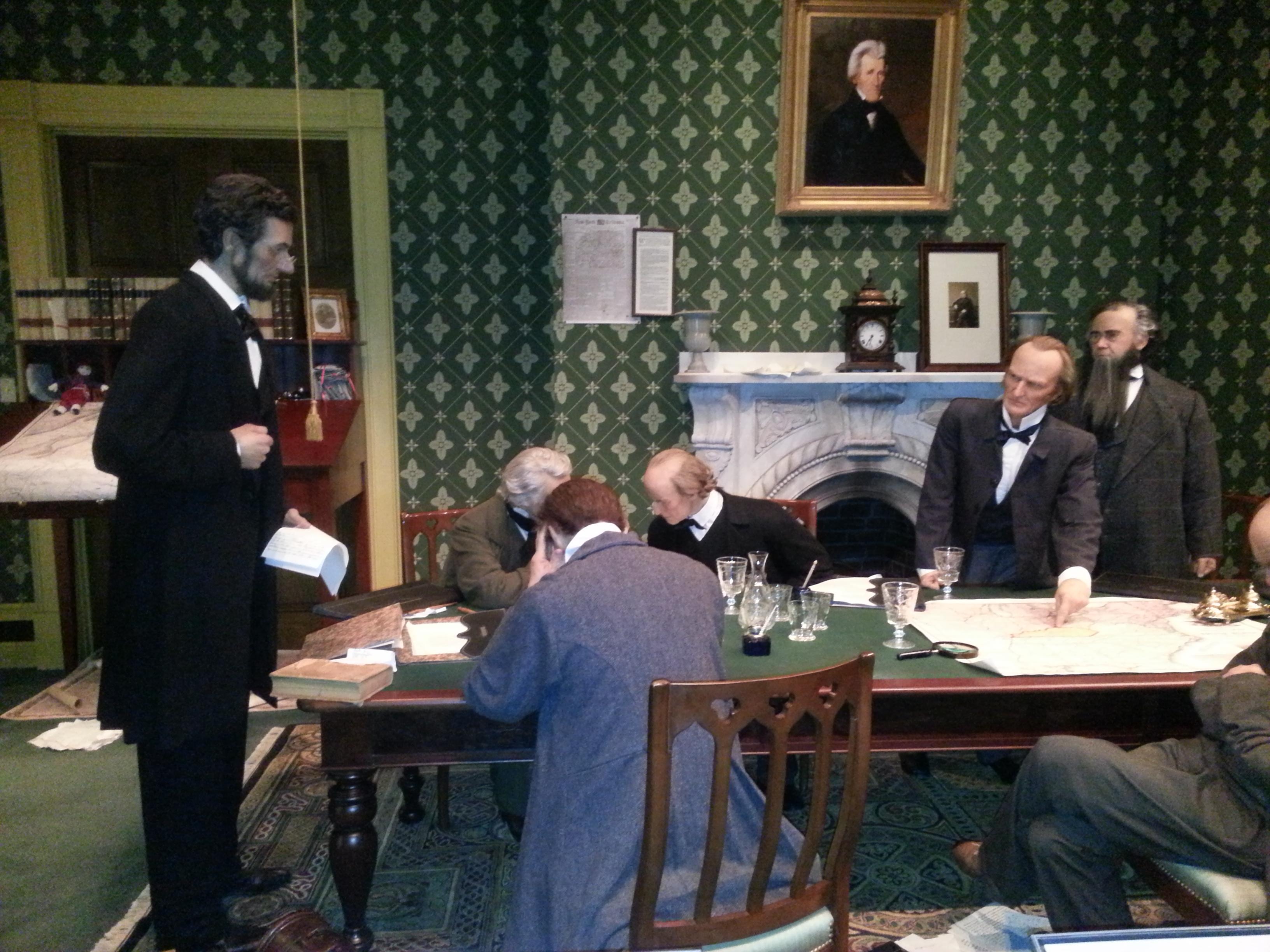
I have a favorite diorama in the Lincoln Museum. This diorama depicts President Lincoln and his advisers debating whether or not to issue the Emancipation Proclamation. Placards around the figures share the perspective of each of the men at the table, offering complex concerns regarding the passage of the Proclamation (does it go far enough? will it be perceived as a sign of Union weakness?). In this room, the visitor is asked to contemplate the eight or nine different perspectives represented.

20131212_103219
Diorama of a debate about the Emancipation Proclamation
20131212_103140
Placard explaining the perspective of one of the men present, Secretary of the Interior Caleb Smith, who “supported the Proclamation only because he thought that, as a result, all Negroes would leave the country.”
Chase
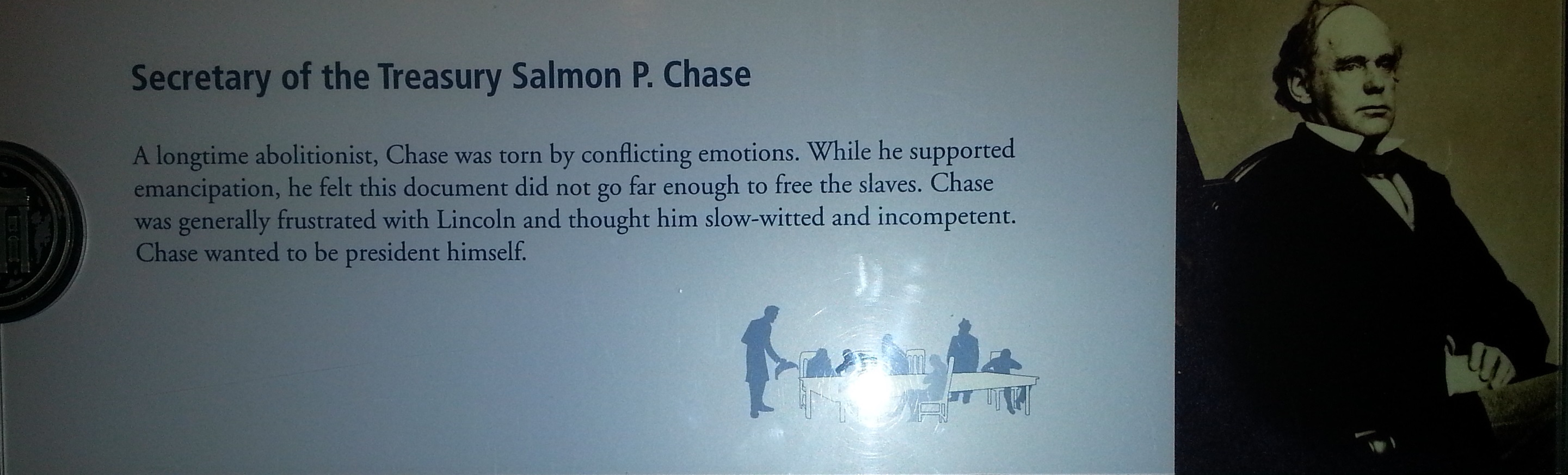
Placard explaining the perspective of Secretary of the Treasury Salmon P. Chase, who “felt that this document did not go far enough to free the slaves.”

The room makes visitors think. Perhaps not everyone who supported the Emancipation Proclamation did so for the right reasons, and those who opposed it might have done so because they thought the country could do even better. In a room with eight people, there are not two sides, there are eight. It makes you wonder about the stories of these eight men, but it does not tell those stories.

Perhaps this is a form of storytelling. One that complicates rather than simplifies. One that uses story to hook the visitor, and then abandons the form of a story in order to raise questions and empower the visitor to engage with the difficulties and intricacies of arguments being made in 1862.

The Anti-Conclusion Conclusion

I am not convinced that visitors, or people, can have a powerful emotional response and simultaneously build or use cognitive and analytic skills. (A very un-thorough google search turned up this, supporting my claim.) And while a work of art might make someone cry, and a dinosaur skull might fill someone with awe, museums have, for the most part, taken it as their responsibility to help people understand these objects, and think carefully about them.

The problem with my claim that storytelling is problematic for museum exhibits is that it is based in the idea that storytelling depends on emotional response, and therefore suggests that I think emotional responses in museums are wrong. I do not. But I do think that the museum exhibit has an analytical function, and that this function is compromised when it is driven by storytelling.

That’s a terrible, weak way to end a blog post. But I do not yet have a more powerful statement to make, because I am still struggling between the power of the story, and the responsibility of the museum.


Should we accept this gift?

A month ago, a donor offered to buy the Peoria PlayHouse Children’s Museum life-sized replicas of three dinosaur heads: Tyrannosaurus Rex, Allosaurus, and Velociraptor. This offer coincided with a decision to re-envision the display on our Sand Porch. The Sand Porch features a sand table with kinetic sand, which children love and play with for hours. It also features plants from various biomes, and bins of collections related to those biomes. Children barely notice the plants, and only attend to collections to bury them in the sand. So with the offer of these dinosaurs, we saw an opportunity to re-envision the Sand Porch display to show visitors things that get dug out of the earth: Dinosaur bones. Arrowheads. Fossils. This decision was supported by a conversation with our Teacher Team (a group of twelve classroom teachers who advise and work with us), who, without knowing about the offered donation, suggested that we should find artifacts such as arrowheads to support using the Sand Porch to teach about anthropology.

The Tyrannosaurus Rex arrived on Friday – too large in its packaging to fit through our door! We unwrapped it and brought it into a classroom, where it lives for the moment.

trex head
The T.Rex head in a PlayHouse classroom.

Now the same donor is offering us hundreds of amazing artifacts collected over a lifetime. Beautiful egg-shaped polished stones. Both real and fake fossils of crinoids and ammonites and other ancient species that I can’t even remember the name of. A giant shark tooth. Arrowheads and axe heads. Coral. All sorts of shells. Old glass bottles dug up from his backyard.

FullSizeRender_3
Crinoid fossils
FullSizeRender_2
Mineral collection
FullSizeRender_4
A few of the fossils on offer

I want to say yes to every one of these, because they inspire wonder and awe in me, and I can imagine so many ways to use and display them that would inspire wonder and awe in children. But I wonder if there are ethical considerations I should keep in mind. These considerations, and my accompanying questions, are as follows:

We are not a collecting institution

I do not believe these are museum-quality pieces. And, to my understanding, they were offered first to a local collecting institution, which chose not to accept them. Also, the donor knows that we would use these for program purposes, allowing children to handle them.

That said, we certainly cannot accession them into a collection, conserve them, or store or display them in a climate controlled environment. Do we have an obligation to ensure that these are NOT museum-quality pieces? What else do we need to do to ensure that we are not disregarding any ethical considerations as put forth by AAM or EdCom?

We are a children’s museum, and children want to touch things

Sarah Schertz, who was interviewed for last week’s post, noted (in a passage edited out of the published interview) that teachers and students love the museum because “everything is made for them and they are supposed to interact with it…. which gives them the message that we value them and value their learning and their education, and that learning is important– people took the time to make a place that is just for them. They are encouraged to touch and interact and experience all of it.”

If we display the objects we are being offered, we will need put some behind glass, as they are too fragile to bear regular handling. For those available to touch, we will need to secure them in place and encourage children to touch them gently.

Will using real artifacts compromise the idea that this is a place “just for them”? Will it make them feel like the museum is less child-centric? 

When do gifts determine programming, instead of vice versa?

In accepting this gift, even if we do not accession the objects, we will be creating a new type of touchable collection, one that needs care and attention not needed by the plastic boats and dolls and wooden trains that populate our exhibits. And along with the opportunity to program around these artifacts is the obligation to program around and use them. What will we do with the beautiful egg-shaped stones? How can we use them to teach children about minerals? How will we use the shells, which are not from anywhere near Peoria?

The objects we want to put on display will require vitrines. It will likely take us years to raise money, design, and build appropriate cabinetry in areas where these objects might deepen understanding of existing exhibits.This may need to be the focus of our end-of-year fundraising drive, and will certainly require additional staff resources for fundraising and exhibit creation.

What are the implications of accepting a gift that might influence museum programming? Don’t all gifts – or nearly all – influence museum programming? What is the line between gifts that support existing initiatives and gifts that require new ones?

How do we inspire children to become “explorers and creators”?

The mission of the museum is:

The Peoria PlayHouse Children’s Museum provides children with the tools and inspiration they need to be explorers and creators of the world. We do this in part through understanding, supporting, and promoting play in the fullest sense of the word, one that includes imagination and creativity.

What is the role of artifacts in inspiring children to become explorers and creators? How do artifacts in cases co-exist with play? Do we risk “mission drift” in accepting these pieces?

So – should we accept this gift?

Schools and Museums: Interview with Sarah Schertz

Sarah Schertz has a Bachelors Degree in Early Childhood Education and Early Childhood Special Education from New York University. She was a part of the 2015 Peoria Playhouse Teacher Team. She teaches kindergarten at Methodist Family Child Care Center in Peoria, IL. 

Sarah brought her ten five- and six-year-old students to the museum for a pilot Explore/Challenge/Become field trip on July 27th. After the field trip, Sarah gathered feedback from her students, and videotaped these conversations. While I cannot share the videos of these interviews here, they are referenced in the conversation below.

Sarah Schertz

As you know, I have written about your class’s visit to the PlayHouse for this blog, and am now looking forward to hearing your perspective on it. What did the field trip achieve? Were there any outcomes for your students that you can identify for us?

My kids really enjoyed it and I think they got a lot out of it.

I know you have written about how exposure is a passive experience, but I think it’s the first step toward discovery – an important first step. My students are in the same classroom every day; they see the same kids, play with the same toys, do the same activities. As a teacher you try to change it up but you are constrained within those four walls. Exposure is an important first step because it is something new, different – they see the world from a better point of view, see something they don’t yet know and can only try to understand.

So was there any added value to this field trip model, as opposed to just opening the doors to your students and letting them play?

Yes. Because my kids are older they can look at their field trip as learning (as well as play) and understand that they are working toward goals. That’s what the Explore/Challenge/Become field trip allows them to do – they get to play, and explore, but they also discuss, make decisions, experiment, and take all this back into the museum and go deeper in their explorations.

During the second half of the field trip, students went into the classroom and did activities like the sink or float experiment, and then had to take their experiments into the real world of the museum and put those ideas into use. They had to use those experiments to make decisions and create something that would float. I think that they learned that experiences in the classroom are connected to the real world, and the things you learn in the classroom can be used in the real world and help you to solve problems in the real world. Sometimes that connection is lost, and they don’t make the connection between what they learned in school and places where they can use that learning.

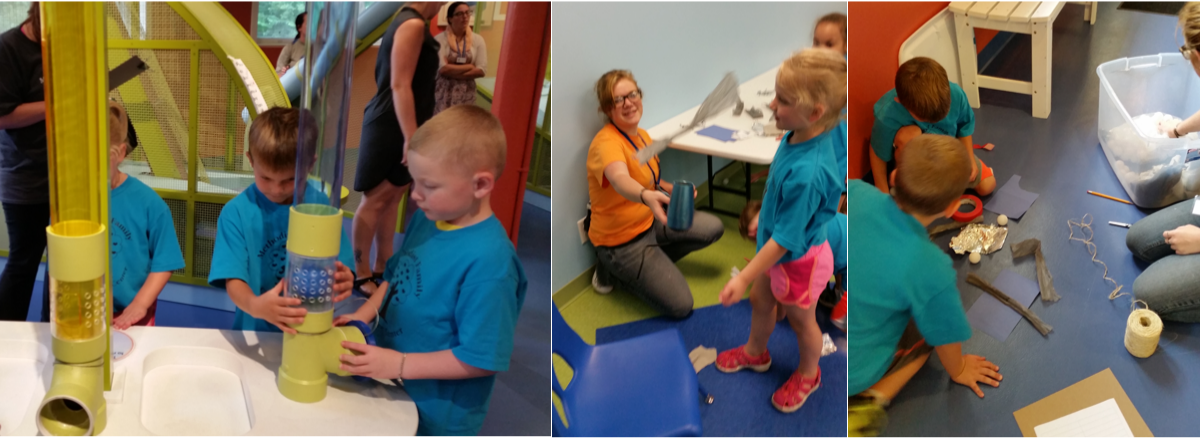
experiments to gallery
From left to right: Students’ initial exploration of wind tunnels in the galleries; classroom activity station; and final extended exploration, in the galleries, in which they make something that will fly using the Bernouli Blower on display.

In your videotaped class discussion, most of your students mentioned things they saw during the first part of the field trip, the open play and exploration time. Do you think the second part of the field trip was less interesting or memorable to them?

All of the students got to experience all the areas of the museum when they were playing, making it a shared experience, and they could discuss it with each other.  During the second part only a couple kids made something that flew, while others made a boat or put on a play. When they discussed the field trip, not everyone else had done that activity, which made it harder to have a conversation about that. I think it’s easier for them to talk about what they all share, and have a frame of reference for.

How important is that shared experience? Should the entire field trip be a shared experience, instead of having them select activities and work in small groups?

No – it’s good to break them up into different areas. My class didn’t have the opportunity to do this after the trip, but small groups potentially give students the opportunity to be leaders. So if I went and made something to fly, then later I could be the teacher and teach the other kids. It gives all of the students the opportunity to be experts on something. But this requires the teacher leading them through the activity in the classroom, and giving them prompts to help them explain it.
What would you like to see changed for future field trips?

On this field trip I was an observer. I look forward to returning with my kids in the role of a teacher. That would allow me to interact with my kids in a more relaxed setting, to ask them those key questions and have time for a real conversation. Field trips offer an opportunity to have real conversations with your kids, to get to understand what they are thinking and how they view the world. You can learn a lot about your kids in novel situations from what they choose, and how they problem solve.
20150727_101051

What else can you tell us about your experience of this field trip?

All of the other teachers from my school who visited the PlayHouse said that they really liked it because everything was developmentally appropriate for our age group. Often on field trips students have to sit longer than they can handle, listen to someone talk for longer than they can pay attention to – that’s when you see behavior issues. On this trip they didn’t have a single behavior issues because everyone was completely engaged.

In past blog posts I have asked whether we need “classroom management” on field trips, or whether the need for management is a sign of poor program design. What are your thoughts on this?

It’s both. Some kids have trouble with impulsivity, but other kids can go with the flow, and if they are engaged and having fun they won’t have time for other behavior issues. It is important to share the rules of the museum, which your teacher did – he told them to be respectful of the exhibits, and to stay in the same area as their adults.  If students are told by teachers before the trip, and then again by museum staff when they arrive, then they have clear boundaries, which sets them up to be successful.


Will this work?

Last week I wrote about exposure as a goal for field trips, and readers debated whether exposure was passive. As I stated in a reply to this post, I don’t think exposure is passive for the visitor, but I do think that it can be a way for the museum to be passive, by abdicating responsibility for the visitor experience. But how does a museum plan programs that make exposure as powerful an experience as possible?

I thought that this week I would share how we are trying to address this at the PlayHouse. One of the challenging things about blogging is that you share ideas that you then have to live up to. Which has made developing field trips feel like a high-stakes-endeavor. Although on the flip side, there is a sense of accountability to the field, as well as the teachers, which is perhaps useful in ensuring that we aim high.

Last week we piloted a new field trip offering, entitled “Explore/Challenge/Become” (perhaps a bit clunky – other suggestions for titles are welcomed!) The field trip was developed by our Education Manager, Rachel Carpenter, and myself in partnership with a team of 12 teachers. The pilot class of five and six year olds, from a local year-round child care center, belonged to one of these teachers. The teacher, Sarah, had a substitute for the day so that she could watch all the groups and stay to reflect and revise after the trip.

Here is the field trip format, incorporating the adjustments we made based on our pilot program:

When children arrive at the museum they enter a classroom, and there are old fashioned, unfamiliar toys on the tables. They are encouraged to try them out. While they play, educators (interns and volunteers) circulate, asking kids the key questions of the visit:

  • What could you try? What might happen if you tried that?
  • What do you wonder?
  • What did you discover?

After five or ten minutes, before they leave the room, the lead educator – a paid PlayHouse Instructor – works with the students to make up a gesture to go with each question, and students are reminded to think about these questions while they are in the museum.

Kids have an hour to play and explore the six exhibits, under the supervision of teachers and chaperones. The chaperones each receive a laminated card that has a museum map on one side, and the key questions, along with tips for engaging students, on the other.

Children on a field trip exploring the PlayHouse
Children on a field trip exploring the PlayHouse.

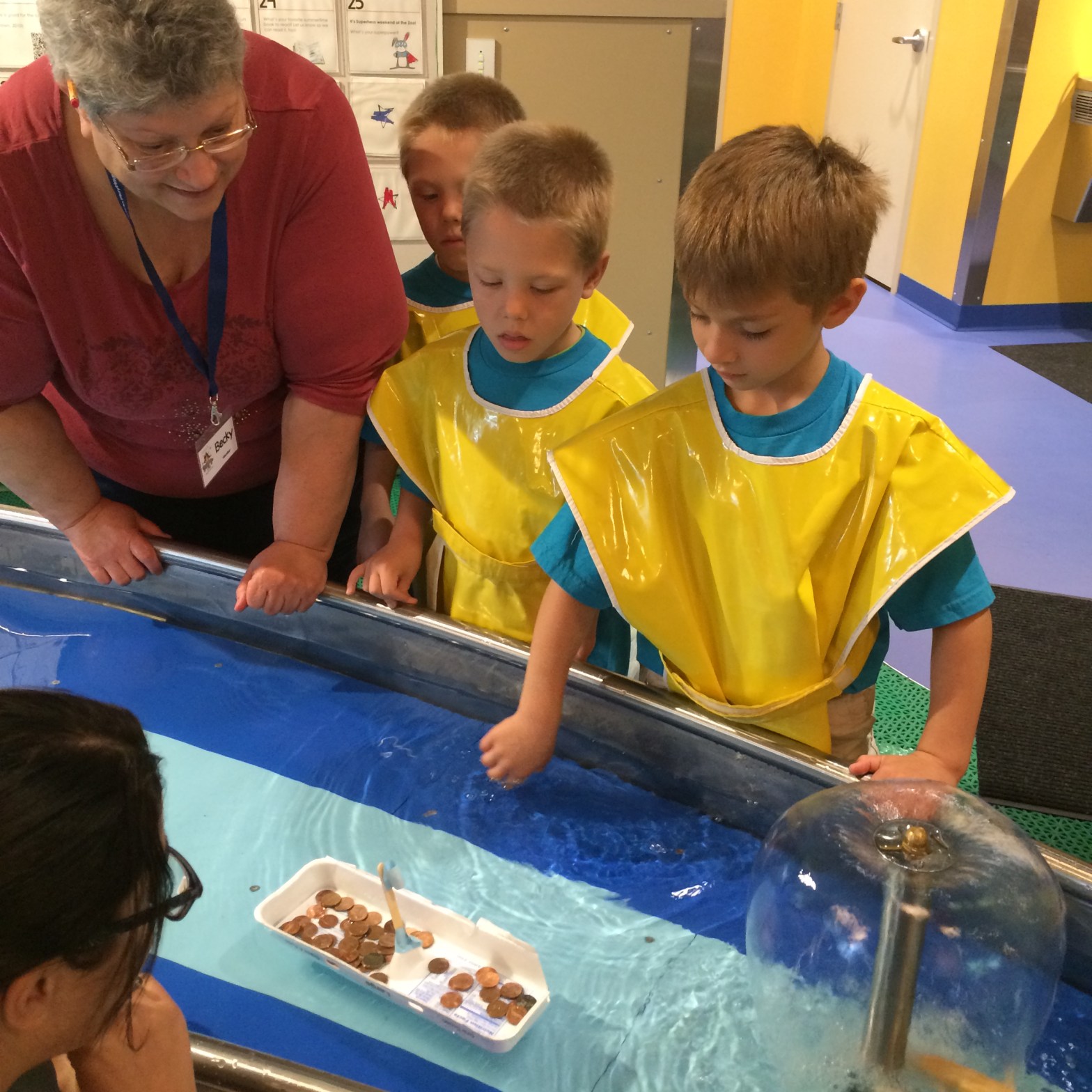
After their hour in the galleries, the kids return to the classroom. There are now 3 to 6 stations around the classroom. In our pilot we had one station with things kids could put in tubs of water, and sort them as something that sinks or floats; one station with hand puppets; and one station with a hair dryer (held by an intern) and things that kids could try to make fly in the air stream. After trying each station kids decide which interests them most.

Children at the Sink/Float activity station in a PlayHouse classroom.

In their newly formed affinity groups, students return to the galleries, to engage in a 30-minute project based on the station that interested them. For example, the children who were most interested in what sinks and what floats make boats at the water table, and see how much weight they can hold. The kids who enjoyed the puppets work together in the theater area to put on a play. And the students who were interested in what would fly conduct an experiment with the Bernoulli blower. Each of these groups is led by the PlayHouse Instructor, an intern, or a volunteer.

IMG_1322
Students made boats and then tested how much weight they could hold.
IMG_1324
Students performing a play using the train area as their set.
IMG_1314
A child testing what would fly over the Bernoulli blower.

Each small group ends with a reflection, during which they discuss what they discovered, what else they could have tried, and what they still wonder. After that, the entire class  regroups in the classroom, and revisits the key questions. They spend a few minutes thinking about what else they would like to try, what they are still wondering, and what they still want to discover.

For each of the 3 to 6 gallery activities, the teacher receives a handout for parents describing what the kids did, and a resource sheet with the lesson plan from each activity as well as ideas for classroom follow up.

Our hope is that students will discover new interests, develop questions, experiment in the exhibits, and leave understanding that experimentation is a way to find out more about something. Sarah, the classroom teacher, interviewed students after the visit, and will be sharing their responses with us next week. And our summer Research Intern, Amanda, is helping to start thinking about evaluation tools, which will be more fully developed by the 2015-16 Research Intern. (The Research Interns are paid cognitive psychology majors from Bradley University, who work closely with their professors on their PlayHouse projects, and are nominated for the internship by their professors and paid for their time.)

The big picture idea for this model is that instead of positioning field trips as a lesson within a larger unit, or a way to test or add to classroom knowledge, museums function best as a place to help kids discover and pursue what interests them. The biggest challenge of this model will be developing strategies to really work with teachers, and support them in following up.

I welcome feedback on this model. Have you tried similar things, and if so, do you have advice or can you share your findings? Does this seem misguided in any way? Where might a model like this lead us?


Why can’t the goal of museum field trips be exposure?

Recently I spent a few hours writing a blog post to be submitted to The Whiskey City Collaborative, a local Peoria blog. Originally, this post was an exercise in thinking about how communities can help schools become places that expand children’s worlds, and thus their opportunities, through field trips. As I wrote, I tried to reconcile this post with the explorations I have been conducting on Museum Questions, and realized that I have a new set of ideas about field trips, very different from those I had when I began the “Schools and Museums” series on this blog nearly a year ago.

First, there are two entirely separate types of museum field trips: Those created and led by teachers at museums, and those created and led by the museums themselves. Field trips led by teachers have a the potential to impact students in far greater ways than those generated by museums. This is because teacher-led field trips are an extension of the classroom, and thus demonstrate how the work of the classroom relates to the larger world. They are also led by people who know their students well.

A student from Lyons Community School at the Metropolitan Museum of Art
A student from Lyons Community School at the Metropolitan Museum of Art, during a teacher-designed and led field trip.

But teacher-led field trips, like all lessons, have to be carefully designed to achieve their potential impact. This requires significant effort and investment on the part of the teachers. A scavenger hunt found online, or a worksheet used over and over regardless of where a specific class is in a unit, is not a carefully designed lesson. Because they take so much time and energy to prepare, effective teacher-led field trips will always be rare.

The second type of field trip, one created by a museum, is ultimately about exposure: exposing children to new places, objects, subjects, and ideas. This is particularly important for the children whose worlds are most narrow: lower-income students who may rarely have the opportunity to leave their neighborhoods, who do not vacation in distant places, whose parents may never take them to a museum or a play. When children’s school day is limited to testable subjects, those subjects become abstract and dull. Museums are a vehicle for exposing children to the things that one can discover and explore through reading and math, the reasons these subjects are worth learning, the things that one can see and do and learn and become when one grows up.

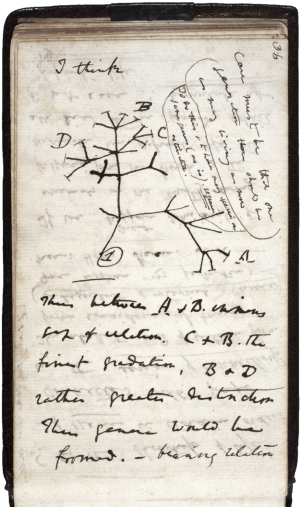
Charles Darwin's 1837  diagram of an evolutionary tree.
Charles Darwin’s 1837 diagram of an evolutionary tree.

But exposure has become a bad word in the minds of funders and school administrators, and thus is taboo amongst museum educators. A grant proposal asking for funding for one-time visits, with the goal of exposing children to something new, would be tossed out by most funders. Museums argue that field trips cultivate critical thinking and disciplinary knowledge because without this claim, most schools will not allow a visit during the school day.

There is another problem with exposure: It is not a sufficient guide in program planning. Saying that field trips expose students to new things does not help museums design excellent field trip offerings. Good program design is guided by clear ideas about why something is important, and thus what the program needs to look like to be successful. But it is possible to simultaneously understand field trips as being about exposure and set clear goals that provide guidance in program design.

Another, perhaps larger, problem is that exposure is not an ending, but a beginning. Building on exposure to new things, helping students use their new-found interest or curiosity as a starting point for exploration, is the job of the teacher. Museum visits become important after students leave. Often – again, especially for lower-income students who may have limited access to books and computers in their homes, and limited access to people outside schools who can help them identify resources to answer the questions sparked by a museum visit – this requires someone at the school to help students find avenues to follow their curiosity. But in our current educational climate I do not think teachers understand this as their role in a museum field trip. Nor do they always have the freedom or time to do this follow up work back in the classroom.

This is not an end to my exploration of field trips, but a mid-point that leads to new questions. How can museums effectively communicate to teachers the role they can and should play in museums visits, and the importance of this role? How do we measure the types of impact that come from exposure to new ideas and objects? How can we position museum visits as a social justice initiative, helping ensure that all students have reasons to read, not just reading instruction?

When do we edit participation?

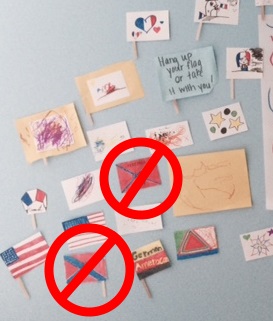
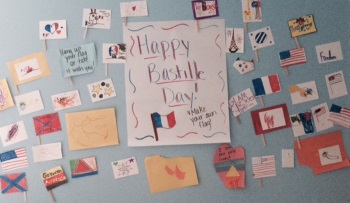
Last week, in honor of Bastille Day, we opened the PlayHouse Art Room to the public with a flag-making activity.

flag-prompt edited

We saw a range of flags created by kids and parents. As I share them, imagine some music playing, something vaguely patriotic but from an imaginary or unknown country.

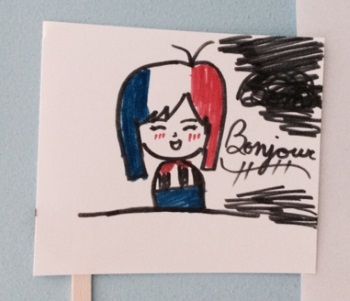
There were French-inspired flags:

french flag edited

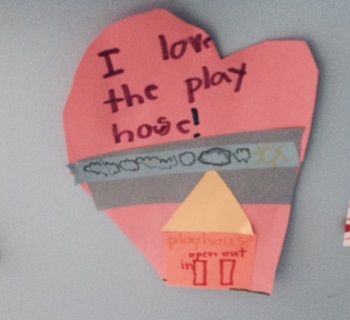
There were PlayHouse flags:

love playhouse flag edited

There were flags celebrating visitors’ cultural heritage:

german amaerican flag edited

And there were flags with indecipherable symbolism (indecipherable to me, but perhaps the flag makers had a very clear intent!):

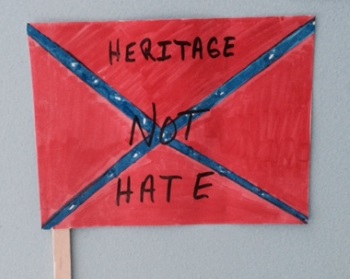
And then there was this:

confederate flag edited

The imaginary music screeches to a halt.

And here comes this week’s question: When do we edit participation?

I left the wall of flags up in the Art Room, the walls of which currently hold the evidence of about five different projects.

flag wall edited 2

But those Confederate flags (which, I am guessing, are by a parent and child)? I took them down.

The joy and difficulty of open-ended participatory activities is that we cannot predict or control visitor contributions. This should be a good thing: museums are a safe and neutral space to share one’s ideas. But what happens when some contributors offer ideas that are anathema to one’s own beliefs?

On the one hand, nothing sparks dialogue like a politically charged symbol. If I left it up, would parents and children who happened to see it engage in a meaningful conversation about the power of a flag, the historical weight of the Confederate flag, recent events in South Carolina, and whether or why some symbols should be retired?

On the other hand, would leaving it up make it seem like the PlayHouse endorses the Confederate flag? How would the public interpret our willingness to display this symbol?

A number of museum professionals are calling for museums to take on difficult issues, particularly those related to societal racism – one of the most important challenges facing us today. Linda Norris recently published a post encouraging museums to take on the Confederate flag and other similarly difficult issues. Gretchen Jennings called for museums to become place-makers: “How can your anchor institutions [museums] wield soft power [meaning act as influences in the development of their communities]?” But that same post draws on and cites Gail Lord: “the inclusion of multiple voices is critical to achieving soft power.”

Participatory museum culture, and the inclusion of multiple voices, means that we must allow and listen to voices we disagree with. Are we ready for that? I worry that by taking down visitor-contributed Confederate flags I have shown that I am not. But could I really leave them up?

When does the risk of misunderstanding outweigh the value of an activity or program?

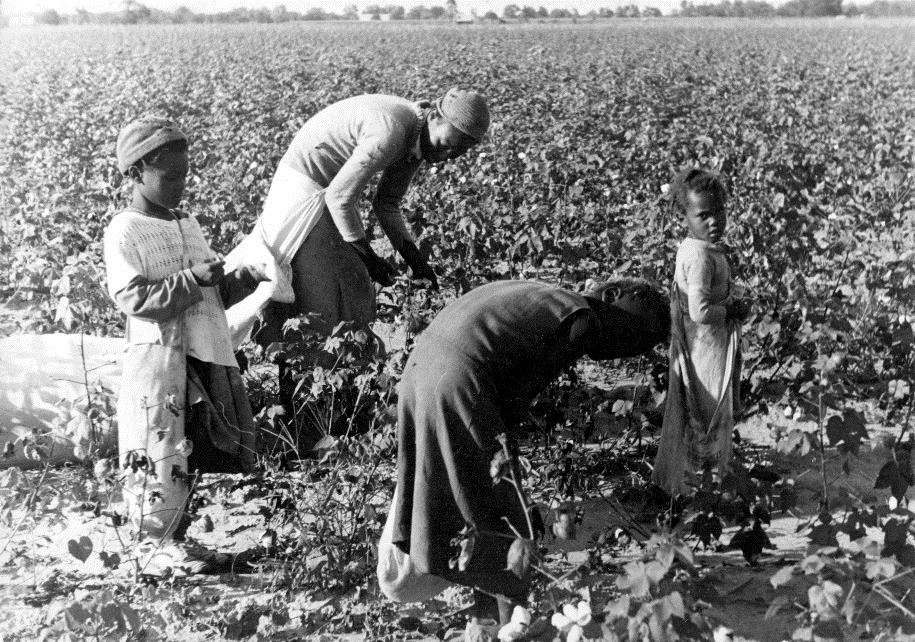
Franke L. Smith is an Education Coordinator at Hickory Hill, a Watson-Brown Foundation historic home, near Augusta, Georgia. At the American Alliance of Museums conference in May, Franke and I began a conversation about a program she offers, and whether and why it may be controversial. This program, “Cotton Pickin’ Field Trip,” teaches students about the history of the cotton industry in Georgia. Hickory Hill has experimented by asking students, as part of this field trip, to pick cotton, as well as to try de-seeding it by hand.

One teacher, upon arriving and seeing her students picking cotton, commented that she expected negative feedback from parents about the trip. Franke assumed that the teacher meant the parents of African American students, which worried her. Her concerns about how this part of the field trip would be accepted were reinforced when she found a related video on You Tube:


I asked Tandra Taylor to join Franke and me by phone to discuss the question of whether it might sometimes be inappropriate to ask students to take on historical roles. Tandra is a doctoral student in the Department of American Studies at Saint Louis University. Her work looks at African American intellectual and cultural history and more specifically, turn of the 20thcentury black women in higher education.

Franke: Hickory Hill is a historic house museum that sits on 256 acres in rural Georgia. The “Cotton Pickin’ Field Trip” aligns with the Georgia Performance Standards: Students have to learn about history of the cotton gin, Eli Whitney, slavery, the Civil War, and the cotton industry into the twentieth century.

Depending on the grade that books this trip, we hit different points. Typically I introduce the visit by talking about what cotton is, and asking students, “What do you know about cotton?” They say t-shirts, blue jeans, etc. We talk about the lifecycle of the plant, and how it’s grown today. Then we back up and talk about picking and processing before tractors and before the cotton gin. We talk about hand picking, slavery, Eli Whitney, and why we care about the cotton gin: An individual could pick 150 pounds of cotton a day, but only gin one pound a day before the invention of the cotton gin. With the cotton gin, one person can process 50 pounds of cotton a day.

We talk briefly about the demand for cotton – how cotton clothes are softer than wool clothes. That leads into economics and slavery, and we talk about how dramatically the numbers of slaves go up after the invention of the cotton gin. We talk about slavery and the Civil War, and how after the war, if you held onto your plantation, where is the money coming from – how are you going to pay the people working in your fields? The South ends up with sharecropping, with many surviving on a credit system in which people get goods on the promise of a payment when the crops come in. This is not sustainable, and it all collapses with the arrival of the boll weevil in 1915. We discuss the eradication of the bug, and the genetic modification of the plant so that it doesn’t hurt to pick it.

We have done this program with four or five groups, but we have only had two groups pick cotton – you can only pick cotton in October and November. The students didn’t seem to have a problem with this part of the program, but one teacher thought she might hear from parents about it. Although apparently the teacher did not get push back, because we did not hear back from her about this issue. She brings students to our site several times a year.

Tandra: I wanted to ask about your response to the video.

Franke: The video made me wonder if we were upsetting kids and they just didn’t say that they were upset. The public school group was half black, half white, with some Hispanic and Asian students as well. Are these kids going along with picking cotton because they are being respectful and doing what they are told, and not speaking up because we’re adults? Are they upset?

On the other hand, picking cotton by hand was not solely the experience of enslaved people. I am white; my father picked cotton by hand when he was a kid in the 1950s. In the rural south, there are lots of people who have picked cotton by hand. Cotton is still grown here.

11-year-old girl picking cotton in Oklahoma, 1916

Tandra: Are the teachers provided with context – a way to prepare students before they get to your site?

Franke: We don’t have any pre-visit materials. The teachers know in advance what the field trip includes. We told them we would talk about the plant and US history, and then go into field to pick cotton.

Tandra: I’m trying to think through ways to avoid the outcome of the young man in the video. What makes this activity a problem – at least as described in the video – is lack of contextualization. Students might think, “We just picked cotton; it wasn’t so bad!” You wouldn’t want this experience decontextualized.

But I don’t think it’s something that should be avoided. I don’t think that young people can move forward in this country without understanding the history of race and class. Students need to be able to understand, and to communicate to their parents that the field trip is not a mockery of this experience for anyone, white or black.

Franke: This is easier with older students. Eighth graders have taken some US history courses and have some basic understanding (theoretically) of the historical context. Although some of them don’t remember it.

I think it has to be a small enough group that you can make sure everyone is taking in what you’re saying, and you have to present it in a way that makes it understandable for them.

I’m thinking about part of the field trip where they try hand-ginning cotton. Some of them did have the “aha  moment” of, “I have been sitting here for ten minutes and have only picked five seeds out of this one boll” – they see all that effort, and how little you get out of it. That a-ha moment comes when they are listening, and we have been talking about the history of cotton and why the cotton gin was such a big deal.

So for this type of experience to be done well you have to have students’ attention, and you have to confront issues – you can’t ignore parts of it.

Tandra: We are getting to a place where museums are shying away from having these conversations. Students need an opportunity to be provoked, to see or hear what might not be familiar in their world. If we are not having these difficult conversations we are not serving the students.

I’m thinking about contextualization. Older students can make the connection between slave labor, the picking of cotton, and the rise of capitalism. There is a recent book, The Half Has Never Been Told: Slavery and the Making of American Capitalism, by Edward Baptist. It does a really good job in framing economic and political implications of our pre-war economic system and transition to capitalism.

African American women and girls picking cotton, 1937

Younger students – younger than 3rd or 4th grades – might do better with the idea of work. They understand that most people are paid for work, or would like to be paid for work; they understand the concept of hard work, what you are putting in vs. getting out. The goal of work is that you get paid, getting paid versus not getting paid.

Rebecca: If you present students with context about slave labor versus paid work, would it be appropriate and instructive to have them pick cotton as part of this field trip?

Tandra: Yes. When I was in first grade we learned about the Underground Railroad.  My elementary school had two floors, and the teachers engaged us in an activity in which the first floor was the South and the second was the North. We pretended that we were part of the Underground Railroad, and that teachers were abolitionists. We had to be very quiet, posing as enslaved people. The school was 99.9% black, and I don’t remember our parents saying anything. I remember this as a great learning experience. It’s different from picking cotton, I know. But students remember experiences.

Franke: It is essential to bring these situations to the level of the student.  Younger students may understand larger concepts – work, hard work, being paid – even if they don’t understand the exact political context.

Educators need to look at what they are trying to get across, make sure it’s appropriate in terms of students’ age, and then package it so that the students can see the good, the bad, and why we need to learn about it: so that we don’t repeat the past and can understand where other people are coming from. Give students all the pieces so they aren’t frustrated or upset or feeling left out or attacked because of their identity depending on the topic.


This conversation surprised me in that it all came down to the same points that I find myself emphasizing over and over:

  • Have clear program goals
  • Design programs carefully so that goals are achieved
  • Be clear (with yourself, staff, and audiences) about why you are making the choices you make

That said, I am struggling with the difference between historical re-enactment, and asking students to actually engage in a real-life task that may have historical and personal resonance for them. Tandra’s Underground Railroad activity is a dramatic re-enactment, and without context the students are just moving in odd ways between two floors of their school building. But the cotton picking was real – students were actually in the fields, picking cotton. Without context, students may feel they are being asked to repeat behaviors that were part of the subjugation their ancestors.

The question, though, is whether to dismiss the activity because it is difficult to implement in a way that has the desired effect, or, knowing the potential value of the understanding students may gain from this activity, to find ways to ensure that students fully grasp the context. Is this possible?  

What are your thoughts?


Should museum professionals get into museums for free?

One of the great perks of working in the museum field is free entry into other museums. I recently went to Indianapolis, and visited three museums in two days. The cost of visiting these three museums, for just one person, was $51.50. But, being an “insider” in the museum world, I called a colleague before going to one museum, and at the other two I showed my American Alliance of Museums card. In the end, I didn’t pay a dime for museum admission.

The normal way to enter a museum with an admission fee: Hand over money, get ticket, enter.
Most people pay an admission fee to enter most museums: Hand over money, get ticket, enter.

Because I do not pay for museums, I never have to make difficult choices about which ones to visit, or think about what would make me choose one museum over another. Nor do I ever need to think about whether my admission money was well spent.

Free admission is partly professional courtesy, but more importantly a form of professional development. Because we can move freely between museums, we can more easily learn from and about each others’ work. Free admission encourages me to be a regular visitor of museums. And once at these museums, I notice how their labels are written, whether the galleries are crowded, when signs are unclear. I look at family guides and membership brochures; I notice which special exhibits are free and which the museum has decided to charge for. And I am inspired: At the Indianapolis Museum of Art I had so much fun with the Erwin Wurm “One-Minute Sculptures” that I am wondering what form something like that might take in a children’s museum. At the Children’s Museum of Indianapolis I saw their end-of-day parade, a fantastic way to gently urge families to leave the museum at closing time.

Me as an Erwin Wurm One Minute Sculpture at the Indianapolis Museum of Art


But free admission sets museum professionals apart from our visitors. Without paying for museums, it becomes hard for us to weigh whether or when cost is a barrier to admission.

There are a lot of things that become invisible to us once we acclimate to a place, or an industry: Once you are immersed in an environment, it is difficult to see it from the outside.

On my first day at The Noguchi Museum, I had trouble figuring out which way to walk from the subway, and could not understand why there weren’t signs placed somewhere. I mentioned something to a colleague who had been at the museum for decades, and she shrugged. Within a few days, I didn’t think about which way to turn anymore. Institutionally, it was difficult to see this immediate barrier to visitation, and so we did not address it.

Just off the subway at 30th Street and Broadway in Queens. How would you know which way to walk to get to The Noguchi Museum?

How can we consider and challenge the things that deter museum visitation or enjoyment? How do we see our our own museums with fresh eyes? Certainly spending time in the galleries, during general visiting hours, is a good start. But even better might be driving there on our day off, waiting in line, paying admission at the door. Imagining, if possible, that we are unfamiliar with the neighborhood, with membership policies, with where the bathrooms are.

I welcome other ideas for how to re-acquaint ourselves with the visitor experience to museums. And thoughts on whether we should all be paying money at the door.